
Zizobet
5.0Welcome Bonus
550% up to £3,800 across 4 deposits + 50 Free Spins
- High Bonus System
- Dual-wallet system
- 24/7 Chat Support
Rank Interactive runs Mecca Games under UKGC account 57924, with Grosvenor, Mecca Bingo, Kitty Bingo, Lucky Pants Bingo and Lucky VIP.
Zizobet
5.0Welcome Bonus
550% up to £3,800 across 4 deposits + 50 Free Spins
Cosmobet
5.0Welcome Bonus
750% + Up to 7000€ 1000 FREESPINS +25% Cashback

Wildies
4.9Welcome Bonus
Welcome Pack 400% up to £3200 + 150 FS

WinBeast
4.9Welcome Bonus
WELCOME PACK £5000 + 500 Free Spins
SlotoSport
4.9Welcome Bonus
Welcome Package £12000 + 777 FS
Velobet
4.8Welcome Bonus
GET UP TO 330% BONUS + 300 FREE SPINS!
7Gear
4.8Welcome Bonus
Welcome Reward Up To £5000 + 500 FS

Spin Polo
4.8Welcome Bonus
Welcome Pack 777% up to £ 7777 + 385 FS
Lilu Casino
4.7Welcome Bonus
Welcome Package 325% Up to £3750 + 500 FS

Truststake
4.7Welcome Bonus
100% Up To 1500 EUR + 100 FS
CleanWins
4.7Welcome Bonus
Welcome Bonus 200% Up To £2000 + 200 FS
Rolletto
4.6Welcome Bonus
725% Up to 7000€+ 200 FREESPINS + 20% Cashback
Betmac
4.6Welcome Bonus
100% Up To 525 EUR + 100 FS

AmunBet
4.6Welcome Bonus
Welcome Package 450% To £3000 + 450 FS

Smash Casino
4.5Welcome Bonus
600% Up To £10 000 + 25% Cashback

Daytona Spin
4.5Welcome Bonus
Welcome Pack 255% up to £4500 + 255 FS
Mecca Games is a Rank Interactive (Gibraltar) Limited casino under UKGC account number 57924. Five genuine Rank brands stand out for UK players because they share the same licence trail but differ in bingo, live casino, slots depth, and bonus style.
| Brand | Our Rating | Welcome Bonus | Payout Speed (E-Wallets) | Top Feature |
| Grosvenor Casinos | 8.6/10 | Deposit £20, get a £20 bonus on selected games; 10x wagering reported on current offer pages | Often same day after checks; public pages promote fast processing | Live tables linked to a major UK casino estate |
| Mecca Bingo | 8.8/10 | Choice of bingo bonus or free spins route; current bingo offer shows £20 bingo bonus or 50 spins | Often same day after checks; PayPal availability may vary by bonus | Bingo rooms and club-linked Mecca identity |
| Kitty Bingo | 7.8/10 | Bingo and slots offers vary by campaign; verify in cashier before deposit | Often same day after checks | Lighter bingo-led design on the same Rank account |
| Lucky Pants Bingo | 7.7/10 | Third-party May 2026 checks report a choice route with bingo bonus or 50 spins | Often same day after checks | Casual bingo room schedule with slots alongside |
| Lucky VIP | 8.0/10 | Bonus-led casino promotions vary; Casino Guru lists 5 payment methods and unlimited withdrawals | Often same day after checks | Slots-first Rank brand with 9.0/10 Casino Guru Safety Index |
Ratings reflect WagerPals editorial assessment based on licence, bonus terms, and player-review data; verify current offers before depositing.
For a smaller UK casino contrast, the BetBlast Casino review tracks a different bonus and KYC pattern outside the Rank group.
The leading Rank sites are genuine Rank Interactive products rather than loose affiliate alternatives. The UKGC register, checked June 2026, lists all profiled domains as active under the same account. Grosvenor Casinos is the live-casino choice, Mecca Bingo is the bingo specialist, Kitty Bingo and Lucky Pants Bingo are lighter room-led options, and Lucky VIP is the closest slots-first Mecca Games alternative.
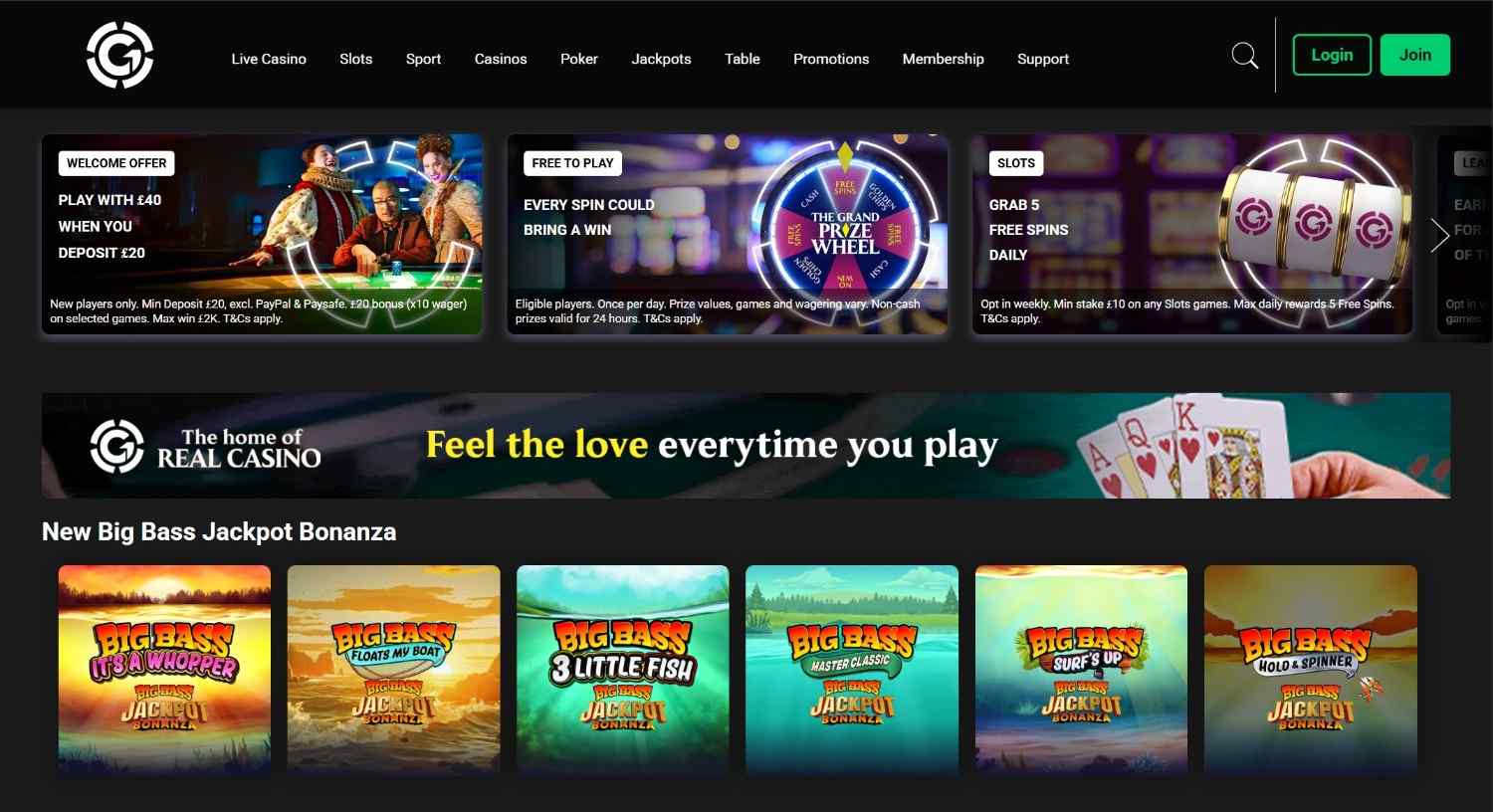
Grosvenor Casinos is the most complete casino product among these Rank brands. It is operated by Rank Interactive (Gibraltar) Limited under UKGC account number 57924 and appears on Casino Guru with a 9.8/10 Safety Index, checked June 2026. Its homepage was live with no closure language, so it ranks as the strongest Mecca Games sister site for table depth.
Casino Guru lists 71 game providers on Grosvenor's live review page, including NetEnt, Play'n GO, Novomatic, Blueprint, Evolution, Pragmatic Play, Red Tiger, Big Time Gaming, Eyecon and Playtech. The same page marks live blackjack, live roulette and live baccarat as available, which gives Grosvenor a broader live footprint than Mecca Games casino UK players see on the subject brand.
Search-visible Grosvenor pages in June 2026 showed a deposit-based welcome offer with a £20 minimum deposit and a £20 bonus on selected slots and live casino games. Older summaries differ on the play-with amount, so the cashier is the source of truth before opting in.
The phrase Grosvenor Casinos sister sites can mislead if it is used loosely, because Grosvenor is not a side project. It is a flagship Rank product and probably the top Mecca Games sister site for roulette, blackjack, live tables and venue-linked benefits. The drawback is that it may feel heavier than Mecca Games for casual slot players who only want a simple lobby and daily spin mechanic.
The Prestige Casino review is a useful comparison when a player wants a smaller casino brand rather than a venue-backed Rank product.
| Metric | Details |
| Site Identity | Premium casino and live-table brand tied to Rank's UK venue estate |
| What Sets It Apart | Strongest live casino and table-game coverage in the Rank online group |
| Game Selection | Casino Guru lists 71 providers, with Evolution, NetEnt, Playtech and Pragmatic Play visible |
| Best Bonus Feature | Deposit bonus route with post-2026 lower wagering pattern on current summaries |
| Drawback | Bonus terms vary by page, so the cashier must be checked before depositing |
| Ideal Player | Players who want live roulette, blackjack and a broader casino lobby than Mecca Games |
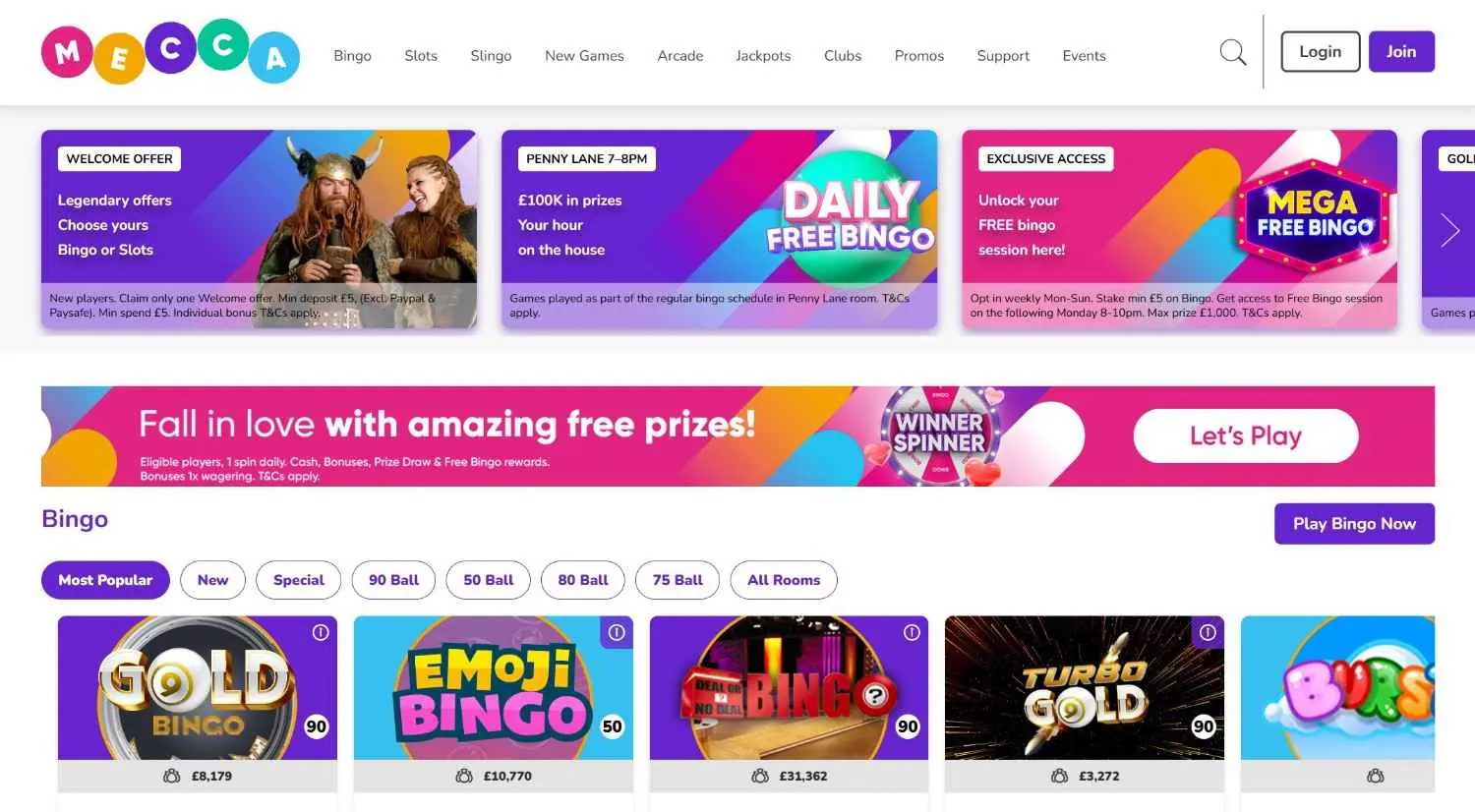
Mecca Bingo is the most obvious brand relationship in this guide and one of the highest-scoring Rank siblings by external safety data. It is run by Rank Interactive (Gibraltar) Limited under UKGC account number 57924. The homepage was live in June 2026, and Casino Guru's page shows a 9.8/10 Safety Index with no player complaints in its database at review time.
This is not merely a casino skin. Mecca Bingo is the bingo-led parent brand in the player's mind, while Mecca Games is the slots-and-games companion. For anyone searching sites like Mecca Games because they like the Mecca style but want rooms and scheduled bingo, Mecca Bingo is the most natural Mecca Games alternative.
The current welcome route is split rather than one-size-fits-all. A live Mecca Bingo promotion page in June 2026 described a choice between a £20 bingo bonus and 50 free spins, with the bingo route tied to selected rooms and the spins route tied to named slot content. Mecca Bingo sister sites do not automatically share that offer.
The product difference is the room schedule. Mecca Bingo has more social bingo framing, chat-led play and recurring room promotions, while Mecca Games focuses on slots, Slingo, jackpot games and daily casino-style mechanics. That means the right choice depends on game rhythm. If you prefer scheduled sessions and lower-stake entertainment, Mecca Bingo wins. If you prefer quick slot sessions and a cleaner casino lobby, Mecca Games remains easier to navigate.
The BetMac Casino review gives a separate UK casino benchmark for bonus-led players who do not need bingo rooms.
| Metric | Details |
| Site Identity | Bingo-first Rank brand with casino games and club-linked Mecca recognition |
| What Sets It Apart | Strongest room-led option among the sister sites of Mecca Games |
| Game Selection | Bingo rooms, slots and selected casino games; Casino Guru marks the Safety Index at 9.8/10 |
| Best Bonus Feature | Choice-style welcome route between bingo bonus and free spins |
| Drawback | Less suitable for players who mainly want live tables or a pure slots lobby |
| Ideal Player | Bingo players who want a genuine Mecca Games sister site with shared Rank licensing |
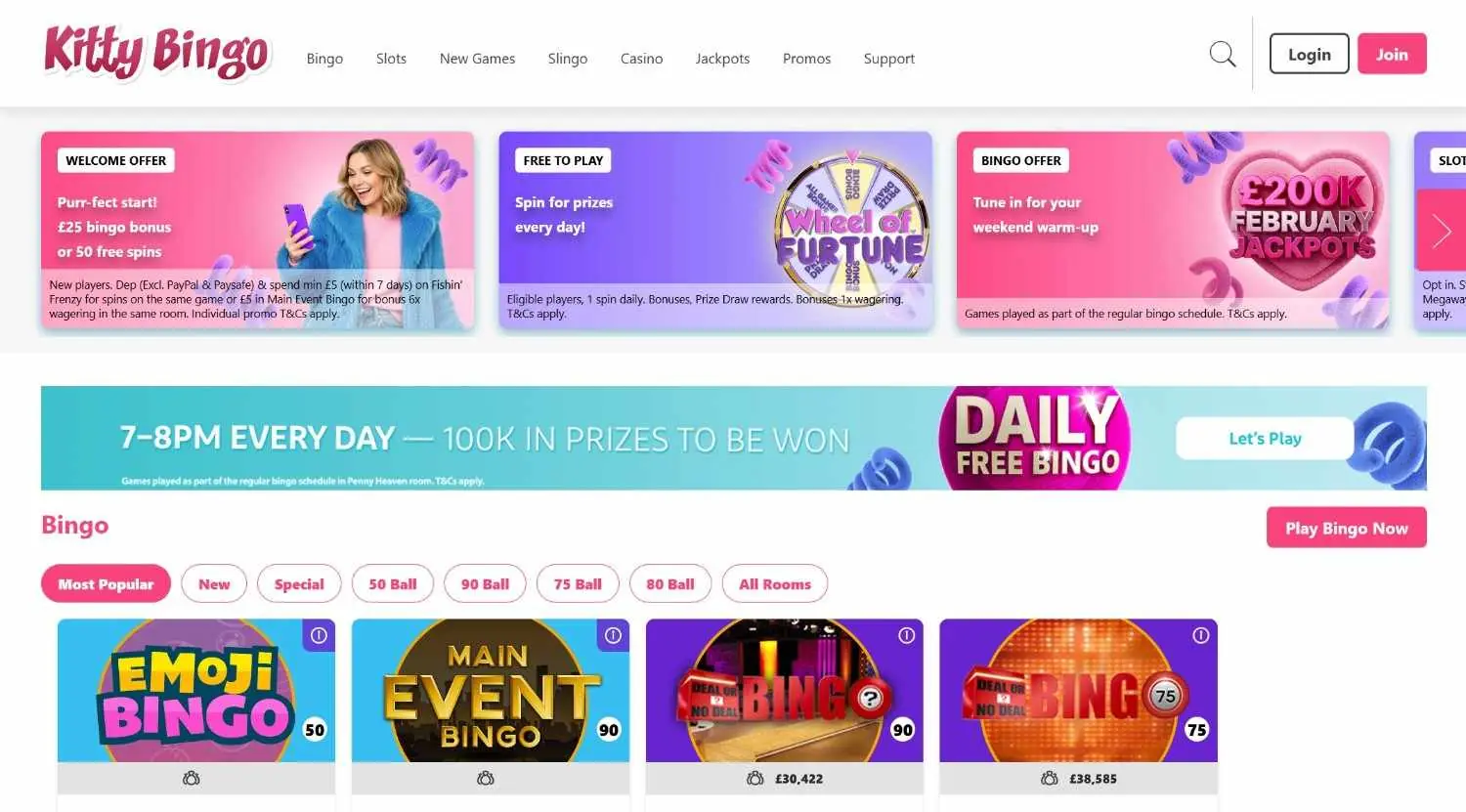
Kitty Bingo is another genuine Rank Interactive domain under UKGC account number 57924, not an invented add-on. The UKGC domain list shows kittybingo.com as active, and the homepage fetch in June 2026 showed live online bingo and casino content rather than a parked or closing page. Kitty Bingo sister sites therefore include Mecca Games in the formal account sense, although players should still treat the brand as a separate product with its own promotions, account experience and room schedule.
The reason Kitty Bingo appears in this guide is variety. Mecca Games is cleaner and more casino-led, while Kitty Bingo uses a brighter bingo identity and a softer casual tone. It suits players who want a lower-pressure bingo environment with slots nearby. The product is not as table-heavy as Grosvenor and not as central to Rank's heritage as Mecca Bingo, but it gives Rank an extra bingo room identity on the same licence trail.
Bonus pages for Kitty Bingo change more often than the UKGC record, so verify the live cashier before deposit. Public UK bingo summaries in 2026 generally frame Rank bingo brands around deposit-triggered bingo bonuses, free spins and room promotions. A Mecca Games casino sister casinos comparison should separate the legal relationship from the live promotion.
Game supply overlaps with the wider Rank stack. Expect bingo rooms, slots, jackpot games and instant-win titles rather than a deep live casino lobby. Players who care about Evolution tables or poker should move to Grosvenor. Players wanting a lighter bingo skin may prefer Kitty Bingo over Mecca Games.
The Betnuvo review offers another non-Rank reference point for players comparing cashier checks and smaller casino lobbies.
| Metric | Details |
| Site Identity | Casual bingo-led Rank brand on the same UKGC account as Mecca Games |
| What Sets It Apart | Softer bingo room identity for players who find Mecca Games too casino-led |
| Game Selection | Bingo rooms, slots, jackpots and selected instant-win games |
| Best Bonus Feature | Deposit-led bingo and free-spin promotions shown through live cashier campaigns |
| Drawback | Less public brand-specific review data than Mecca Games or Grosvenor |
| Ideal Player | Casual bingo players comparing Rank brands inside the same licence trail |
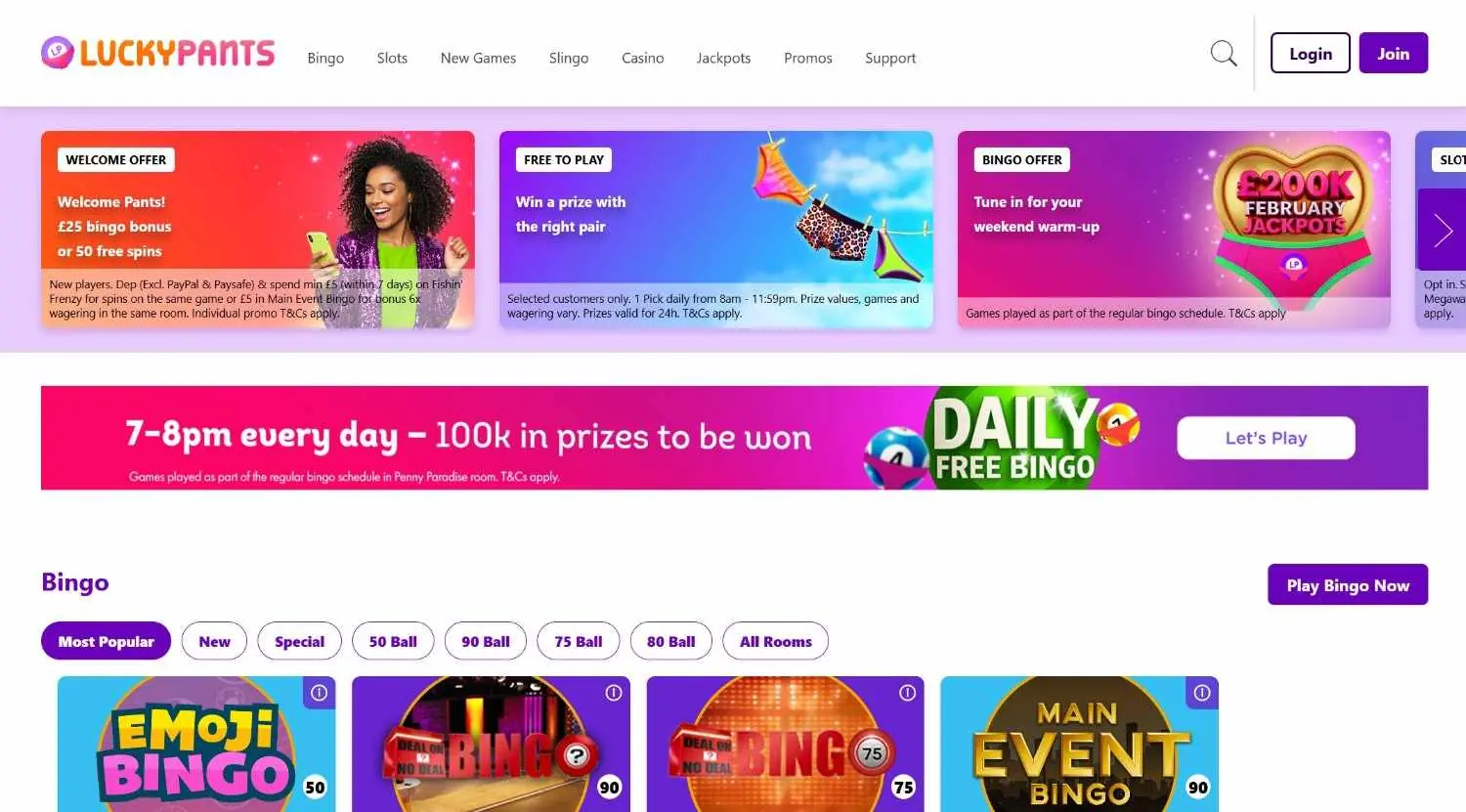
Lucky Pants Bingo is a smaller but genuine Rank Interactive brand. The UKGC register lists luckypantsbingo.com as active under account number 57924, and the homepage check in June 2026 returned a live casino-games page without closure wording. Lucky Pants Bingo sister sites include the wider Rank group domains, but the article treats it as a separate bingo-led option rather than a clone of Mecca Games.
The brand has a more playful identity than Mecca Bingo and a narrower purpose than Grosvenor. It is aimed at players who want bingo, slots and simple promotions without a large venue-led casino interface. For a player comparing connected casino options, Lucky Pants Bingo is relevant because the licence, owner and back-office trail match while the front-end mood changes. It is one of the quieter Rank alternatives rather than the most powerful product in the network.
The public bonus picture in May and June 2026 points to a choice-led welcome mechanic. Current bingo summaries describe a deposit path with bingo bonus or free spins, PayPal and PaysafeCard exclusions for qualifying deposits, and bingo wagering around 6x on the cited route.
Lucky Pants Bingo's game library is smaller than the headline casino lobbies, but that can suit bingo players who do not want 70-provider casino depth. If table games matter, it should not be the first pick.
| Metric | Details |
| Site Identity | Playful bingo and slots brand on the Rank Interactive UKGC account |
| What Sets It Apart | Simpler bingo-first feel than the main Mecca and Grosvenor products |
| Game Selection | Bingo rooms, slots and selected casino games |
| Best Bonus Feature | Choice-led deposit route reported in May 2026 bingo summaries |
| Drawback | Less useful if live casino, poker or deep table selection is a priority |
| Ideal Player | Players who want a lighter Mecca Games sister site with bingo at the centre |

Lucky VIP is the strongest slots-first pick after Mecca Games itself. The UKGC register lists luckyvip.com as active under Rank Interactive (Gibraltar) Limited account number 57924, and the June 2026 homepage fetch showed a live casino site. Casino Guru lists Lucky VIP with a 9.0/10 Safety Index and five deposit methods, making it useful for players who want casino play without a bingo skin.
The brand does not have the land-based weight of Grosvenor or the room-led familiarity of Mecca Bingo. Its purpose is closer to a compact online casino, with slots, jackpots and selected live content. Casino Guru reports unlimited withdrawals and no win limit for Lucky VIP, while also flagging some bonus-term issues around restricted games and bonus behaviour.
Lucky VIP's welcome and retention offers change through the Rank campaign system. If the cashier shows free spins, bonus funds or daily rewards, check the qualifying deposit method, expiry period, max cash-out and game contribution before playing. The strongest Rank options are the ones where the offer terms fit the way you actually play.
For games, Lucky VIP is closer to Mecca Games than the bingo brands. Expect Eyecon, Blueprint, Pragmatic Play, NetEnt-style content, Slingo-type titles and jackpot slots across the broader Rank supply, though each front end can differ. It is less persuasive if the player wants bingo rooms, where Mecca Bingo or Lucky Pants Bingo has a clearer identity.
Lucky VIP sister sites also show why Mecca Games sister companies should be treated as a licence-network term, not a promise of one shared wallet. Rank can operate the brands under the same account while still using separate promotions, sign-up flows and reward rules. Players should expect familiar compliance checks across the network, but they should not assume a Mecca Games login, bonus or exclusion choice automatically carries across every front end.
| Metric | Details |
| Site Identity | Slots-first Rank casino with a lighter standalone identity |
| What Sets It Apart | Closest casino-style alternative to Mecca Games among the selected five |
| Game Selection | Slots, jackpots and selected live content; Casino Guru rates Safety Index 9.0/10 |
| Best Bonus Feature | Campaign-led casino bonuses and payment choice across five listed methods |
| Drawback | Bonus terms need close reading despite the strong external safety score |
| Ideal Player | Slot players who want a genuine Rank Interactive casino alternative |
We tested the Rank Interactive sister sites through a live-source review rather than relying on old affiliate lists. The checks covered the UKGC public register, Rank operator terms, live homepages, current promotion pages, Casino Guru Safety Index pages, Trustpilot feedback and complaint-site visibility. We use small-stake real-money checks across a representative subset of network brands over time, then combine that with current public evidence for bonuses, banking and licence status. Some cashier details can change after publication, so the article distinguishes register-verified facts from campaign-led offers.
Our wagering requirements guide explains why the 10x cap still needs to be read alongside game contribution and expiry rules.
The current Mecca Games welcome offer is a useful worked example for sites like Mecca Games. The live promotion page checked in June 2026 says a new player must select the offer, deposit at least £10 and receive a £20 bonus plus 50 free spins on Kong 3 Even Bigger Bonus. The £10 deposit plus £20 bonus means £30 is subject to 10x wagering, so the target is £300 before bonus winnings can be withdrawn. Free-spin winnings have their own 10x route and a £50 converted-cash cap.
This is why the Mecca Games sister sites no deposit bonus phrase needs a cautious answer. The profiled Rank brands can run free-spin promotions, daily wheels and returning-player campaigns, but the main new-player routes checked for this article are deposit-triggered. A "free spins" headline does not automatically mean no deposit.
Players who only want free-spin routes can compare the separate no deposit casinos UK page before assuming a Rank welcome offer qualifies.
UKGC LCCP SR Code 5.1.1, effective from 19 January 2026, limits wagering requirements to 10x where the rule applies. That makes Rank's newer 10x-style offers easier to understand, but payment exclusions, game restrictions, expiry windows and max conversion caps still decide whether a bonus is worth taking.
Mecca Games wins on simplicity. It is a slots, Slingo and jackpot lobby with a clear welcome offer and a familiar Mecca name. Casino Guru gives the live Mecca Games page a 7.9/10 Safety Index, Above average, lists five payment methods and says Gamecheck found no fake games in sampled titles. Those are credible safety signals, even though Trustpilot feedback is poor.
Grosvenor beats Mecca Games on table depth and live casino. Mecca Bingo beats it on scheduled room play. Kitty Bingo and Lucky Pants Bingo are lighter bingo-led options, while Lucky VIP is the closest casino-style sibling. No new Rank Interactive casino launch was verified in the June 2026 register check. For players comparing sites like Mecca Games, the decision should come from product fit.
The Peaches Casino review gives a different small-brand comparison where slot lobby style matters more than bingo rooms.
| Payment Method | Min Deposit | Max Deposit | Withdrawal Time | Fees |
| Visa debit | Usually £10 on Rank casino offers | Account and method limits apply | Public pages promote fast withdrawals after checks | No standard operator fee found |
| Mastercard debit | Usually £10 on Rank casino offers | Account and method limits apply | Often same day after KYC, subject to reviews | No standard operator fee found |
| PayPal | Accepted on several Casino Guru payment lists | Account and method limits apply | Often fast after checks, but bonus qualification can be excluded | No standard operator fee found |
| Apple Pay | Listed by Casino Guru for Mecca Games, Grosvenor and Lucky VIP | Account and method limits apply | Card-rail timing after approval | No standard operator fee found |
| PaysafeCard | Listed by Casino Guru, but often excluded from welcome bonus qualification | Voucher and account limits apply | Deposit-only or restricted use may apply | No standard operator fee found |
The best payment route across these brands is usually debit card or Apple Pay if you want to qualify for the headline welcome offer. PayPal can be convenient, but Mecca Games public terms and several Rank bonus summaries warn that PayPal or PaysafeCard deposits may not qualify for selected promotions. Always separate "accepted for deposit" from "eligible for bonus."
For method-specific checks, the Apple Pay casinos UK page separates payment availability from bonus eligibility.
| Site | Top 5 Providers | Approx. Game Count | Live Dealer Available |
| Mecca Games | NetEnt, Evolution, Blueprint, Eyecon, Pragmatic Play | Operator page claims 1,800+ games; Casino Guru lists 7 game categories | Limited; Casino Guru shows live games but fewer live categories |
| Grosvenor Casinos | NetEnt, Play'n GO, Novomatic, Blueprint, Evolution | Casino Guru lists 71 providers | Yes, broad live blackjack, roulette and baccarat coverage |
| Mecca Bingo | Eyecon, Blueprint, Pragmatic Play, Slingo, NetEnt-style supply | Bingo rooms plus slots; exact live count varies | Limited, bingo-led rather than table-led |
| Kitty Bingo | Slingo, Eyecon, Blueprint, Pragmatic Play, NetEnt-style supply | Smaller bingo-led lobby | Limited |
| Lucky Pants Bingo | Slingo, Eyecon, Blueprint, Pragmatic Play, jackpot suppliers | Smaller bingo-led lobby | Limited |
| Lucky VIP | NetEnt, Blueprint, Eyecon, Pragmatic Play, Evolution-style live supply | Casino Guru marks 12 game categories available | Yes, selected live content |
Provider overlap is high because these are Rank Interactive casinos, but the lobby emphasis is different. Rank Interactive casinos share licence oversight while Grosvenor gives the widest table spread, Mecca Bingo prioritises rooms, and Lucky VIP is the most direct slots-first sibling.
If table games are the deciding factor, our blackjack casinos hub gives a broader view beyond the Rank network.
| Site | Licence Body | UKGC Licence No. | Self-Exclusion Available | RNG Testing |
| Mecca Games | UKGC | UKGC account number 57924 | UKGC remote-casino self-exclusion options | Gamecheck sample found no fake games per Casino Guru |
| Grosvenor Casinos | UKGC | UKGC account number 57924 | UKGC self-exclusion options | Gamecheck sample found no fake games per Casino Guru |
| Mecca Bingo | UKGC | UKGC account number 57924 | UKGC self-exclusion options | Casino Guru reports no unfair or predatory clauses found |
| Kitty Bingo | UKGC | UKGC account number 57924 | UKGC self-exclusion options | Rank software and supplier controls apply under UKGC oversight |
| Lucky Pants Bingo | UKGC | UKGC account number 57924 | UKGC self-exclusion options | Rank software and supplier controls apply under UKGC oversight |
| Lucky VIP | UKGC | UKGC account number 57924 | UKGC self-exclusion options | Gamecheck sample found no fake games per Casino Guru |
The UKGC public register is the strongest safety source for this network. It lists Rank Interactive (Gibraltar) Limited, account number 57924, as active with remote bingo, remote casino, gambling software, real-event betting and virtual-event betting activities from 11 March 2022. The domain-name page lists all five profiled brands as active. The regulatory-actions page says no regulatory actions have been recorded for this business.
For disputes, complain to the operator first, keep screenshots of the offer tile, cashier method and KYC upload status, then escalate through the appointed ADR route if unresolved. Gambling Commission public guidance is the authority reference for licence checks, and GamCare counselling resources are separate harm-support resources.
The main complaint pattern sits around Mecca Games itself rather than every Rank sister equally. Trustpilot showed 139 Mecca Games reviews and a 1.3/5 TrustScore in June 2026, with 95% one-star reviews visible. Recent reviews mention login problems, game crashes, poor returns, promotion frustration, verification friction and payment concerns. One positive April 2026 review said a win was paid within 12 hours, but the negative volume is high.
When a withdrawal dispute becomes formal, the what to do if a casino refuses to pay guide explains the evidence trail to keep.
Casino Guru gives a different signal. Its live Mecca Games review shows a 7.9/10 Safety Index and "Not enough data" for user feedback. Grosvenor and Mecca Bingo score 9.8/10, and Lucky VIP scores 9.0/10. This split is why the editorial trust rating sits in the middle.
The Zombillion review shows how offshore-style sentiment signals can diverge from UKGC-network evidence.
No reliable Reddit pattern was found in June 2026 checks. AskGamblers and Casinomeister did not provide a clear Mecca Games complaint pattern in this pass.
| Source | What Players Praise | What Players Criticise |
| No reliable pattern found in June 2026 checks | Search results were polluted by unrelated "Mecca" topics | |
| Trustpilot | Isolated positive payout comments, including a 12-hour payout review in April 2026 | 1.3/5 from 139 Mecca Games reviews; complaints about crashes, poor returns, verification and promotions |
| AskGamblers | No reliable Mecca Games pattern found in this pass | No clear brand-specific complaint cluster verified |
| Casino Guru | Mecca Games 7.9/10 Safety Index; Grosvenor 9.8/10; Mecca Bingo 9.8/10; Lucky VIP 9.0/10 | Mecca Games has Above average rather than Very high score, and Casino Guru notes some bonus-term cautions on related brands |
The dominant signal is mixed. The Rank brands benefit from an active UKGC account, no recorded regulatory action and strong Casino Guru safety scores on several siblings. The weak point is player sentiment, especially the Mecca Games Trustpilot page. Players should treat the network as properly licensed but still prepare KYC documents early and avoid bonus routes they do not understand.
The ReelRaven review is another comparison where player-sentiment evidence carries more weight than a headline offer.
The best within-network pick is Grosvenor Casinos if you want casino depth. It has the strongest live-table range, the highest-profile Rank casino identity and a 9.8/10 Casino Guru Safety Index. For bingo, Mecca Bingo is the better pick because it is the clearest room-led product among the sister sites of Mecca Games.
For players who want a newer-site benchmark outside Rank, new casinos UK coverage is better than forcing a sister-site comparison.
The best non-sister alternative is MrQ for players who want a different UKGC operator with a cleaner, modern casino feel. It is not a Rank Interactive brand and should not be described as a Rank sibling, but it is a useful external comparison for players who want a separate account, different bonus rules and a different customer-support culture.
Instaspin sister site alternatives give a separate network example for readers comparing how ownership groups shape product choice.
Mecca Games similar sites are worth considering when they are genuine Rank Interactive brands and their product difference is clear. Grosvenor Casinos, Mecca Bingo, Kitty Bingo, Lucky Pants Bingo and Lucky VIP are real same-account options, while Mecca Games remains the simple slots-and-Slingo pick. The editorial trust rating is 6.8/10 because Casino Guru and UKGC signals are solid but Trustpilot sentiment is poor.
The cashback casinos hub is a better fit if ongoing value matters more than shared Rank ownership.
For most players, the top Rank choices are Grosvenor for live casino and Mecca Bingo for room play. If you stay inside Rank, check the cashier wording, avoid assuming shared bonuses, and complete your KYC verification immediately after registration.

Dermot Heathcote
Senior Casino Analyst
Dermot covers UK-licensed online casinos for WagerPals, focusing on UKGC compliance, payment safety, and bonus terms. He spends most of his time reading licence registers, withdrawal terms, and player-complaint forums so readers don't have to.