

Zizobet
5.0Welcome Bonus
550% up to £3,800 across 4 deposits + 50 Free Spins
- High Bonus System
- Dual-wallet system
- 24/7 Chat Support
Instaspin is operated by Magico Games N.V. under an Anjouan Gaming Authority licence (ALSI-082309007-FI4). The operator runs just one confirmed sister site, Bet Ninja, making this one of the smallest casino networks currently active. The network's defining characteristic is its minimalist, mobile-first approach to casino design paired with crypto-friendly banking.
This operator does not hold a UK licence, so it is not permitted to offer gambling to consumers in Great Britain, and UK player protections such as GAMSTOP, ADR dispute resolution and licensed-operator safeguards do not apply. This page is published for information only and is not a recommendation to play.
Zizobet
5.0Welcome Bonus
550% up to £3,800 across 4 deposits + 50 Free Spins

Cosmobet
5.0Welcome Bonus
750% + Up to 7000€ 1000 FREESPINS +25% Cashback

Wildies
4.9Welcome Bonus
Welcome Pack 400% up to £3200 + 150 FS

WinBeast
4.9Welcome Bonus
WELCOME PACK £5000 + 500 Free Spins

SlotoSport
4.9Welcome Bonus
Welcome Package £12000 + 777 FS

Velobet
4.8Welcome Bonus
GET UP TO 330% BONUS + 300 FREE SPINS!

7Gear
4.8Welcome Bonus
Welcome Reward Up To £5000 + 500 FS

Spin Polo
4.8Welcome Bonus
Welcome Pack 777% up to £ 7777 + 385 FS

Lilu Casino
4.7Welcome Bonus
Welcome Package 325% Up to £3750 + 500 FS

Truststake
4.7Welcome Bonus
100% Up To 1500 EUR + 100 FS

CleanWins
4.7Welcome Bonus
Welcome Bonus 200% Up To £2000 + 200 FS

Rolletto
4.6Welcome Bonus
725% Up to 7000€+ 200 FREESPINS + 20% Cashback

Betmac
4.6Welcome Bonus
100% Up To 525 EUR + 100 FS

AmunBet
4.6Welcome Bonus
Welcome Package 450% To £3000 + 450 FS

Smash Casino
4.5Welcome Bonus
600% Up To £10 000 + 25% Cashback

Daytona Spin
4.5Welcome Bonus
Welcome Pack 255% up to £4500 + 255 FS
| Detail | Info |
|---|---|
| Full Legal Name | Magico Games N.V. |
| Parent Company | Independent (Curaçao-registered) |
| Primary Licence(s) | Anjouan Gaming Authority, ALSI-082309007-FI4 |
| Active Casino Brands | 2 |
| Casino Guru Safety Index | 4.8/10 (Low) |
| Trustpilot Rating | 3.2/5 from 208 reviews (April 2026) |
Magico Games N.V. is a relatively young operator that launched Instaspin in late 2023 as its debut casino brand. Registered in Curaçao with payment processing handled through Gamico Solutions Limited in Cyprus, the company took a conservative approach to expansion, waiting roughly eighteen months before launching its second brand. Compared to established multi-brand operators like Bet365 sister sites networks or the William Hill group, Magico Games runs a notably compact portfolio, though this smaller footprint allows tighter operational focus across its two properties.
| Brand | Our Rating | Welcome Bonus | Payout Speed (E-Wallets) | Top Feature |
|---|---|---|---|---|
| Instaspin | 2.4/5 | 100% up to €100 + 100 FS (1st deposit) | 24–72 hours | Crypto-friendly with 30+ coins |
| Bet Ninja | 2.2/5 | 100% up to €100 + 100 FS (1st deposit) | 24–72 hours | Ninja-themed sportsbook integration |
| Rolletto | 3.0/5 | 100% up to €500 + 200 FS | 0–24 hours (crypto) | Full sportsbook and esports suite |
| Velobet | 3.0/5 | 100% up to €500 + 100 FS | 0–24 hours (crypto) | Sports and casino hybrid platform |
| MyStake | 3.2/5 | 150% up to €200 | 0–24 hours (crypto) | Mini games and crash game selection |
Bonuses are subject to change — always verify the latest terms directly on each operator's website before depositing. For context on how different regulatory frameworks affect player protections across these operators, our gambling licences explained guide covers the key distinctions.
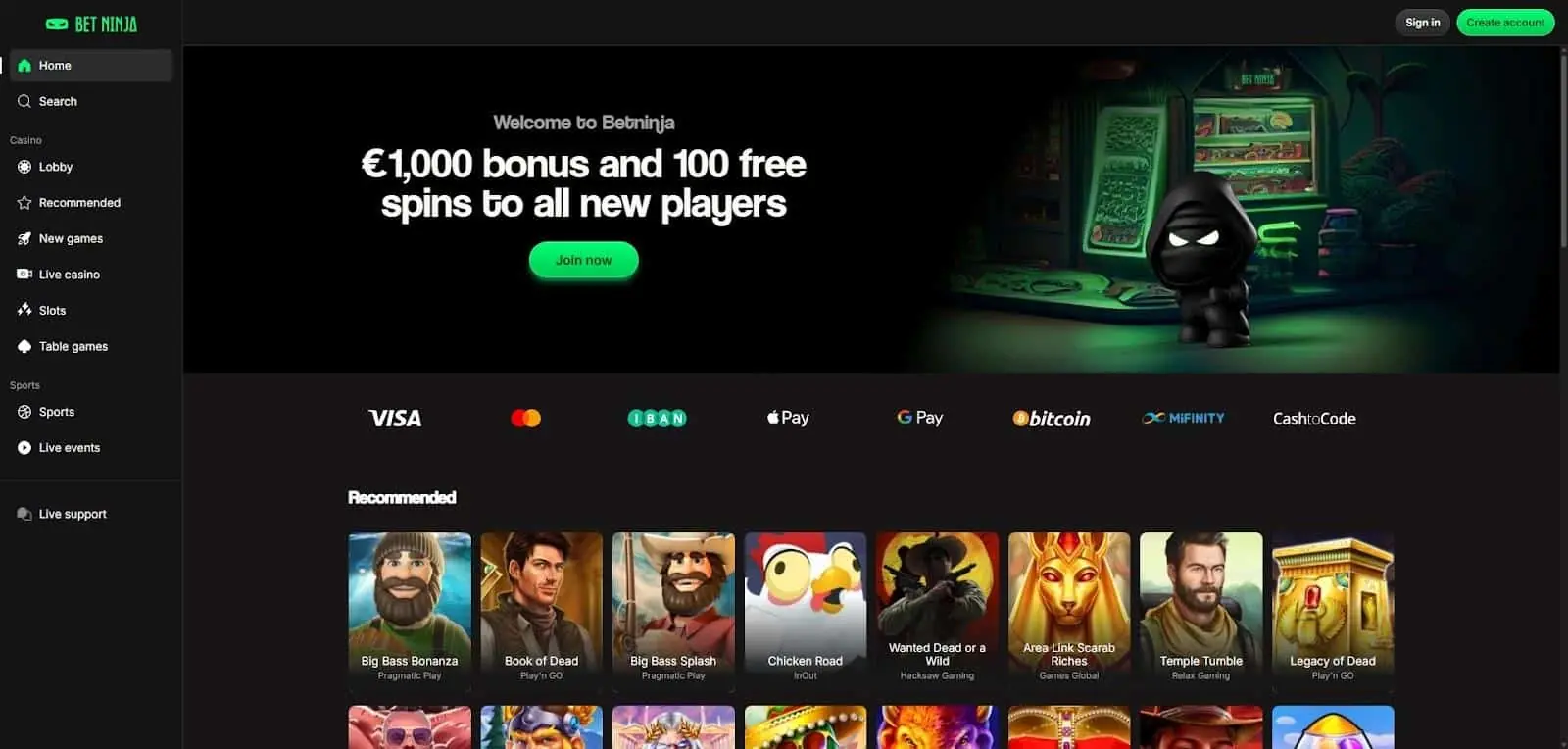
Bet Ninja launched in 2025 as Magico Games N.V.'s second casino brand and the sole confirmed Instaspin sister site. Where Instaspin leans into minimalist slot-focused design, Bet Ninja takes a darker, ninja-inspired aesthetic targeting players who enjoy visual character alongside gameplay. The site holds the same Anjouan Gaming Authority licence (ALSI-082309007-FI4), confirming shared regulatory oversight.
The game library mirrors Instaspin's scale at roughly 2,000 titles from around 25 providers, including Pragmatic Play, Play'n GO, Relax Gaming, Nolimit City, and Hacksaw Gaming. The live casino features around 30 tables via Evolution Gaming and Ezugi. Where Bet Ninja differentiates itself is through an integrated sportsbook covering football, basketball, MMA, and niche markets like darts — a feature entirely absent from Instaspin.
The welcome bonus follows an identical three-deposit structure: 100% up to €100 plus 100 free spins (1st), 50% up to €200 (2nd), and 25% up to €700 (3rd), totalling €1,000 plus 100 free spins. Wagering is 30x on bonus and deposit combined, with a €5 max bet, €20 minimum deposit, and 30-day completion window. Free spins are distributed at 10 per day over 10 days.
Banking options are shared network-wide: Visa, Mastercard, MiFinity, Apple Pay, Google Pay, CashtoCode, bank transfer, and 30+ cryptocurrencies via Bitpace. Withdrawal limits sit at €4,000 daily, €16,000 weekly, and €50,000 monthly, with a minimum withdrawal of €100 — notably higher than Instaspin's €20 minimum.
Bet Ninja fits players who want Magico Games infrastructure with sports betting flexibility. However, early AskGamblers complaints about confiscated winnings linked to hidden max-bet rules during bonus play warrant caution. The site has no VIP or loyalty programme, matching the Instaspin gap.
| Metric | Details |
|---|---|
| Site Identity | Dark, ninja-themed design with character-driven branding |
| What Sets It Apart | Integrated sportsbook covering 20+ markets alongside a full casino |
| Game Selection | 2,000+ games from 25 providers including Pragmatic Play, Hacksaw, Nolimit City |
| Best Bonus Feature | Three-deposit welcome package totalling €1,000 + 100 free spins |
| Honest Drawback | €100 minimum withdrawal and early player complaints about bonus-related confiscations |
| Ideal Player | Sports bettors who want a combined sportsbook and casino under one Anjouan-licensed roof |

Rolletto operates under a Curaçao licence and has built a reputation as one of the more established offshore casino-sportsbook hybrids since its launch. The site runs on a clean, dark-themed interface that balances casino gaming with a deep sportsbook covering football, tennis, basketball, esports, and virtual sports. Rolletto is operated by a different company from Magico Games and runs within a broader network of offshore brands.
The game library comfortably exceeds Instaspin's offering, with over 4,000 titles from providers including Pragmatic Play, Evolution Gaming, Play'n GO, Hacksaw Gaming, Betsoft, and BGaming. The live casino section is deeper than anything in the Magico Games network, with multiple blackjack, roulette, baccarat, and game show tables streaming around the clock. Sports betting markets run pre-match and in-play across 30+ sports.
Rolletto's welcome bonus offers 100% up to €500 plus 200 free spins, with wagering requirements of 40x on the bonus amount. The minimum deposit is €20. Beyond the welcome offer, Rolletto maintains weekly reload bonuses, a cashback programme, and a tiered VIP system — addressing one of the biggest gaps in the Instaspin network where no loyalty infrastructure exists.
Banking covers Visa, Mastercard, Skrill, Neteller, MiFinity, and a wide cryptocurrency selection. Crypto withdrawals process within minutes, while card and e-wallet withdrawals typically complete within 24–48 hours. Withdrawal limits are generally higher than Instaspin's €4,000 daily cap, which is a meaningful advantage for players managing larger balances.
| Metric | Details |
|---|---|
| Site Identity | Sleek dark theme with dual casino-sportsbook focus |
| What Sets It Apart | VIP tiered loyalty programme with cashback and reload bonuses |
| Game Selection | 4,000+ games from 40+ providers including Betsoft and BGaming |
| Best Bonus Feature | 100% up to €500 + 200 free spins welcome offer |
| Honest Drawback | 40x wagering requirement is higher than Instaspin's 30x |
| Ideal Player | Players seeking a full casino-sportsbook experience with ongoing loyalty rewards |
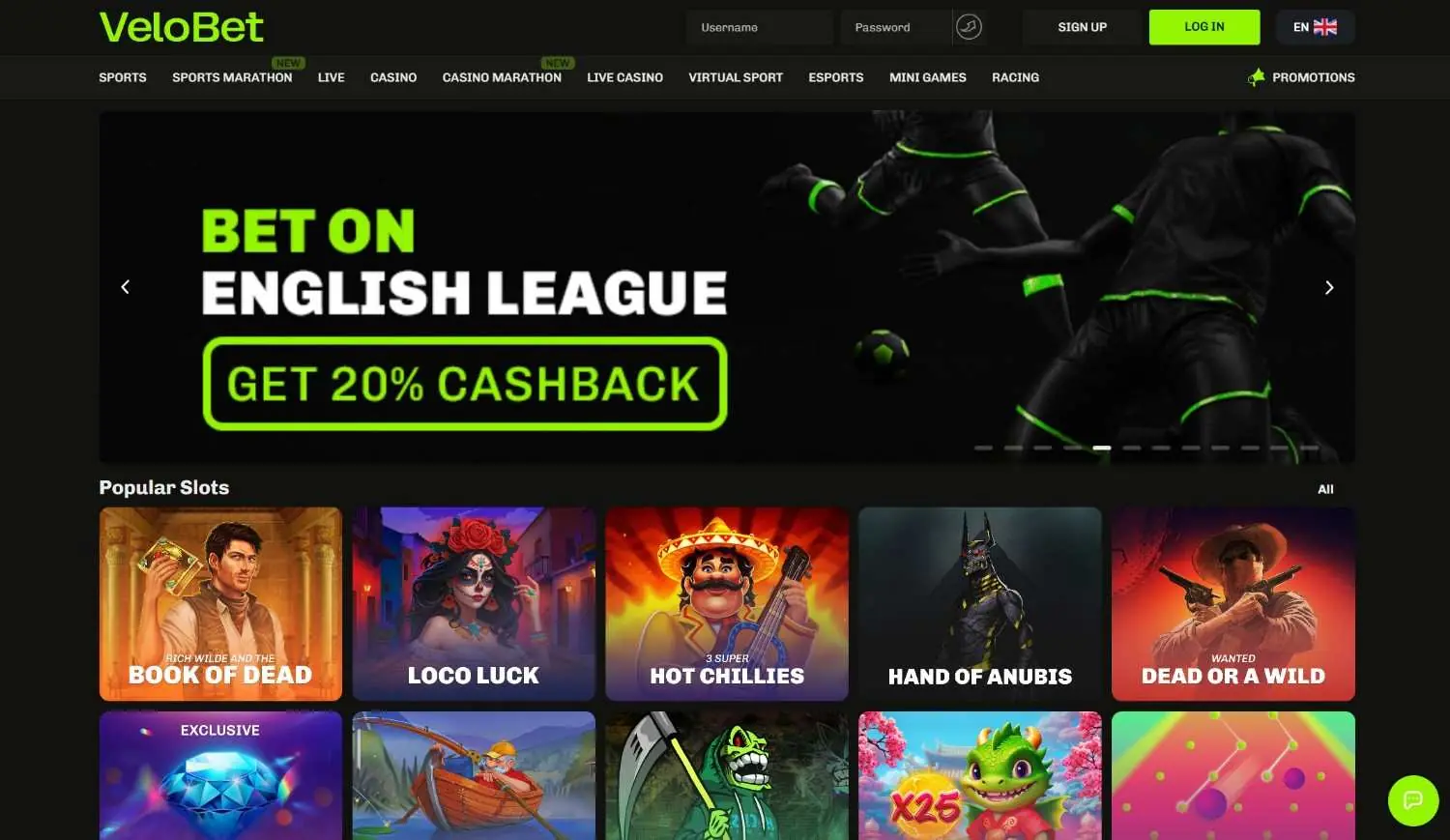
Velobet targets players who prioritise cryptocurrency deposits and fast withdrawals alongside conventional banking. The site holds a Curaçao licence and operates independently from Magico Games N.V. Its design is modern and sports-heavy, with equal weight given to casino gaming and live sports betting.
The casino library runs past 5,000 games — significantly larger than Instaspin's approximately 2,000 titles. Providers include Pragmatic Play, Evolution Gaming, Play'n GO, Hacksaw Gaming, Nolimit City, and Push Gaming. The live casino section features over 200 tables, making it one of the deepest live dealer selections available outside UKGC-regulated sites. Other casinos like Cosmobet share similar infrastructure in this space, though Velobet's game count leads the group.
The welcome bonus offers 100% up to €500 plus 100 free spins, with 40x wagering on the bonus. Minimum deposit is €20. Velobet also runs weekly tournaments, reload promotions, and a cashback system that gives it a clear edge over the Magico Games network's bare-bones bonus structure.
Payment methods include Visa, Mastercard, bank transfer, MiFinity, and over 30 cryptocurrencies. Crypto withdrawals are near-instant, and fiat withdrawals typically clear within 48 hours. Withdrawal caps sit higher than Instaspin's limits, which matters for players managing larger balances.
| Metric | Details |
|---|---|
| Site Identity | Modern, sports-forward design with crypto-native infrastructure |
| What Sets It Apart | 5,000+ game library with 200+ live dealer tables |
| Game Selection | Massive catalogue from 50+ providers including Push Gaming and crypto studios |
| Best Bonus Feature | Weekly tournaments and cashback beyond the welcome offer |
| Honest Drawback | 40x bonus wagering requirement and complex multi-tier bonus terms |
| Ideal Player | Crypto-heavy players who want deep game libraries and active ongoing promotions |
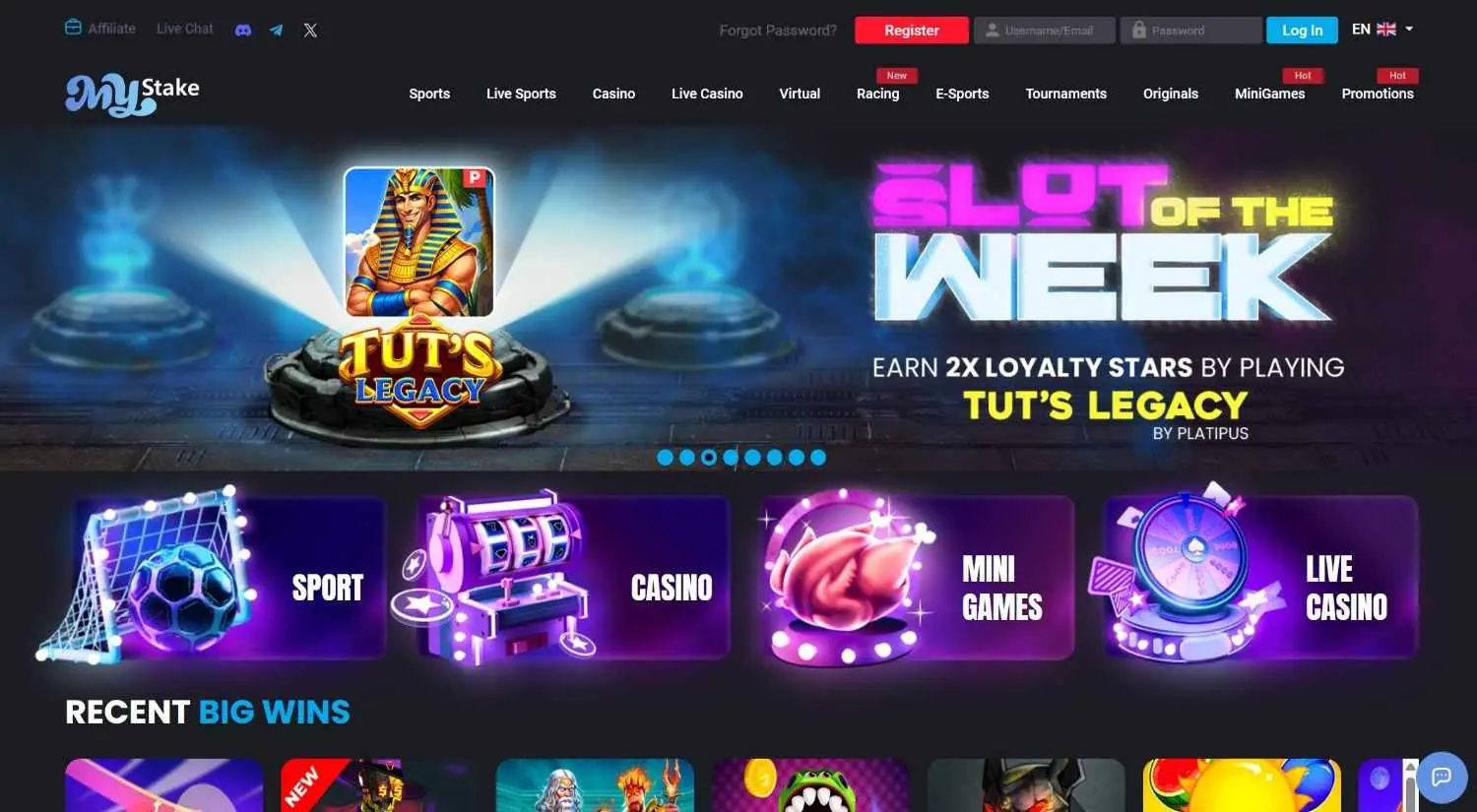
MyStake has established itself as one of the more recognisable offshore casinos, operating under a Curaçao licence since 2020. The site has built a following through its unique mini games section — featuring Chicken, Dino, Plinko, and Mines — which differentiates it from the standard slots-and-tables format that Instaspin follows.
The game library surpasses 6,000 titles from over 60 providers, including Pragmatic Play, Evolution Gaming, Hacksaw Gaming, Play'n GO, and Red Tiger. The live casino section is extensive, and the sportsbook covers major and niche sports including esports.
MyStake's welcome bonus offers 150% up to €200 on the first deposit, with a 30x wagering requirement — matching Instaspin's playthrough terms. The minimum deposit is €20. Beyond the welcome package, MyStake runs daily cashback, reload bonuses, and a VIP programme with personalised rewards, giving it a clear advantage over the Magico Games network.
Banking spans Visa, Mastercard, Skrill, Neteller, bank transfer, and comprehensive cryptocurrency support. Withdrawals process within 24–48 hours for e-wallets and crypto, and up to 5 business days for card payments.
| Metric | Details |
|---|---|
| Site Identity | Functional design with a distinctive mini games arcade section |
| What Sets It Apart | Unique proprietary mini games (Chicken, Dino, Mines, Plinko) unavailable elsewhere |
| Game Selection | 6,000+ titles from 60+ providers, the largest library among these alternatives |
| Best Bonus Feature | 150% first deposit match with 30x wagering — same playthrough as Instaspin |
| Honest Drawback | Interface design feels dated compared to newer competitors |
| Ideal Player | Players who want maximum game variety, including exclusive mini games, with VIP rewards |
Within the Magico Games network, there is only one comparison to make: Instaspin versus Bet Ninja. In bonus terms, the two sites are virtually identical. Both offer the same three-deposit welcome package totalling €1,000 plus 100 free spins, both use 30x wagering on deposit and bonus combined, and both set the maximum bet at €5 during bonus play. There is no differentiation on bonus generosity within the network.
The game libraries overlap heavily, with both sites drawing from the same pool of approximately 25 providers and 2,000 titles. Neither site runs exclusive content. The meaningful difference is that Bet Ninja includes an integrated sportsbook with 20+ markets, while Instaspin remains a casino-only platform. For players who only want slots and table games, Instaspin's cleaner, distraction-free interface may actually be the preferable option.
Neither brand offers a loyalty programme, VIP scheme, reload bonuses, or tournament system, which is a genuine competitive weakness. The Gambiva sister brands network, for example, runs cashback and VIP tiers as standard across all its brands. Both Instaspin and Bet Ninja rely entirely on the welcome package to attract and retain players, which means the post-bonus experience is identical regardless of which Magico Games brand you choose.
Withdrawal processing and banking options are shared across both sites, though Bet Ninja's €100 minimum withdrawal is five times higher than Instaspin's €20 minimum, making Instaspin the better choice for players who prefer cashing out smaller amounts. The €5,000 daily win cap applies at both brands.
Magico Games N.V. has not launched any new brands in 2026. The operator expanded from one to two active casinos with Bet Ninja's launch in 2025, but the network has remained stable since. There have been no announcements of upcoming brands, acquisitions, or new licensing applications. The Anjouan Gaming Authority licence continues to cover both properties under a single licence number.
Instaspin itself has continued adding games and payment methods incrementally, with the crypto selection expanding to cover over 30 digital currencies through the Bitpace processor. The addition of a sportsbook to Bet Ninja in 2025 suggests the operator may be testing sports betting as a product vertical before potentially rolling it out to the main brand. This measured pace of development is consistent with Magico Games' approach since inception. By contrast, larger operators behind PartyCasino partner sites have expanded to ten or more brands in the same timeframe, highlighting how conservative this network's growth strategy remains.
| Payment Method | Min Deposit | Max Deposit | Withdrawal Time | Fees |
|---|---|---|---|---|
| Visa/Mastercard | €20 | Not disclosed | 3–5 business days | None stated |
| MiFinity | €20 | Not disclosed | 24–48 hours | None stated |
| Apple Pay | €20 | Not disclosed | Not available for withdrawal | None stated |
| Google Pay | €20 | Not disclosed | Not available for withdrawal | None stated |
| CashtoCode | €20 | Not disclosed | Not available for withdrawal | None stated |
| Bank Transfer | €20 | Not disclosed | 3–5 business days | None stated |
| Bitcoin (BTC) | €20 | Not disclosed | 0–24 hours | Network fees only |
| Ethereum (ETH) | €20 | Not disclosed | 0–24 hours | Network fees only |
| Tether (USDT) | €20 | Not disclosed | 0–24 hours | Network fees only |
| Ripple (XRP) | €20 | Not disclosed | 0–24 hours | Network fees only |
| Dogecoin (DOGE) | €20 | Not disclosed | 0–24 hours | Network fees only |
Cryptocurrency is the standout payment option across the Magico Games network, with over 30 coins supported through the Bitpace gateway. Crypto withdrawals process faster than fiat options and carry no operator-imposed fees beyond standard network charges. For fiat users, MiFinity offers the fastest non-crypto route at 24–48 hours. Card and bank withdrawals can stretch to 5 business days. The withdrawal cap of €4,000 daily, €16,000 weekly, and €50,000 monthly applies network-wide. Both sites require full KYC verification before processing any withdrawal, which players report takes 2–3 days. Other crypto-friendly networks like the Kingdom Casino sister site list follow similar verification timelines, suggesting this is an industry-wide pattern rather than a Magico Games-specific delay.
| Site | Top 5 Providers | Approx. Game Count | Live Dealer Available |
|---|---|---|---|
| Instaspin | Pragmatic Play, Play'n GO, Relax Gaming, Hacksaw Gaming, NetEnt | 2,000+ | Yes (Evolution, Ezugi, Live88) |
| Bet Ninja | Pragmatic Play, Play'n GO, Relax Gaming, Nolimit City, Hacksaw Gaming | 2,000+ | Yes (Evolution, Ezugi, Animo Studios) |
The provider overlap between Instaspin and Bet Ninja is near-total, with both drawing from the same pool of approximately 25 studios. Major names like Pragmatic Play, Play'n GO, and Hacksaw Gaming anchor the slots sections, while Evolution Gaming and Ezugi power the live lobbies. Bet Ninja appears to have added Animo Studios for virtual-dealer roulette variants, a minor point of differentiation. Neither site features exclusive games, and the library size of around 2,000 titles sits below the 4,000–6,000 range offered by larger competitors. Casino Guru's game audit found no fake games at Instaspin, a positive verification point for an Anjouan-licensed site.
The live casino experience across the Magico Games network relies primarily on Evolution Gaming for flagship tables like Lightning Roulette, Crazy Time, and Mega Ball, supplemented by Ezugi for standard blackjack and baccarat, and Live88 for Andar Bahar and other niche titles. Instaspin lists approximately 42 live dealer games, while Bet Ninja offers around 30. Table limits start low — some roulette tables accept stakes from €0.05, which makes the live section accessible for casual players. Game show titles provide variety, but the overall live selection is modest compared to casinos with dedicated live casino partnerships running hundreds of tables.
Neither Instaspin nor Bet Ninja offers a dedicated mobile app. Both sites operate through mobile-optimised browser experiences built on HTML5, which adapt cleanly to smartphone screens. Navigation feels simpler on mobile than desktop at both sites, with bottom navigation bars providing quick access to key sections. Games load consistently on 4G connections, and live casino streams maintain acceptable quality on mobile browsers. The absence of a native app is not unusual for Anjouan-licensed casinos, though it does limit push notification capabilities for promotional updates — unlike Coral Casino.
The most significant gap in the Magico Games network is the complete absence of any loyalty or VIP programme at either brand. There are no tiered rewards, no points accumulation, no cashback schedules, and no reload bonuses available on an ongoing basis. Once the welcome package is exhausted, returning players have no structured incentive to continue depositing. Instaspin's Telegram channel occasionally broadcasts free spin offers, and Bet Ninja reportedly sends email-based promotions to active accounts, but these are inconsistent and undisclosed.
Instaspin operates under the Anjouan Gaming Authority (Union of Comoros), which is one of the newer iGaming regulatory bodies. The licence (ALSI-082309007-FI4) covers both Instaspin and Bet Ninja under the same regulatory umbrella. While Anjouan licensing requires operators to maintain fair gaming standards and data protection measures, it does not carry the same enforcement weight as Tier 1 regulators. The site uses SSL encryption to protect data transmission, and all game providers operate with independently certified RNG systems.
KYC verification is required before any withdrawal can be processed. Players must submit photo ID and proof of address, with the process typically completing within 2–3 days. Responsible gambling tools at Instaspin include deposit limits (which must be activated by contacting customer support rather than self-service), a self-exclusion option accessible from the responsible gambling page, and links to external support organisations including Gambling Therapy and Gamblers Anonymous. The lack of self-service deposit limit controls and the absence of session time limits, reality-check pop-ups, or cooling-off periods are notable gaps compared to casinos with more developed responsible gambling infrastructure. UKGC-licensed competitors such as All British Casino offer these tools as standard self-service features, which underscores the gap Anjouan-regulated sites face in player protection.
| Site | Licence Body | Licence No. | Responsible Gambling Tools | RNG Testing |
|---|---|---|---|---|
| Instaspin | Anjouan Gaming Authority | ALSI-082309007-FI4 | Deposit limits (via support), self-exclusion, external links | Provider-certified RNG |
| Bet Ninja | Anjouan Gaming Authority | ALSI-082309007-FI4 | Deposit limits (via support), self-exclusion, external links | Provider-certified RNG |
| Rolletto | Curaçao | 8048/JAZ | Deposit limits, self-exclusion, session limits | Provider-certified RNG |
| Velobet | Curaçao | 8048/JAZ | Deposit limits, loss limits, self-exclusion | Provider-certified RNG |
| MyStake | Curaçao | 8048/JAZ | Deposit limits, self-exclusion, VIP cooldown | Provider-certified RNG |
Instaspin's reputation is polarised. Casino Guru assigns a Safety Index of 4.8/10 (Low), driven by the Anjouan licensing, small estimated revenue, and the €5,000 daily win cap rather than a high volume of unresolved complaints. One direct complaint is logged on Casino Guru (334 black points) — a balance-drop technical issue eventually resolved after mediation. AskGamblers features several complaints, including blocked accounts during withdrawal processing and delayed payouts stretching beyond stated timeframes.
On Trustpilot, instaspin.com has 208 reviews with divided sentiment. Positive reviews praise game selection, fast crypto payouts, and straightforward registration. Negative reviews cluster around withdrawal delays, verification requests appearing after winning sessions, and deposit processing glitches.
| Source | What Players Praise | What Players Criticise |
|---|---|---|
| Trustpilot (208 reviews) | Fast crypto withdrawals, clean interface, game variety | Withdrawal delays, extra KYC after wins, deposit glitches |
| Reddit (limited threads) | Simple design, quick registration | Anjouan licensing concerns, lack of regulatory protection |
| Casino Guru (Safety Index 4.8/10) | No fake games found, fair T&Cs, resolved complaint | Low Safety Index, €5,000 daily win cap, small operator size |
The pattern that emerges is a casino that handles routine operations competently but faces friction when larger withdrawals enter the picture.
Instaspin's welcome package distributes value across three deposits: 100% up to €100 plus 100 free spins (1st), 50% up to €200 (2nd), and 25% up to €700 (3rd), totalling €1,000 in potential bonus funds. The 100 free spins are awarded on Big Bass Bonanza at 10 per day over 10 days, and each batch expires within 24 hours if unused.
Here is a worked example of the first deposit bonus: deposit €100, receive €100 bonus plus 100 free spins. Your total playable balance is €200. The 30x wagering requirement applies to both deposit and bonus combined, meaning you must wager €200 x 30 = €6,000 before withdrawing. With a maximum bet of €5 per spin and slots contributing 100% toward wagering, you would need a minimum of 1,200 qualifying spins. Live games contribute only 10% and table games 5%, making slots the only practical clearance route. Free spin winnings carry a separate 30x wagering requirement.
Bet Ninja mirrors these terms exactly. Neither site in the Magico Games network offers no-deposit bonuses. Among the profiled alternatives, MyStake's 150% up to €200 first deposit match offers a higher percentage on a smaller cap, while Rolletto's 100% up to €500 provides greater absolute value on the opening deposit. Understanding wagering requirements is essential before committing to any of these offers. For comparison, UKGC-regulated brands like Pink Casino typically publish clearer breakdowns of slot contribution rates and maximum cashout caps within their bonus terms.
The absence of any loyalty or VIP programme is the single largest gap. Both Instaspin and Bet Ninja rely entirely on one-time welcome bonuses, leaving returning players without structured incentives.
Responsible gambling tools are limited to deposit limits activated only through customer support and a basic self-exclusion mechanism. There are no self-service session time limits, no reality-check pop-ups at configurable intervals, and no voluntary cooling-off periods with defined durations. Players must contact support to adjust deposit limits rather than managing them independently, which adds friction to what should be an accessible safety feature.
The €5,000 daily win cap restricts high-variance play. A significant jackpot or multiplier win would be paid out across multiple days, and the weekly cap of €16,000 constrains this further. E-wallets like Skrill and Neteller, which are standard at most offshore casinos, are not available — a notable banking gap. PayPal casinos, which some players expect from operators serving UK audiences, are also absent from the Magico Games network. The lack of a published ADR (Alternative Dispute Resolution) provider means players have no guaranteed independent mediation path beyond Casino Guru or AskGamblers community complaints. Published RTP data for individual games is not available on the site, meaning players cannot verify actual return percentages being deployed.
Within the Magico Games network, the choice is straightforward. If you want a casino-only experience with a clean, distraction-free interface and a lower €20 minimum withdrawal, Instaspin is the better option. If you want sports betting alongside your casino play and do not mind the €100 minimum withdrawal, Bet Ninja adds that dimension without sacrificing anything on the casino side.
For players looking beyond the network, the alternatives profiled here each serve different priorities. Rolletto suits players who want a mature offshore platform with VIP rewards and a comprehensive sportsbook. Velobet appeals to crypto-focused players who prioritise game library depth and live dealer variety. MyStake is the pick for anyone drawn to unique mini games, the largest game selection, and 30x wagering terms that match Instaspin's own.
Instaspin delivers a focused, functional casino experience that prioritises simplicity and crypto-friendly banking over feature depth. The 2,000-game library from reputable providers, clean mobile experience, and 30x wagering on the welcome bonus are genuine strengths. Casino Guru's audit confirming no fake games and fair terms and conditions adds a layer of reassurance for a site operating under Anjouan licensing.
The network's limitations are equally clear. A single sister site, no loyalty programme, no self-service responsible gambling tools, a €5,000 daily win cap, and polarised player reviews about withdrawal processing all temper the positives. Among the alternatives, MyStake offers the best combination of game variety, matched wagering terms, and ongoing promotions — making it the strongest external option for players who find the Magico Games network too thin.
If you choose to play at Instaspin or Bet Ninja, complete your KYC verification immediately after registration rather than waiting until your first withdrawal request. Multiple player complaints cite verification delays as the primary friction point when cashing out, and proactive verification eliminates this bottleneck entirely.

Olivia Cox
Sister Sites Researcher
Olivia tracks UK casino sister-site networks for WagerPals — mapping which brands share authorisations, parent companies, and player-protection terms. She works from public authorisation registers and operator filings, with a particular eye for offshore/UKGC ownership splits.