

Zizobet
5.0Welcome Bonus
550% up to £3,800 across 4 deposits + 50 Free Spins
- High Bonus System
- Dual-wallet system
- 24/7 Chat Support
Broadway Gaming UKGC account 39075 links Glossy Bingo with Butlers, Dotty, Rosy, Bingo Diamond and Casino of Dreams.
Zizobet
5.0Welcome Bonus
550% up to £3,800 across 4 deposits + 50 Free Spins

Cosmobet
5.0Welcome Bonus
750% + Up to 7000€ 1000 FREESPINS +25% Cashback

Wildies
4.9Welcome Bonus
Welcome Pack 400% up to £3200 + 150 FS

WinBeast
4.9Welcome Bonus
WELCOME PACK £5000 + 500 Free Spins

SlotoSport
4.9Welcome Bonus
Welcome Package £12000 + 777 FS

Velobet
4.8Welcome Bonus
GET UP TO 330% BONUS + 300 FREE SPINS!

7Gear
4.8Welcome Bonus
Welcome Reward Up To £5000 + 500 FS

Spin Polo
4.8Welcome Bonus
Welcome Pack 777% up to £ 7777 + 385 FS

Lilu Casino
4.7Welcome Bonus
Welcome Package 325% Up to £3750 + 500 FS

Truststake
4.7Welcome Bonus
100% Up To 1500 EUR + 100 FS

CleanWins
4.7Welcome Bonus
Welcome Bonus 200% Up To £2000 + 200 FS

Rolletto
4.6Welcome Bonus
725% Up to 7000€+ 200 FREESPINS + 20% Cashback
Betmac
4.6Welcome Bonus
100% Up To 525 EUR + 100 FS

AmunBet
4.6Welcome Bonus
Welcome Package 450% To £3000 + 450 FS

Smash Casino
4.5Welcome Bonus
600% Up To £10 000 + 25% Cashback

Daytona Spin
4.5Welcome Bonus
Welcome Pack 255% up to £4500 + 255 FS
These sister brands sit under Broadway Gaming Limited, a UKGC-regulated bingo and slots group using UKGC account number 39075. The UKGC register lists eight active domains on this account: Glossy Bingo itself plus seven same-operator brands. We profile the five most casino-relevant alternatives below (Butlers Bingo, Dotty Bingo, Rosy Bingo, Bingo Diamond, and Casino of Dreams as the casino-led sister), with Casino Fantastico and Lucky247 also on the same UKGC account but treated as a non-UK Italian-language brand and a betting-led product respectively.
| Brand | Our Rating | Welcome Bonus | Payout Speed (E-Wallets) | Top Feature |
| Butlers Bingo | 8.0/10 | Deposit £10, get a bingo bonus package promoted on-site; 3x bingo wagering | Same-day to 1 business day target | Longest-running Broadway bingo brand |
| Dotty Bingo | 8.1/10 | Deposit £10, get up to £100 bingo bonus plus 100 spins; 3x bingo and 35x free-spin wins | Same-day to 1 business day target | 12-room bingo lobby and low ticket prices |
| Rosy Bingo | 7.9/10 | Deposit-led bingo bonus; 3x bingo and 35x casino bonus wagering | Same-day to 1 business day target | Softer community-led bingo theme |
| Bingo Diamond | 7.7/10 | Deposit-led bingo bonus; network terms apply | Same-day to 1 business day target | Classic bingo positioning inside the same UKGC account |
| Casino of Dreams | 7.6/10 | Slots-led welcome package; network bonus rules apply | Same-day to 1 business day target | Slots-first Broadway option |
Ratings reflect WagerPals editorial assessment based on licence, bonus terms, Casino Guru safety data checked May 2026, Trustpilot sentiment checked May 2026, and current public operator pages; verify current offers before depositing.
Glossy Bingo casino UK players should treat this as a network guide rather than a generic list of lookalikes. The genuine Broadway brands share Broadway Gaming Limited, UKGC account number 39075, and a common support and safer-gambling framework. That makes the comparison more useful than a loose market scan, because it shows how the same operator presents bingo, slots, banking, bonuses, and complaints across different brand skins. For a broader UK bingo benchmark, Fabulous Bingo review context is useful because it separates brand age from current product quality.
The sister sites of Glossy Bingo are strongest if you want another bingo-led lobby without leaving Broadway. A separate Bingo Hollywood review can also help readers compare bingo-first positioning beyond this operator. The best Glossy Bingo sister sites for most players are Dotty Bingo for room variety and Butlers Bingo for brand age, while Casino of Dreams is the clearest Glossy Bingo alternative for players who prefer slots over community bingo rooms.
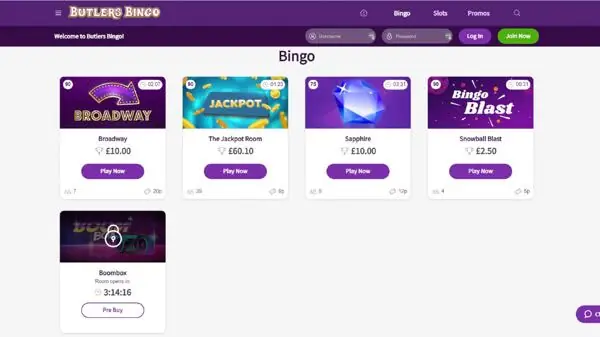
Butlers Bingo launched in June 2010 as Broadway Gaming's flagship brand, according to the operator's own company timeline checked in May 2026. Players comparing older UK bingo brands may also find a Cashmo Casino review useful as a separate benchmark. It is one of the most direct Broadway alternatives because it sits under the same Broadway Gaming Limited UKGC account number 39075 and appears as an active trading name on the UKGC public register. For non-Broadway comparison research, MrQ sister sites show how another UKGC bingo-led group is structured. Butlers Bingo sister sites therefore means same-operator brands such as Glossy Bingo, Dotty Bingo, Rosy Bingo, Bingo Diamond, and Casino of Dreams, not a loose affiliate grouping.
Casino Guru's live Butlers Bingo review, checked May 2026, gives it a 7.8/10 Safety Index with an Above average verbal tier. The same page reports two direct complaints and 117 black points from related casinos, so the risk frame is not spotless. It is still a stronger sibling than many smaller bingo skins because the UKGC licence trail is clean, the brand has been operating for more than a decade, and Broadway's register entry shows no regulatory actions on the account page checked for this guide. For non-Broadway comparison research, MrQ sister sites show how another UKGC bingo-led group is structured.
The bonus value is best judged through wagering, not headline size. Broadway help pages across the network state 3x wagering on bingo bonus funds and 35x wagering on casino bonus or free-spin winnings. Under UKGC LCCP Social Responsibility Code 5.1.1, mixed-product offers and high wagering requirements have tightened from January 2026, so current on-site terms should be read before claiming. Butlers is a sound Glossy Bingo sister site if you want the oldest Broadway bingo room rather than a larger slots catalogue.
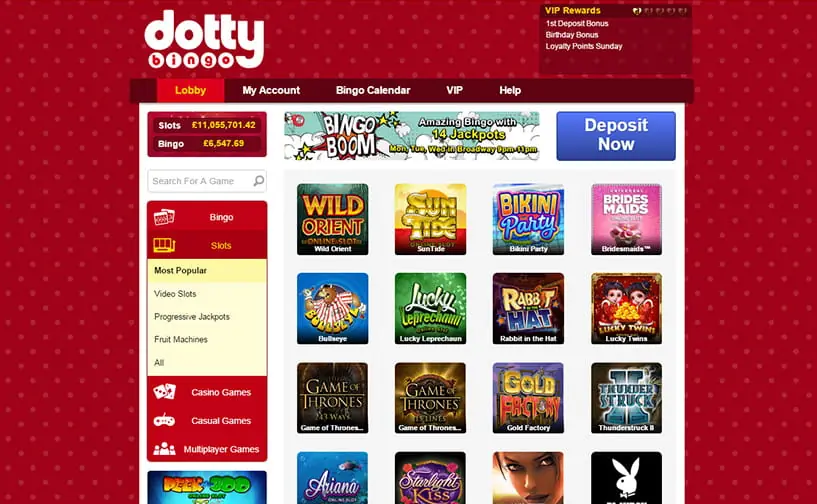
Dotty Bingo is the most useful pick for players comparing sites like Glossy Bingo from a room-variety angle. Broadway says it acquired Dotty Bingo in July 2014, and the UKGC public register lists dotty bingo as an active trading name under Broadway Gaming Limited account number 39075. Dotty Bingo sister sites therefore include Glossy Bingo under the same licence trail, with Butlers Bingo, Rosy Bingo, Bingo Diamond, and Casino of Dreams in the same active trading-name cluster.
Dotty's public site checked in May 2026 promotes 12 bingo rooms, 90-ball, 75-ball, 80-ball, and 30-ball bingo, plus hundreds of slot games. It also states a £10 minimum deposit point for the welcome offer, a bingo bonus of up to £100, 100 free spins, 3x wagering on bingo bonus funds, and 35x wagering on free-spin winnings. Those numbers make Dotty the easiest sibling to analyse because the public page itemises more detail than several older network pages.
Casino Guru's live Dotty Bingo review, checked May 2026, lists a 7.9/10 Safety Index with an Above average tier, no direct complaints in its database, and 117 black points from related casinos. It also reports PayPal availability and no live dealer casino games. That profile fits the product: Dotty is not a premium casino lobby, but it is a practical bingo site for players who care about room choice, low ticket prices, and a lighter community tone.
Dotty is also the best Glossy Bingo sister site for players who want the clearest bonus maths. A £10 deposit can unlock a £60 bingo bonus under the 600% structure shown on Dotty's public page, while a larger qualifying deposit reaches the £100 cap. With 3x wagering, a £60 bingo bonus requires £180 in bingo stakes before conversion. That is easier to understand than a slots-heavy welcome package, although the free-spin winnings at 35x are much tougher.
The main drawback is the same one found across Broadway Gaming Limited casinos: the bingo offer is better than the casino-side offer. If your aim is roulette, blackjack, or live dealer tables, Dotty will feel narrower than UKGC casino-led alternatives such as 888 Casino or Sky Vegas. As a Glossy Bingo sister site, though, it is the clearest upgrade for bingo-room variety.
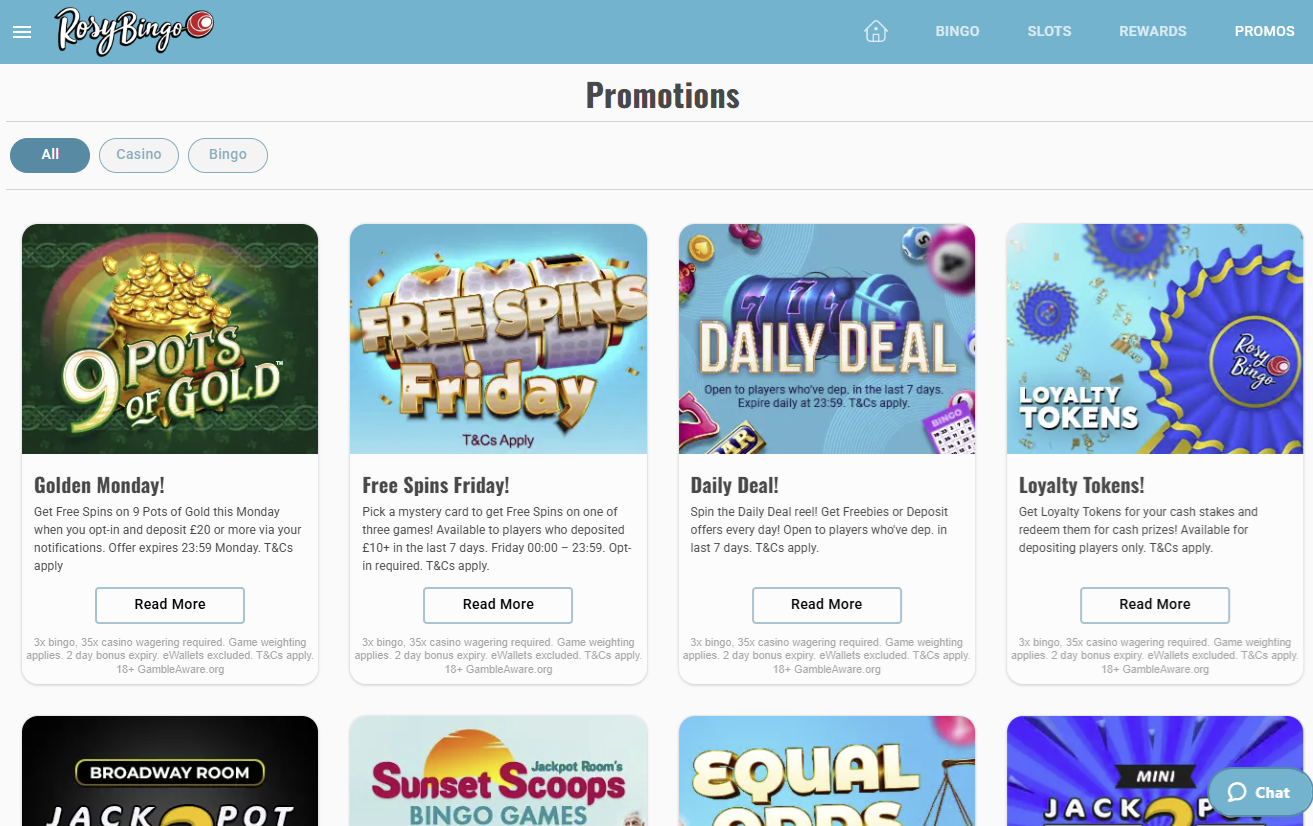
Rosy Bingo is the softer community brand among these Broadway choices. Broadway's timeline says Rosy was acquired in January 2014, and the UKGC register lists rosy bingo as an active Broadway Gaming Limited trading name under account number 39075. Rosy Bingo sister sites include the same Broadway bingo set, but Rosy's presentation is more floral and chat-led than Glossy's brighter magazine-style lobby.
The public help-centre page for Rosy Bingo checked in May 2026 states the core wagering mechanics clearly: bingo bonus wagering is 3x the credited bonus, while casino bonus wagering is 35x. The help article gives the example that a £10 bingo bonus creates a £30 wagering target, while a £10 casino bonus creates a £350 target. That difference is central to judging Glossy Bingo alternatives inside the same group, because the bingo side is much more forgiving than the slots side.
Trustpilot sentiment for Rosy Bingo, checked May 2026 through the live Trustpilot page, shows a 4.1/5 score from about 1,120 reviews. The recurring positive theme is staff support, while criticism centres on payout pace, bonus friction, game results, and the look of the bingo lobby. A separate Bingo Hollywood review helps compare another bingo-led brand without treating it as a Broadway sibling.
Casino Guru's indexed Rosy Bingo review shows an Above average Safety Index around 7.8/10 in live search results checked May 2026, with the same Broadway ownership context. I treat that as directionally consistent with the Broadway cluster rather than a reason to call Rosy materially safer than Glossy. The meaningful distinction is product feel: Rosy suits players who want chat, bingo rooms, and a softer brand tone.
Rosy is not the best Glossy Bingo sister site for casino-first play, and it is not the right pick if you want a large live-casino catalogue. It is more useful if you want a different bingo community under the same licence, with the same UKGC account number and broadly similar payment and support arrangements.
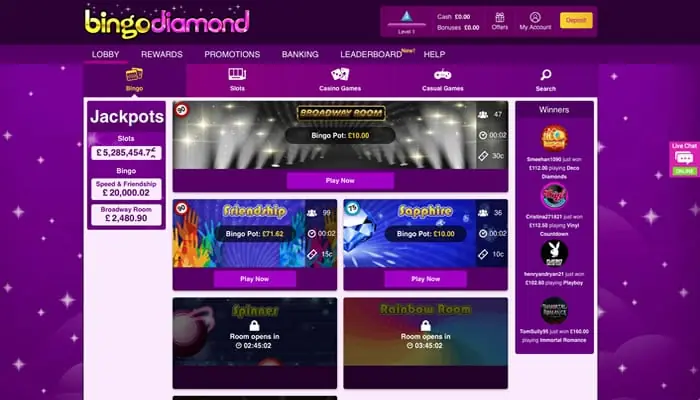
Bingo Diamond is another genuine member of the Glossy Bingo casino sister casinos set because the UKGC register lists bingodiamond.com as an active trading name under Broadway Gaming Limited account number 39075. Broadway's company timeline says Bingo Diamond was acquired in August 2015. Bingo Diamond sister sites include Glossy Bingo, Butlers Bingo, Dotty Bingo, Rosy Bingo, and the casino-led Broadway brands on the same register entry.
This profile is less heavily documented by public review sites than Dotty or Glossy, so the safest way to judge it is through the licence trail and Broadway's network rules. Bingo Diamond is a bingo-first brand, not a high-roller casino. It is a Glossy Bingo alternative only if your priority is changing the room theme while staying with the same operator.
The licence and operator evidence is clean. The UKGC page checked in May 2026 lists zero regulatory actions for Broadway Gaming Limited and shows nine active trading names. The trade-off is that Bingo Diamond has a thinner public reputation footprint than Glossy, Dotty, and Rosy.
For bonus maths, assume the same Broadway split until the live offer page says otherwise: bingo bonus funds are materially easier to clear than casino bonus funds. A player taking a £20 bingo bonus at 3x would need £60 of qualifying bingo stakes, while a £20 casino bonus at 35x would require £700. That is why the best use case is low-stakes bingo, not slots bonus chasing.
Bingo Diamond is one of the Broadway alternatives that makes sense for loyal network players rather than brand-new casino players. If you want a broader library, a larger number of live tables, or deeper app support, a different UKGC operator may be a better fit.
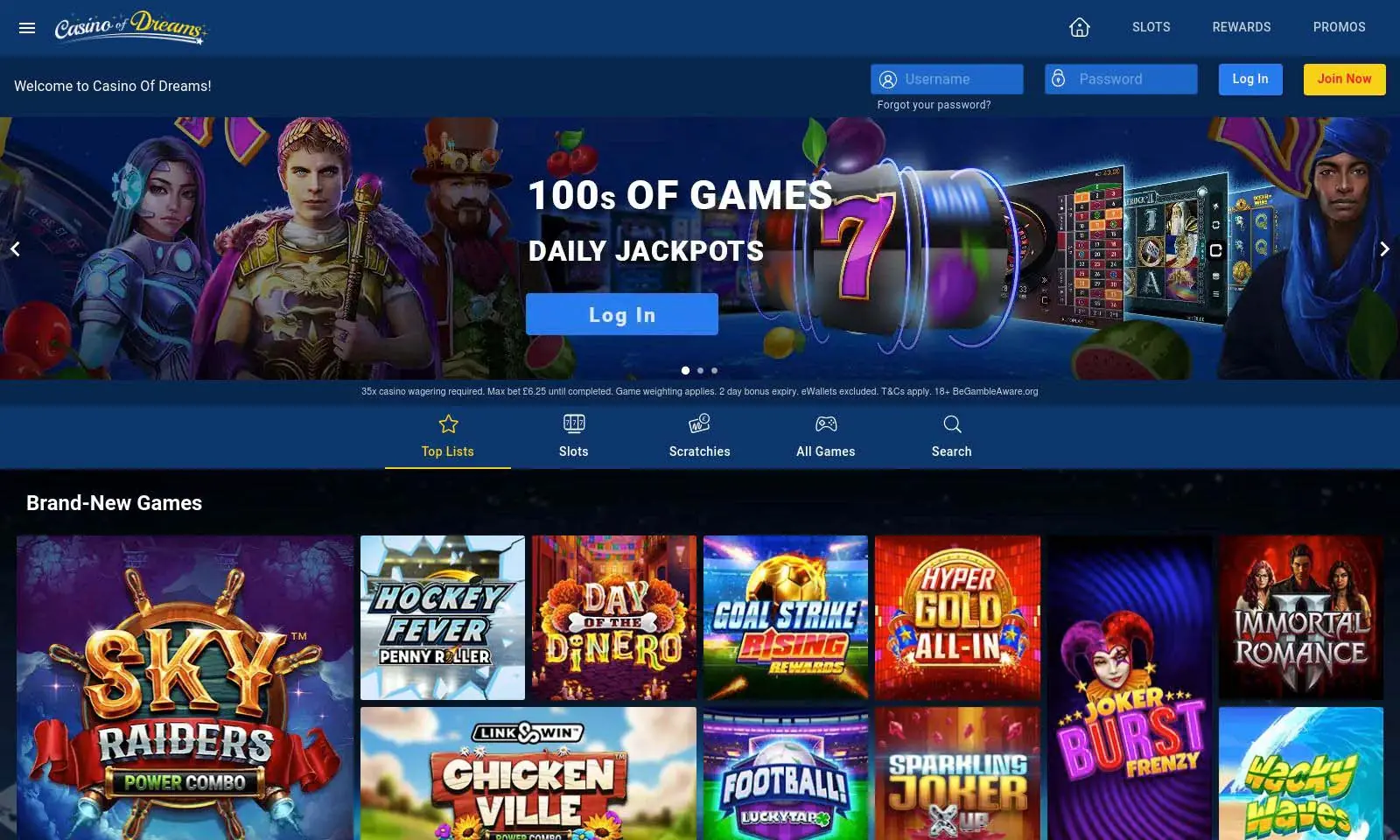
Casino of Dreams is the slots-led option in this Broadway set. The UKGC public register lists casino of dreams as an active trading name under Broadway Gaming Limited account number 39075, which makes it a genuine same-operator brand rather than an editorial alternative. Casino of Dreams sister sites include the Broadway bingo brands, but the product emphasis is different enough to justify a separate place in this guide.
The main difference is intent. Glossy Bingo, Dotty, Rosy, Butlers, and Bingo Diamond are bingo-led brands with casino games attached. Casino of Dreams reverses that emphasis and is better framed as a slots and casino lobby within the Broadway account. It will not suit players looking for the most social bingo rooms, but it does give Glossy players a way to test a casino-first Broadway skin without leaving the same regulatory trail.
Casino of Dreams is the riskiest of the five if your reason for switching is bonus value. Casino-led welcome packages often rely more heavily on slots bonus money, and the Broadway help-centre structure shows casino bonus wagering at 35x. A £20 slots bonus would therefore require £700 in eligible casino stakes before conversion. That is a very different proposition from a 3x bingo bonus.
For players who search for similar Broadway casino sites because they want more casino games, Casino of Dreams is the most relevant same-group answer. If the search moves from bingo to casino-only brands, a GoldenBet review is a separate research path rather than a same-network substitute. For players who search for sites like Glossy Bingo because they mainly want bingo, Dotty or Butlers are safer editorial picks.
We checked the UKGC public register, Broadway Gaming's own About page, live operator help pages, Casino Guru review pages, Trustpilot pages, and current public brand pages in May 2026. We assess representative network brands with small-account workflows, payment-method checks, support-route checks, bonus-term reading, and complaint-pattern analysis. We do not claim every room on every brand was played in this pass; some game and banking details come from operator pages, public help centres, and third-party complaint records.
This process keeps the article grounded in current evidence rather than inherited brand lists. It also explains why all five profiles are genuine Broadway Gaming Limited sister sites rather than unrelated UKGC alternatives.
The most important bonus distinction across sites like Glossy Bingo is the split between bingo bonus money and casino bonus money. Broadway help pages checked in May 2026 state 3x wagering for bingo bonus funds and 35x wagering for casino bonus funds, with free-spin winnings treated as casino bonus money. Our wagering requirements guide explains why bingo and casino bonus balances should be calculated separately. Dotty Bingo's public page gives the clearest example: a £10 qualifying deposit can create a bingo bonus of £60 under a 600% structure, while a bigger qualifying deposit can reach a £100 bingo bonus.
A practical example shows why the product type matters. If a player deposits £10 and receives a £60 bingo bonus, the total starting balance is £70, but the bonus clearance target is £180 because £60 multiplied by 3 equals £180. If the same player receives £5 of free-spin winnings as casino bonus money, the 35x target is £175. The bingo bonus is therefore the better value route for most low-stakes players.
The exact Glossy Bingo sister sites no deposit bonus answer is simple: we did not verify a current no-deposit welcome offer on the live Broadway pages checked for this article. Current promotions are deposit-led or account-targeted. Readers comparing bonus types can use the no deposit casinos UK page to separate true no-deposit offers from deposit-triggered bingo rewards. UKGC LCCP SR Code 5.1.1 also means bonus structures must be clearer and product-specific from January 2026, so mixed bingo-and-slots promotions should be read carefully before opting in.
Glossy Bingo sits in the middle of Broadway's bingo cluster. It is newer than Butlers Bingo, launched in 2013 according to Broadway's company timeline, and it has a stronger public review footprint than Bingo Diamond. A Glossy Bingo review should therefore judge it as an established bingo brand, not a new or experimental skin.
Dotty Bingo beats Glossy for public room detail because its page promotes 12 rooms, multiple bingo variants, low ticket prices, and a clearly described welcome package. Butlers Bingo beats Glossy for age and flagship status. Rosy Bingo offers a softer community feel. Bingo Diamond is the quieter same-licence option. Casino of Dreams is the only one that feels like a direct casino-first switch rather than another bingo-room choice.
There were no clearly verified new Broadway consumer bingo launches in 2026 during this check. Broadway's major recent public timeline items are platform and B2B developments, including Dragonfish activity and GamProtect, rather than a fresh UK bingo skin. That stability is useful for players comparing sites like Glossy Bingo because the network is known, regulated, and internally consistent. For a wider licence primer, the gambling licences guide explains how account numbers, trading names, and operators fit together.
| Payment Method | Min Deposit | Max Deposit | Withdrawal Time | Fees |
| Visa debit | £10 | Account-dependent | Operator target: within 1 business day processing | No standard operator fee found |
| Mastercard debit | £10 | Account-dependent | Operator target: within 1 business day processing | No standard operator fee found |
| PayPal | £10 | Account-dependent | Often faster after approval | No standard operator fee found |
| Skrill | £10 | Account-dependent | Often faster after approval | No standard operator fee found |
| Neteller | £10 | Account-dependent | Often faster after approval | No standard operator fee found |
| Apple Pay | £10 | Card-limit dependent | Withdrawal usually returns to eligible linked method | No standard operator fee found |
| Bank transfer | £10 | Account-dependent | Slower than e-wallets in normal use | No standard operator fee found |
Casino Guru's live payment panel checked May 2026 lists 10 payment methods, including Skrill, Neteller, Paysafecard, Mastercard, Visa, PayPal, Maestro, bank transfer, Apple Pay, and Revolut. For UK players, PayPal or a debit card is usually the most practical route. Our Visa casino payments guide is a useful cross-check for debit-card limits and withdrawal expectations. Paysafecard can be useful for deposit control, but it is not normally the best withdrawal route.
| Site | Top 5 Providers | Approx. Game Count | Live Dealer Available |
| Glossy Bingo | Pragmatic Play, Games Global, Eyecon, Blueprint, NetEnt | Hundreds | Limited casino-side access |
| Butlers Bingo | Pragmatic Play, Games Global, Eyecon, Blueprint, NetEnt | Hundreds | Limited casino-side access |
| Dotty Bingo | Pragmatic Play, Games Global, Eyecon, Blueprint, NetEnt | Hundreds | Casino Guru says no live dealer casino games |
| Rosy Bingo | Pragmatic Play, Games Global, Eyecon, Blueprint, NetEnt | Hundreds | Limited casino-side access |
| Bingo Diamond | Pragmatic Play, Games Global, Eyecon, Blueprint, NetEnt | Hundreds | Limited casino-side access |
| Casino of Dreams | Pragmatic Play, Games Global, Eyecon, Blueprint, NetEnt | Hundreds | More casino-led, but not a specialist live-casino brand |
Broadway moved its bingo product relationship to Pragmatic Play in 2020, and the current brand pages still present bingo as the core network strength. The slots library is broad enough for casual play, but these are not specialist live-casino lobbies. Players who mainly want slot variety can compare this network with our free spins casinos UK coverage before choosing a promotion. Players who prioritise Evolution live games, deep roulette variants, or baccarat tables will usually find stronger options away from the Broadway account, especially after comparing broader slots casinos by library depth.
| Site | Licence Body | UKGC Licence No. | Self-Exclusion Registered | RNG Testing |
| Glossy Bingo | UK Gambling Commission | UKGC account number 39075 | GamStop registered through UKGC remote gambling duties | Supplier and UKGC compliance framework |
| Butlers Bingo | UK Gambling Commission | UKGC account number 39075 | GamStop registered through UKGC remote gambling duties | Supplier and UKGC compliance framework |
| Dotty Bingo | UK Gambling Commission | UKGC account number 39075 | GamStop registered through UKGC remote gambling duties | Supplier and UKGC compliance framework |
| Rosy Bingo | UK Gambling Commission | UKGC account number 39075 | GamStop registered through UKGC remote gambling duties | Supplier and UKGC compliance framework |
| Bingo Diamond | UK Gambling Commission | UKGC account number 39075 | GamStop registered through UKGC remote gambling duties | Supplier and UKGC compliance framework |
| Casino of Dreams | UK Gambling Commission | UKGC account number 39075 | GamStop registered through UKGC remote gambling duties | Supplier and UKGC compliance framework |
The licence position is the strongest part of this network. The UKGC public register checked May 2026 shows Broadway Gaming Limited account number 39075, active trading names for Glossy Bingo, Butlers Bingo, Dotty Bingo, Rosy Bingo, Bingo Diamond, Casino of Dreams, Casino Fantastico, and Lucky247, plus zero regulatory actions on the account page. Players can use the operator complaint route first, then an approved ADR route if a UKGC complaint remains unresolved, and the Gambling Commission public guidance explains why register checks matter.
Casino Guru gives Glossy Bingo a 7.7/10 Safety Index with an Above average tier, checked directly on the live Casino Guru page in May 2026. It also reports two direct complaints and 24 related-casino complaints, producing 117 black points from related casinos. That supports a measured trust rating: acceptable under UK regulation, but not a flawless complaint profile.
The dominant complaint pattern is not licensing confusion; it is withdrawal and verification friction. Trustpilot's live Glossy Bingo page checked May 2026 shows about 743 reviews and a 4.3/5 TrustScore, with many positive comments praising support agents. The negative side is still important: recent one-star reviews mention delayed withdrawals, document requests after wins, promotional email confusion, and bonus-crediting issues.
This is consistent across the Broadway cluster. Rosy Bingo's Trustpilot page checked May 2026 shows about 1,120 reviews and a 4.1/5 score, with the same split between helpful live chat and complaints about payouts, game experience, and bonus terms. Complete identity and source-of-funds checks early, especially before making repeated deposits or claiming bonus funds. Players who need support can also use GamCare counselling resources before gambling becomes unaffordable.
No reliable Reddit pattern was found in May 2026 checks for Glossy itself. Reddit results were mostly generic bingo, UK industry, or unrelated casino-review discussions rather than repeated first-hand Glossy reports. AskGamblers and Casinomeister did not provide a stronger current network-wide pattern than Trustpilot and Casino Guru for this pass.
| Source | What Players Praise | What Players Criticise |
| No reliable Glossy-specific pattern found in May 2026 checks | Generic bingo and casino threads do not prove a network-specific issue | |
| Trustpilot | Helpful agents, quick live-chat replies, some fast withdrawals | Withdrawal delays, verification requests, bonus-crediting disputes |
| AskGamblers | No stronger current network pattern found than Casino Guru and Trustpilot | Complaint visibility was not strong enough to quantify fairly |
| Casino Guru | Above average Safety Index for Glossy at 7.7/10 | Two direct complaints, related-casino complaints, and 117 related black points |
For e-wallet context beyond this group, the PayPal casinos UK guide gives extra detail on deposits, withdrawals, and account checks.
The sentiment grid shows why the most useful Broadway brands are not automatically risk-free. Broadway's UKGC status is a meaningful protection, but player reviews still point to operational friction around KYC and withdrawals. The practical response is to verify early, keep bonus screenshots, and avoid stacking deposits before the first withdrawal is processed.
Dotty Bingo is the best within-network pick for most bingo players. It has the clearest public room detail, a visible welcome-bonus structure, low ticket-positioning, and a Casino Guru Safety Index of 7.9/10 with an Above average tier checked in May 2026. Among Broadway Gaming Limited casinos, it gives the best balance of transparency and bingo variety.
If you do not want to stay within Broadway, the best non-sister alternative depends on product preference. For bingo-first players, Mecca Games and Foxy Games are UKGC-regulated alternatives with stronger brand recognition outside this network. A Mecca Games review is the most direct comparison for players who want an established bingo name. For casino-first players, 888 Casino and Sky Vegas offer broader casino libraries and app ecosystems than Glossy. That second route is more about brand ecosystem than room format, so banking, app quality, and support hours matter as much as bonus value. Bingo-first readers can also compare Foxy Games sister site alternatives before moving away from Broadway. That makes them better Glossy Bingo alternatives for players who have outgrown bingo-led lobbies.
Glossy Bingo similar sites are worth considering if you want another UKGC-regulated bingo brand under a familiar operator. Product fit matters here because bingo rooms, casino lobbies, and live-table depth solve different player needs. Players choosing by game depth rather than operator relationship should compare broader slots casinos before assuming a bingo-led account is the right fit. The genuine Glossy Bingo sister sites are not random lookalikes: they sit under Broadway Gaming Limited, UKGC account number 39075, and share a recognisable bingo-first structure. Dotty Bingo is the strongest overall sibling, Butlers Bingo is the heritage pick, and Casino of Dreams is the casino-led switch.
The caveat is that Broadway's review profile is mixed. Support often receives praise, but withdrawals, verification, and bonus-crediting complaints appear often enough to shape the verdict. Use bingo bonuses rather than casino bonuses if the terms suit your budget, avoid chasing 35x wagering, and complete your KYC verification immediately after registration. If you want a completely fresh brand rather than a sibling, start with our new casinos UK shortlist.

Dermot Heathcote
Senior Casino Analyst
Dermot covers UK-licensed online casinos for WagerPals, focusing on UKGC compliance, payment safety, and bonus terms. He spends most of his time reading licence registers, withdrawal terms, and player-complaint forums so readers don't have to.