
PlayOJO
5.0Welcome Bonus
50 Free Spins, no wager
- No wagering on bonuses
- OJOplus cashback
- Hot or Cold RTP tool
SlotMonster is owned by Igloo Ventures SRL in Casino Guru data and linked by sister-site sources to the wider EOD Code SRL network. Its 35+ reported sister sites share crypto-first infrastructure, big game libraries, and offshore licensing. The network’s defining issue is scale versus weak complaint response.
This operator does not hold a UK licence, so it is not permitted to offer gambling to consumers in Great Britain, and UK player protections such as GAMSTOP, ADR dispute resolution and licensed-operator safeguards do not apply. This page is published for information only and is not a recommendation to play.
PlayOJO
5.0Welcome Bonus
50 Free Spins, no wager
Betway
5.0Welcome Bonus
100% up to £50, 10x wager
BetMGM
4.9Welcome Bonus
200 spins, no wager
Casumo
4.9Welcome Bonus
50% up to £100, 10x

888 Casino
4.9Welcome Bonus
100 spins on £10 deposit

BetVictor
4.8Welcome Bonus
£20 + 50 spins on £10
Rizk Casino
4.8Welcome Bonus
100% £100 + 50 free spins

Sky Vegas
4.8Welcome Bonus
270 free spins, no wager
Unibet
4.7Welcome Bonus
200 spins on £10 stake
32Red
4.7Welcome Bonus
100 spins worth 20p each

Mr Green
4.7Welcome Bonus
200 spins on £10 deposit

Paddy Power
4.6Welcome Bonus
160 free spins, no wager
Jackpotjoy
4.6Welcome Bonus
50 spins or £30 bingo
Coral Casino
4.6Welcome Bonus
100 free spins, no wager

Foxy Games
4.5Welcome Bonus
100 free spins, no wager

Virgin Games
4.5Welcome Bonus
100 spins or £50 bingo
| Detail | Info |
| Full Legal Name | Igloo Ventures SRL in Casino Guru data; EOD Code SRL in sister-site data |
| Parent Company | EOD Code SRL / Igloo Ventures SRL network |
| Primary Licence(s) | Anjouan Gaming, Comoros; sister-site data also references Costa Rica registration |
| Active Casino Brands | 35+ reported sister sites |
| Casino Guru Safety Index | 2.8/10 |
| Trustpilot Rating | 2.6/5 from 402 reviews, checked April 2026 |
SlotMonster’s operator mapping is not perfectly clean. Casino Guru lists SlotMonster as owned by Igloo Ventures SRL and licensed by Anjouan Gaming in Comoros, while sister-site databases describe SlotMonster as operated by EOD Code SRL from Costa Rica and connected to more than 35 sister sites. The safest editorial wording is that SlotMonster sits inside an EOD Code SRL / Igloo Ventures SRL-linked offshore casino network rather than treating one public label as the whole corporate story.
The main caution is not the game library; it is player protection. Casino Guru gives SlotMonster a Very Low Safety Index of 2.8/10, says its terms are unfair, lists 15 complaints and 5,737 black points, and flags a No Reaction Policy for complaints. That means the casino has not cooperated with Casino Guru’s mediation attempts, so unresolved disputes weigh heavily against it.
In market terms, SlotMonster is closer to crypto-heavy offshore networks than to large regulated UK ecosystems such as Bet365 sister sites, Sky Vegas, or Coral related casinos. Useful comparisons are SkyHills, WSM Casino, Instant Casino, Incognito Casino, Crashino, and external alternatives such as Zizobet, Cosmobet, and Donbet.
A Bonus Boss review is a cleaner benchmark for judging whether headline bonus value turns into realistic wagering value.
| Brand | Our Rating | Welcome Bonus | Payout Speed (E-Wallets) | Top Feature |
| SkyHills | 3.6/5 | 200% up to €1,500, 35x wagering reported | 24–48 hours first e-wallet withdrawal; faster after verification | Largest reported EOD Code SRL game library |
| WSM Casino | 3.4/5 | 200% up to $25,000 + 50 free spins reported | Crypto often minutes to one hour; fiat 24–72 hours | Highest headline bonus ceiling in the network |
| Instant Casino | 3.3/5 | 200% up to €7,500, 35x wagering reported | Crypto payouts usually minutes on-chain | Fastest onboarding and crypto-first design |
| Incognito Casino | 3.1/5 | 100% up to €500 + surprise spins, 35x wagering reported | 24–48 hours fiat; instant crypto | Privacy-forward registration experience |
| Zizobet | 3.5/5 | 550% up to €3,800 + 50 free spins reported in sister-site data | Crypto/e-wallet timing depends on KYC | Best external alternative from a different operator cluster |
Bonuses are subject to change — always verify the latest terms directly on each operator’s website before depositing.
The genuine SlotMonster sister sites repeatedly listed in EOD Code SRL network sources include SkyHills, Instant Casino, Spinsino, Incognito Casino, FoxyGold, Lucky Pays, TG.Casino, Mega Dice, Lucky Block, TheHighRoller, Golden Panda, Crashino, WSM Casino, Kripty, CoinKings, Bitubet, Betiro, and Reel Crypto. This article profiles four EOD Code SRL / Igloo-linked sites plus one external alternative to stay inside the five-site cap; a Dr Slot review would be a separate slots-only benchmark.
A Zizobet review is useful here because Zizobet is the external alternative profiled outside the EOD Code SRL network.
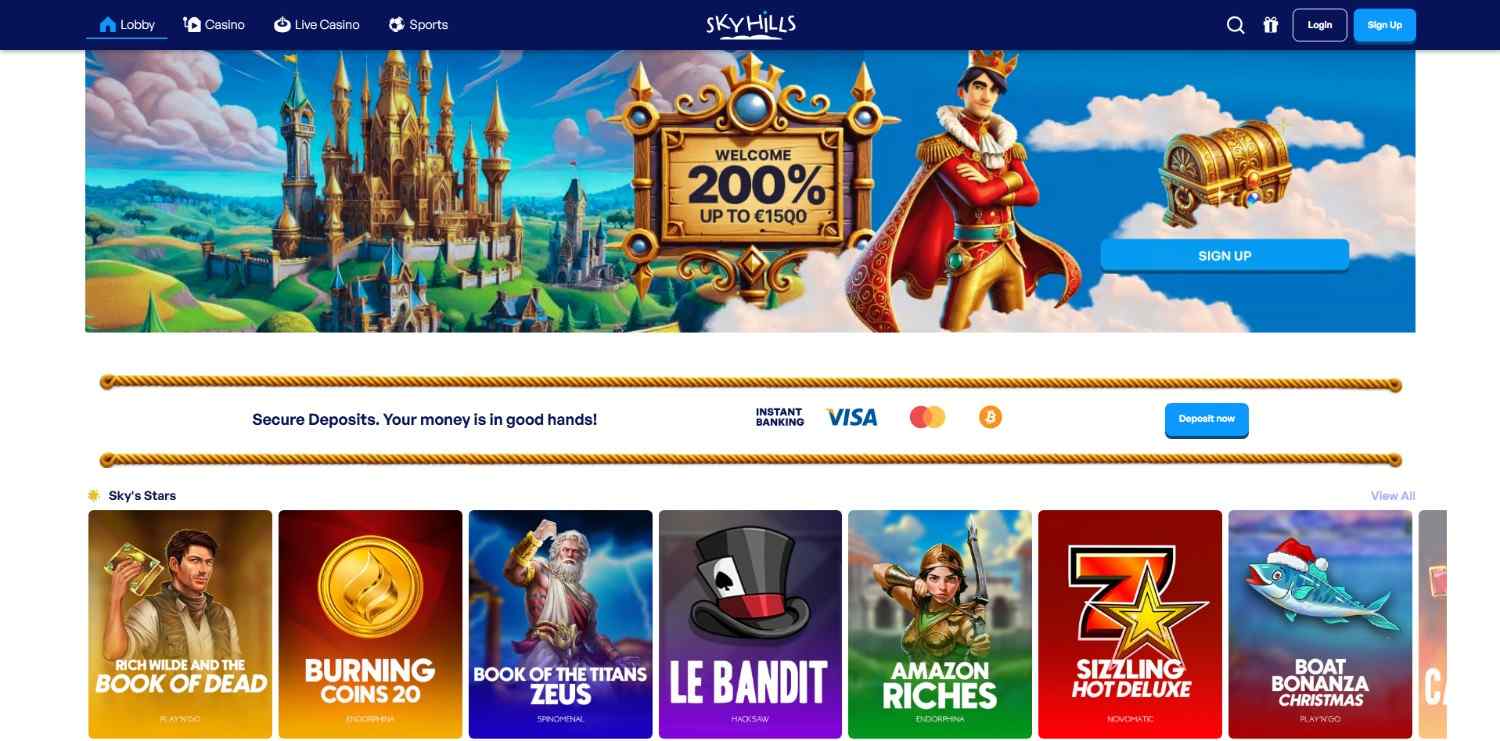
SkyHills is the strongest SlotMonster sister site if the main decision factor is game depth. Sister-site testing describes SkyHills as the most expansive EOD Code SRL product by game count, launched in November 2024 with more than 7,000 titles. That comfortably exceeds SlotMonster’s approximate 6,000-game catalogue reported in the same sister-site guide and makes SkyHills the best library-first choice in this network.
The identity is cleaner and more premium than SlotMonster, a useful distinction when comparing it with a Monster Casino review. SlotMonster uses a playful monster mascot and broader cashier appeal, while SkyHills presents itself as a polished all-rounder with a sky-and-horizon visual theme. Players who find SlotMonster’s branding noisy may prefer SkyHills because it looks less gimmick-led and more like a general offshore casino-and-sportsbook account.
Sister-site data describes SkyHills as operating with both Anjouan and Curaçao licensing, while SlotMonster’s Casino Guru profile points to Anjouan Gaming under Igloo Ventures SRL. Because licensing labels vary across the EOD Code ecosystem, players should check the live footer before depositing. What matters for this guide is that SkyHills is consistently presented as part of the same EOD Code SRL network, not as an unrelated competitor.
The provider footprint is broad. Pragmatic Play, Evolution Gaming, Nolimit City, Hacksaw Gaming, NetEnt, Red Tiger, Push Gaming, and Thunderkick are all named in the SkyHills section of the sister-site guide. The welcome offer is reported as 200% up to €1,500 with a €20 minimum deposit and 35x wagering on the bonus amount. SkyHills also reportedly runs reloads, cashback, and invitation-style VIP treatment.
Banking is broader than at Incognito or Instant Casino, with Visa, Mastercard, bank transfer, Sofort, and cryptocurrency options. E-wallets are reported at 24–48 hours on first withdrawal pending KYC, then under 24 hours on later verified withdrawals. SkyHills is the best SlotMonster sister site for players who want the same network feel but with a larger game library and less cartoonish presentation.
For crypto-led library comparisons, a Kings Chip Casino review is a useful outside benchmark.
| Metric | Details |
| Site Identity | Premium EOD Code SRL sister site with sky-and-horizon branding |
| What Sets It Apart | Largest reported game library in the SlotMonster network |
| Game Selection | 7,000+ reported titles with Pragmatic, Evolution, NetEnt, Hacksaw, Nolimit City |
| Best Bonus Feature | 200% up to €1,500 with 35x wagering reported |
| Honest Drawback | Licensing labels should be checked directly before deposit |
| Ideal Player | Players who want the biggest SlotMonster sister site by game variety |
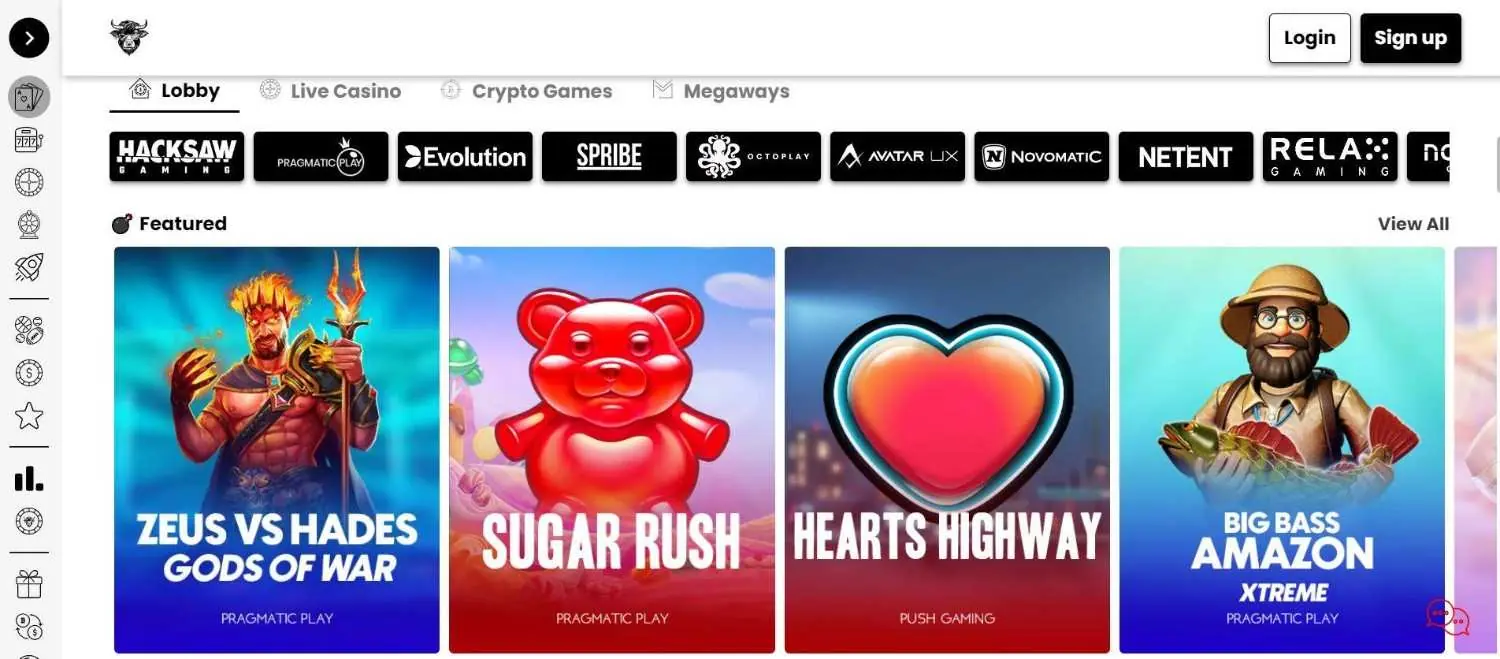
WSM Casino is the most bonus-heavy site like SlotMonster in the EOD Code SRL network. Its Wall Street Memes identity targets players who already understand crypto culture, meme-coin communities, Telegram promotions, and casino gaming as overlapping entertainment categories. That makes it very different from SlotMonster’s playful monster branding, even though both sit in the same broader operator ecosystem.
The headline offer is the reason WSM Casino belongs in this guide. Sister-site data reports 200% up to $25,000 plus 50 free spins, which dwarfs SlotMonster’s standard 100% up to €500 structure. The catch is obvious: to claim the full amount, the player needs a very large deposit. Entry-level users depositing around €20 get a similar network experience to SlotMonster, just with a higher maximum ceiling available.
WSM Casino’s game library is reported at more than 5,000 titles. The provider mix overlaps strongly with SlotMonster, with Pragmatic Play, Evolution Gaming, NetEnt, Nolimit City, and Hacksaw Gaming all named in the network write-up. The sportsbook covers major European and global markets, plus esports, which fits the younger crypto audience the casino appears to target.
A ZetBet review is a more relevant sportsbook-casino comparison than a pure slot lobby when assessing WSM Casino’s mixed-product identity.
Payments follow the EOD Code SRL pattern. Bitcoin, Ethereum, Litecoin, Dogecoin, Tether, and other cryptocurrencies sit alongside Visa and Mastercard for fiat deposits. Sister-site data says crypto withdrawals typically take minutes to one hour on-chain, while fiat methods take 24–72 hours pending verification. That makes WSM Casino more attractive to high-deposit crypto users than to casual card players.
For jackpot-style bonus contrast, a Jackpot Raider review is a cleaner comparison than treating WSM’s headline ceiling as automatically superior.
The unique feature is community positioning. WSM Casino uses Telegram channel promotions and social media giveaways more aggressively than SlotMonster. That can be appealing if the player already follows crypto or meme-token communities, but it may feel less serious to players looking for a calmer casino account. WSM Casino is the best SlotMonster sister site for bonus ceiling, not necessarily for trust clarity.
| Metric | Details |
| Site Identity | Wall Street Memes-themed crypto casino with social-channel positioning |
| What Sets It Apart | Highest reported headline bonus cap in the EOD Code SRL network |
| Game Selection | 5,000+ reported titles with strong provider overlap against SlotMonster |
| Best Bonus Feature | 200% up to $25,000 + 50 free spins reported |
| Honest Drawback | Full bonus value requires very large deposits |
| Ideal Player | High-deposit crypto players who want maximum bonus ceiling |
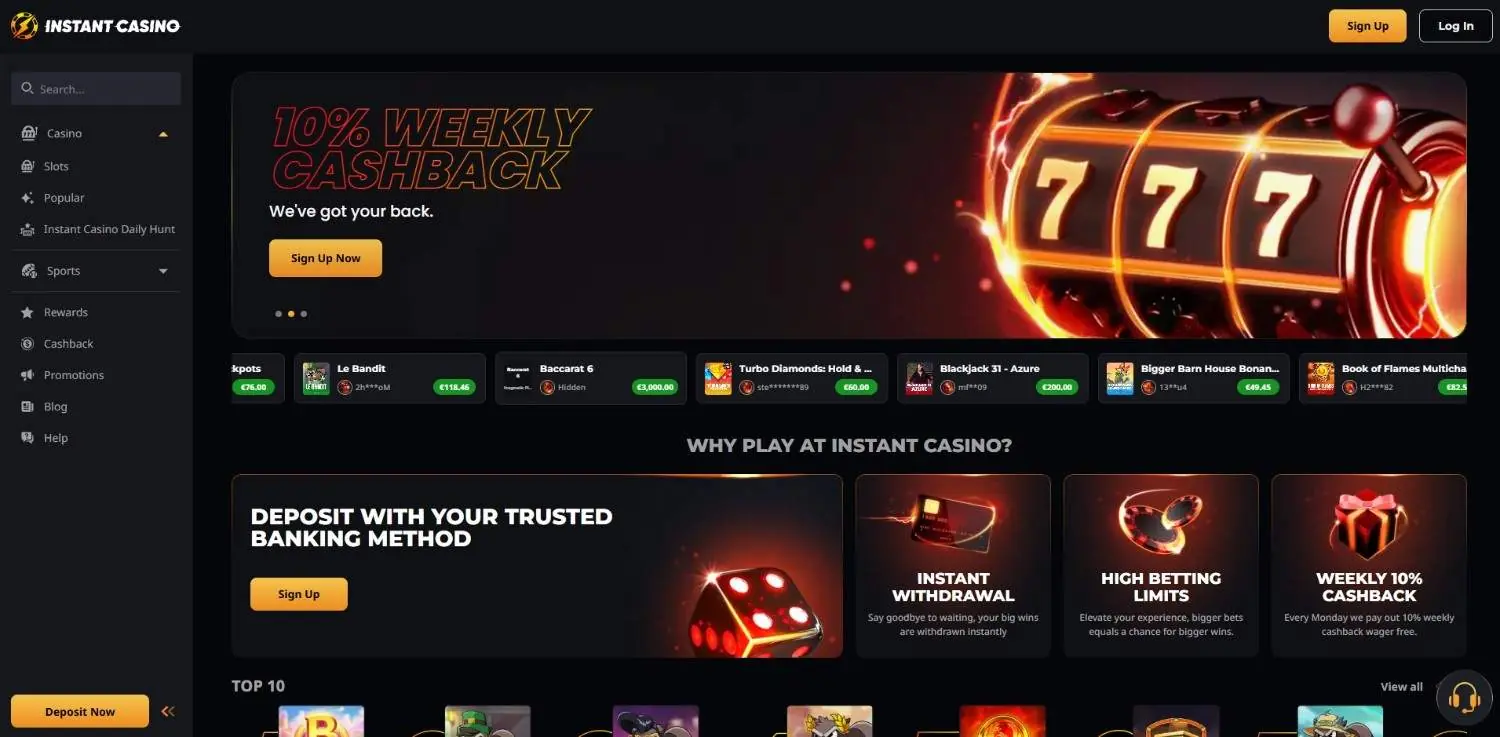
Instant Casino is the sharpest fast-access alternative to SlotMonster within the same network. Sister-site data says it launched in 2024 and focuses on speed, minimal friction, and crypto-first account creation. The name is literal: registration is marketed as taking under two minutes, deposits clear rapidly through cryptocurrency, and the interface is built for players who value quick onboarding over a theatrical casino theme.
The design is minimalist compared with SlotMonster. SlotMonster has a more conventional casino feel, with broad payment methods and mascot-led branding. Instant Casino strips that down into a faster, more crypto-native experience. That makes it a better fit for players who already hold Bitcoin, Ethereum, Litecoin, Tether, Tron, or Binance Coin and do not want to rely on card or e-wallet routes.
A FlashDash Casino review is the closest comparison point for speed-led casino positioning.
The welcome bonus is much larger than SlotMonster’s. Sister-site data reports 200% up to €7,500, with a €20 minimum deposit and 35x wagering on the bonus amount. The game library is reported at more than 3,000 titles at launch, with Pragmatic Play, Evolution Gaming, Nolimit City, and Hacksaw Gaming as anchor providers. The live casino section includes Evolution content such as Crazy Time and Lightning Roulette.
Banking is where Instant Casino differs most. Crypto payouts are described as minutes on-chain under standard network conditions, while fiat options are limited and region-dependent. That makes Instant Casino one of the strongest SlotMonster sister sites for players prioritising withdrawal speed, but weaker for players who prefer Visa, Mastercard, Apple Pay, Google Pay, or hybrid cashier options.
For a more conventional casino-name benchmark, a NineWin Casino review offers a cleaner contrast than Instant Casino’s crypto-first model.
Support runs through live chat and email, and responsible-gambling tools include deposit limits and self-exclusion inside the account. The limitation is that the toolset is narrower than what players may expect from stricter jurisdictions. Instant Casino is best for crypto users who want fast access, not for players who want the broadest cashier or the most traditional account controls.
| Metric | Details |
| Site Identity | Minimalist, crypto-first sister site focused on speed |
| What Sets It Apart | Fast registration and crypto-first deposits/withdrawals |
| Game Selection | 3,000+ reported games with Evolution, Pragmatic, Nolimit City, Hacksaw |
| Best Bonus Feature | 200% up to €7,500 with 35x wagering reported |
| Honest Drawback | Limited fiat options compared with SlotMonster |
| Ideal Player | Crypto holders who want fast onboarding and payouts |
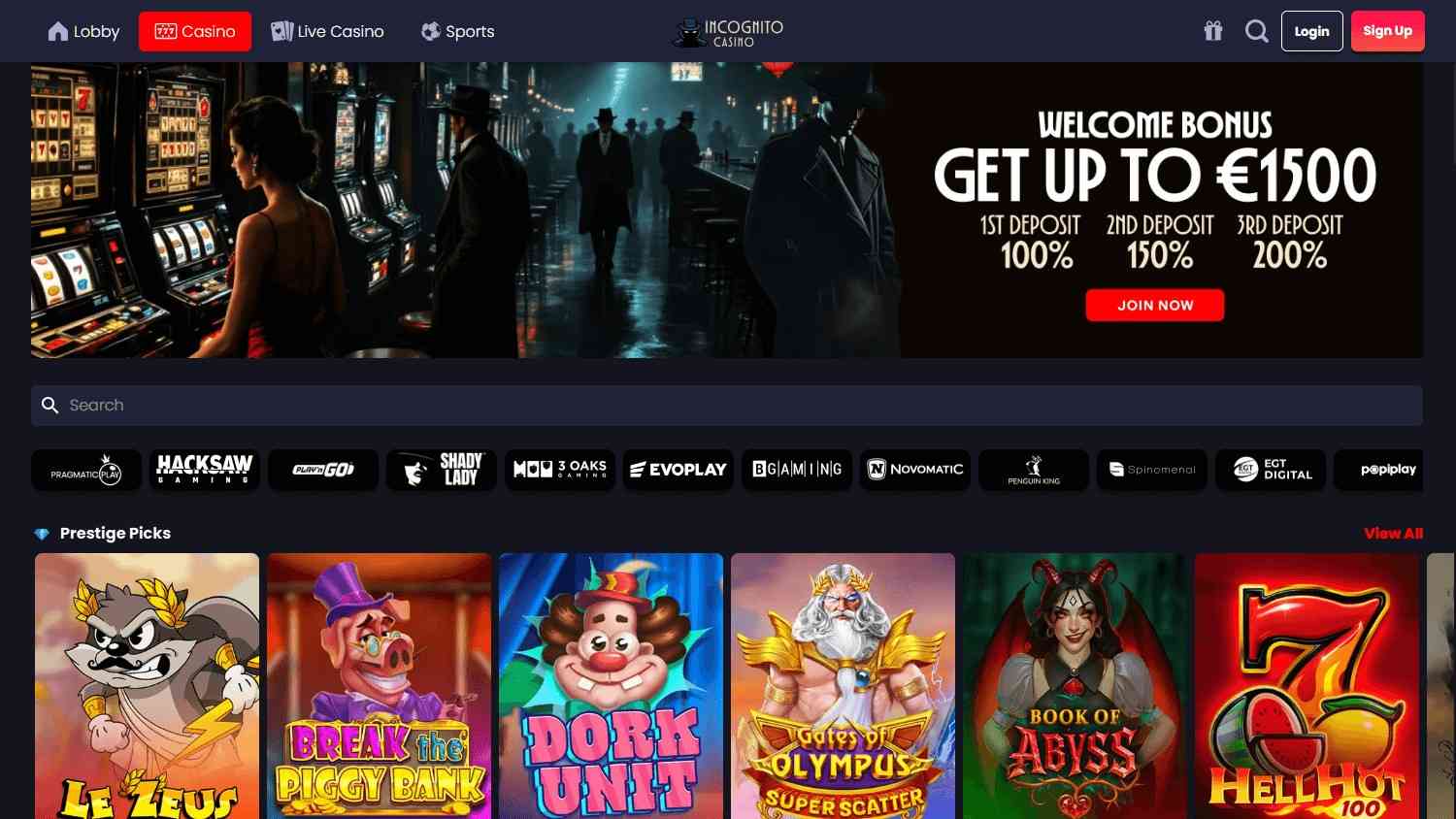
Incognito Casino is the most privacy-forward SlotMonster sister site in the EOD Code SRL group. Sister-site data says it joined the network in May 2024, shortly after SlotMonster’s debut. Its main selling point is reduced friction at registration: the account setup is described as requiring only an email address and password, although KYC can still become mandatory at withdrawal.
The design is clean and functional. Unlike SlotMonster’s monster mascot and more playful identity, Incognito Casino uses a dark, minimalist interface that feels closer to an anonymous crypto product than a traditional casino. It targets players who want a fast start and less visual noise rather than a theme-led experience.
A HeySpin Casino review is a stronger fit for clean-interface comparison than a bonus-only benchmark.
The library is reported at more than 3,000 titles across slots, live casino, table games, and sportsbook categories. The same core providers appear across the network: Pragmatic Play, Evolution Gaming, NetEnt, Nolimit City, and Hacksaw Gaming are all named in the Incognito section of the sister-site guide. That means Incognito’s game offer is smaller than SlotMonster’s but still broad enough for regular slot and live dealer players.
The bonus mirrors SlotMonster’s core pattern. Sister-site data reports a 100% deposit match up to €500, a €20 minimum deposit, 35x wagering on the bonus amount, and surprise free spins on qualifying deposits. The seven-day wagering window is standard for the network and should be checked carefully before opting in.
Payment options are narrower than SlotMonster’s. Incognito relies mainly on Visa, Mastercard, and a limited cryptocurrency selection, with no MiFinity, Apple Pay, or Google Pay support in the sister-site testing. That is the major practical drawback. Incognito is the best SlotMonster sister site for minimal registration, but not for cashier flexibility.
| Metric | Details |
| Site Identity | Dark, privacy-forward sister site with minimalist interface |
| What Sets It Apart | Reduced-friction registration and surprise-spin mechanic |
| Game Selection | 3,000+ reported titles with the core EOD provider suite |
| Best Bonus Feature | 100% up to €500 + surprise free spins reported |
| Honest Drawback | Narrower payment selection than SlotMonster |
| Ideal Player | Players who want a low-friction SlotMonster sister site |
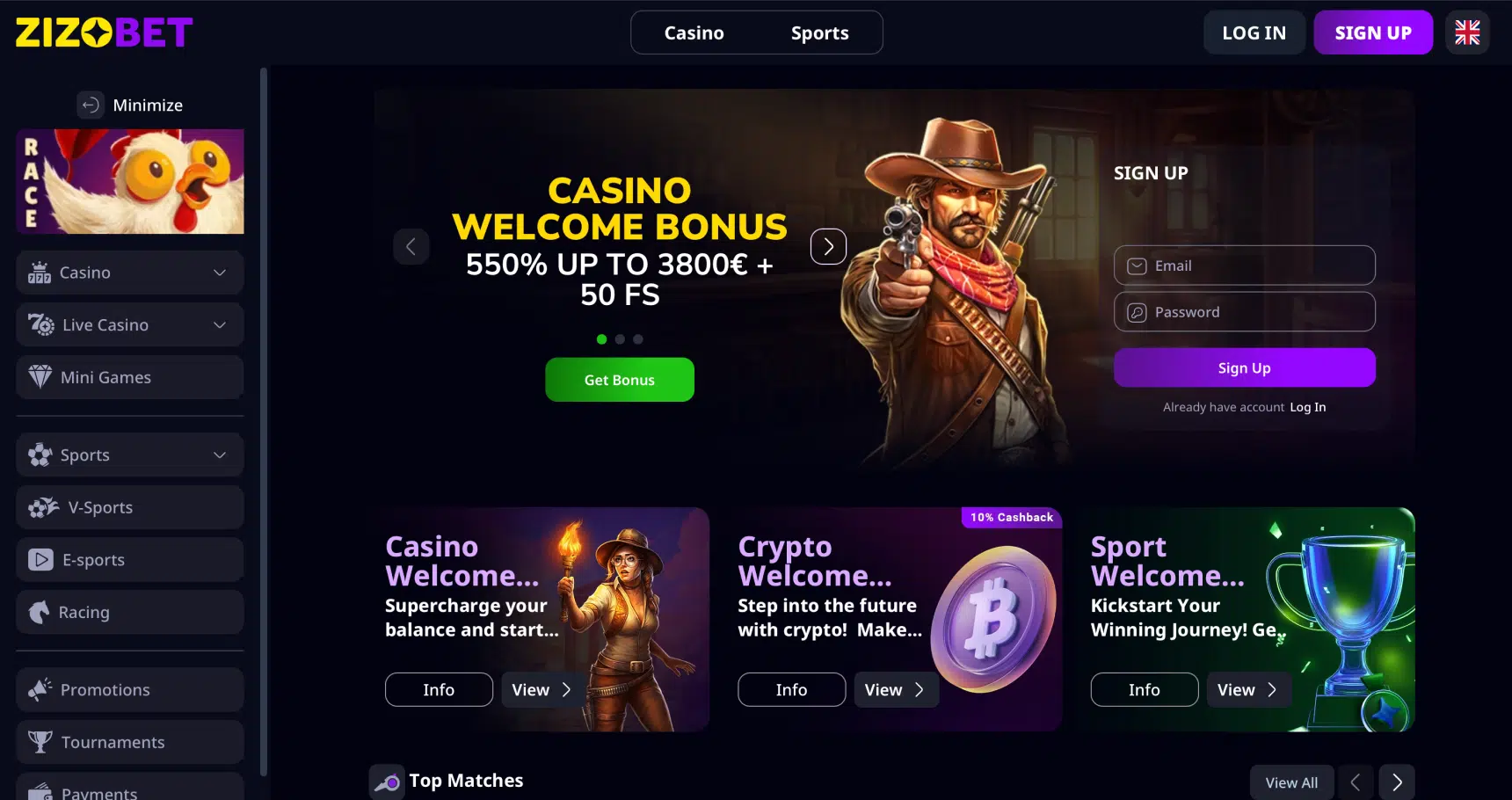
Zizobet is not a SlotMonster sister site. It is included as the external alternative because it targets a similar offshore casino audience while sitting under a different operator cluster. Sister-site data describes Zizobet as operated by Santeda International B.V. and licensed by the Curaçao Gaming Control Board under OGL/2024/1798/1048, separate from the EOD Code SRL / Igloo Ventures SRL setup.
The appeal is bonus strength. Sister-site data reports a 550% up to €3,800 plus 50 free spins headline offer, which beats SlotMonster’s standard 100% up to €500 and even competes with larger EOD Code SRL sister-site offers. For players looking at SlotMonster alternatives from a promotional-value angle, Zizobet is one of the more relevant external comparisons.
The operational philosophy is different. EOD Code SRL sites tend to push crypto infrastructure, large game counts, and fast registration. Santeda-linked casinos often lean into sustained promotional value, cashback-style offers, and broader account familiarity. That does not automatically make Zizobet safer; it simply gives players a different operator cluster to compare.
Zizobet is best used as a benchmark rather than a clean upgrade. It helps answer whether a player wants another EOD Code SRL casino or a separate Curaçao-linked alternative with a bigger bonus headline. Players should still check licence details, withdrawal terms, KYC rules, and bonus restrictions before depositing.
The reason Zizobet fits this guide is editorial contrast. SlotMonster has better cashier breadth than some direct sister sites, but a weak Casino Guru Safety Index and No Reaction Policy. Zizobet offers a different network and more aggressive welcome value, but it does not remove the need for offshore-casino caution.
| Metric | Details |
| Site Identity | External Curaçao-linked offshore casino, not an EOD sister site |
| What Sets It Apart | Larger reported welcome offer than SlotMonster |
| Game Selection | Broad casino and promotional ecosystem in a separate operator cluster |
| Best Bonus Feature | 550% up to €3,800 + 50 free spins reported |
| Honest Drawback | Different network, but still requires offshore due diligence |
| Ideal Player | Players wanting a SlotMonster alternative outside EOD Code SRL |
SlotMonster sits in the middle of the EOD Code SRL / Igloo Ventures-linked network. It is not the largest, fastest, or highest-bonus site, but it is one of the most balanced. Sister-site data says SkyHills beats SlotMonster on game count with 7,000+ titles, WSM Casino beats it on bonus ceiling with a reported $25,000 cap, and Instant Casino beats it on crypto-first speed.
SlotMonster’s advantage is cashier balance. Casino Guru lists 27 deposit methods, including cards, bank transfer, Apple Pay, Google Pay, MiFinity, Interac, Klarna, Cashlib, and many cryptocurrencies. That is broader than Incognito and Instant Casino, which lean more narrowly toward cards or crypto.
On bonuses, SlotMonster is less aggressive than several sisters. Sister-site data lists its welcome bonus as 100% up to €500 with 35x wagering on the bonus amount, while SkyHills, WSM Casino, and Instant Casino all show higher ceilings. SlotMonster’s Monster Surprise Spins add recurring excitement, but they do not offset the weak safety profile.
The decisive weakness is reputation. Casino Guru gives SlotMonster a 2.8/10 Safety Index, flags unfair terms, lists 15 complaints, and applies a No Reaction Policy. That means even if SlotMonster is more convenient than some siblings, it is not the strongest trust pick in the network.
For broader slot-focused comparison, a Mr Slot Casino review shows how another slot-led casino can be assessed outside the EOD Code SRL context.
The EOD Code SRL network appears to have moved from rapid expansion toward consolidation. Sister-site data says the portfolio grew to more than 35 active casino sites, with major additions in 2024 and 2025, but no major new launch confirmed for early 2026. That suggests the operator is now managing a large portfolio rather than adding new skins every month.
The bigger 2026 issue is complaint handling. Casino Guru’s current SlotMonster review shows a No Reaction Policy for complaints, which means the casino has repeatedly ignored mediation attempts. The review also lists 15 complaints and 5,737 black points. That is a stronger warning signal than any new feature release would be a positive one.
Another development is market scrutiny around offshore casino reviews. Trustpilot shows SlotMonster at 2.6/5 from 402 reviews, with 52% one-star ratings and a note that the company has not replied to negative reviews. For a casino that relies heavily on player trust around withdrawals, that public review split matters.
| Payment Method | Min Deposit | Max Deposit | Withdrawal Time | Fees |
| Visa / Mastercard | Usually €20 in sister-site bonus data | Site/account dependent | 24–72 hours after KYC at many brands | Provider terms may apply |
| Bank transfer / SEPA | Site dependent | Site/account dependent | Slower than crypto and e-wallet routes | Bank fees may apply |
| Apple Pay / Google Pay | Available at SlotMonster, not uniform across sister sites | Site/account dependent | Deposit-focused; withdrawal eligibility varies | Provider terms apply |
| MiFinity / Interac / Klarna | Site and country dependent | Site/account dependent | Method-dependent after verification | Provider terms apply |
| Bitcoin / Ethereum / Litecoin / Tether | Usually site dependent | Coin/account dependent | Often fastest, especially at crypto-first sisters | Blockchain fees may apply |
SlotMonster has one of the broader cashiers in its network. Casino Guru lists 27 deposit methods, including Mastercard, Visa, Bitcoin, online bank transfer, bank transfer, Apple Pay, Bitcoin Cash, Ripple, Ethereum, Litecoin, USD Coin, Cardano, Tether, Interac e-Transfer, Google Pay, Klarna, Dogecoin, Binance Coin, Tron, Solana, Cashlib, Yaspa, MiFinity, Interac, Rabobank, ABN AMRO, and ING Bank.
Withdrawal limits are decent on paper: €4,000 per day, €10,000 per week, and €20,000 per month. The issue is not the ceiling; it is complaint friction. Casino Guru complaints include delayed withdrawals, account closures, self-exclusion disputes, and blocked withdrawals, with several unresolved because the casino did not respond to mediation.
| Site | Top 5 Providers | Approx. Game Count | Live Dealer Available |
| SlotMonster | Pragmatic Play, Evolution, NetEnt, Nolimit City, Hacksaw Gaming | Approximately 6,000 in sister-site data | Yes |
| SkyHills | Pragmatic Play, Evolution, NetEnt, Hacksaw, Nolimit City | 7,000+ reported | Yes |
| WSM Casino | Pragmatic Play, Evolution, NetEnt, Nolimit City, Hacksaw | 5,000+ reported | Yes |
| Instant Casino | Pragmatic Play, Evolution, Nolimit City, Hacksaw | 3,000+ reported | Yes |
| Incognito Casino | Pragmatic Play, Evolution, NetEnt, Nolimit City, Hacksaw | 3,000+ reported | Yes |
| Zizobet | Broad Santeda-linked casino library | Exact count not verified here | Yes |
Game variety is one of SlotMonster’s strengths. Sister-site data places SlotMonster around 6,000 games, with the core EOD Code SRL provider set built around Pragmatic Play, Evolution Gaming, NetEnt, Nolimit City, Hacksaw Gaming, and other studios. That is enough to make SlotMonster competitive on content even if its safety score is weak.
The network hierarchy is clear. SkyHills is the game-count leader at 7,000+, WSM Casino sits around 5,000+, and Instant and Incognito launch around 3,000+. SlotMonster is therefore a strong middle-to-upper library option, not the largest catalogue in the group.
The live casino experience across the EOD Code SRL network is Evolution-led, with game shows such as Crazy Time, Lightning Roulette, Monopoly Live, and Dream Catcher available at major sites. Pragmatic Play Live supplements that catalogue with lower-limit game-show and blackjack variants across several brands. SlotMonster therefore has credible live dealer coverage even though it is not the network’s safest-rated site.
Mobile play is browser-based across the network. Sister-site testing says no native iOS or Android app is available at any EOD Code SRL brand. That does not make the mobile experience weak, because HTML5 layouts are responsive, but it does mean SlotMonster lacks app-store trust, biometric login, and native-device polish.
Loyalty is less transparent than game supply. SlotMonster’s Monster Surprise Spins act as the closest recurring reward mechanic, while VIP treatment across the network is invitation-based. Players seeking public tier tables, published cashback rates, or transparent point accumulation may find this model frustrating.
SlotMonster is licensed by Anjouan Gaming in Comoros according to Casino Guru and owned by Igloo Ventures SRL. Sister-site data also connects the network to EOD Code SRL and an Anjouan licence number ALSI-142311005-FI2. The key safety issue is not whether an offshore licence is named; it is how the casino handles disputes and terms.
| Site | Licence Body | Licence No. | Responsible Gambling Tools | RNG Testing |
| SlotMonster | Anjouan Gaming, Comoros | ALSI-142311005-FI2 reported by sister-site data | Deposit limits and self-exclusion referenced | Third-party testing not clearly published |
| SkyHills | Anjouan + Curaçao reported by sister-site data | Not fully verified here | Deposit limits, self-exclusion | Third-party testing not fully verified here |
| WSM Casino | Anjouan-linked EOD Code SRL network | Not fully verified here | Deposit limits, self-exclusion | Not fully verified here |
| Instant Casino | Anjouan-linked EOD Code SRL network | Not fully verified here | Deposit limits, self-exclusion | Not fully verified here |
| Incognito Casino | Anjouan-linked EOD Code SRL network | Not fully verified here | Deposit limits, self-exclusion | Not fully verified here |
| Zizobet | Curaçao Gaming Control Board in sister-site data | OGL/2024/1798/1048 reported | Account tools expected, not fully assessed here | Not fully verified here |
Casino Guru’s verdict is severe. SlotMonster has a Very Low Safety Index of 2.8/10, unfair T&Cs, high disputed winnings relative to casino size, and a No Reaction Policy for complaints. Casino Guru also notes that SlotMonster is not on any relevant casino blacklist, but that positive point does not outweigh the complaint and T&C concerns.
Responsible gambling tools appear to include deposit limits and self-exclusion, but complaint records include a case where a player alleged self-exclusion was ignored. Because the casino did not respond to mediation, the case was marked unresolved under the No Reaction Policy. That is a serious practical warning.
SlotMonster’s reputation is split but weak overall. Trustpilot shows 2.6/5 from 402 reviews, with 34% five-star reviews and 52% one-star reviews. Positive reviews mention paid withdrawals, good game selection, bonuses, and smooth navigation. Negative reviews mention alleged scam behaviour, withdrawal failure, poor returns, ID concerns, and non-response.
| Source | What Players Praise | What Players Criticise |
| Trustpilot, 402 reviews | Game variety, paid withdrawals, bonuses, site usability | 52% one-star reviews, withdrawal complaints, scam accusations, ID concerns |
| Reddit / casino forums | No reliable high-volume SlotMonster-specific subreddit pattern verified | Concerns appear more clearly in Trustpilot and Casino Guru complaints |
| Casino Guru, Safety Index 2.8/10 | No blacklist finding, broad payments, live chat listed | 15 complaints, 5,737 black points, unfair T&Cs, No Reaction Policy |
| Casinomeister | No direct SlotMonster rogue classification verified in this pass | No direct rogue label should be claimed without a specific warning page |
Casino Guru’s complaint archive is the stronger risk signal. It includes unresolved cases about blocked withdrawals, closed accounts, self-exclusion disputes, and withheld winnings. Some cases were resolved or closed because players stopped responding, but several were marked under the No Reaction Policy because the casino did not engage with mediation.
The fair conclusion is not that every SlotMonster player has a bad experience. Some Trustpilot and Casino Guru user reviews report successful payments. The issue is that the complaint record and lack of mediation response create enough risk that SlotMonster should be treated as high caution.
SlotMonster’s welcome bonus is reported as 100% up to €500, with a €20 minimum deposit and 35x wagering on the bonus amount. A worked example makes the value clearer: deposit €100, receive a €100 bonus, and start with €200 total balance. To release bonus winnings, the player must wager €3,500 in qualifying bets.
That is not unreasonable by offshore standards, but the seven-day validity window is tight. If a player cannot complete €3,500 of qualifying wagering within that window, the bonus may expire. Live casino often contributes less than slots toward wagering, so clearing through roulette or blackjack can require far more nominal turnover.
Compared with sister sites, SlotMonster is mid-tier. WSM Casino has the largest reported ceiling at 200% up to $25,000. Instant Casino reports 200% up to €7,500. SkyHills reports 200% up to €1,500. Incognito mirrors SlotMonster’s 100% up to €500 structure but with a more privacy-forward onboarding experience.
No standard no-deposit welcome bonus was verified for SlotMonster in Casino Guru’s profile. Players should treat any no-deposit spin code as campaign-specific rather than a permanent network feature.
SlotMonster’s biggest missing piece is complaint cooperation. A No Reaction Policy means Casino Guru has repeatedly failed to get the casino to respond during mediation. That matters more than a large game library or broad cashier because unresolved disputes are exactly when cooperation matters most.
The second gap is T&C fairness. Casino Guru considers SlotMonster’s terms unfair and flags rules around betting systems and bonus-hunting strategies. Players using bonuses should read the rules before play, not after a withdrawal is blocked.
The third gap is mobile maturity. The network is browser-based with no native apps. That is acceptable for casual play but weaker than mobile casinos with app-first account tools.
The fourth gap is loyalty transparency. Monster Surprise Spins and invitation-style VIP treatment exist, but there is no clear public tier ladder with fixed points, rates, and benefits.
Finally, PayPal casinos are not part of the network cashier, while some payment options vary heavily by site and country. That makes SlotMonster less flexible for players who prefer mainstream digital wallets.
SkyHills is the best SlotMonster sister site for game variety. It has the largest reported EOD Code SRL library and a more polished all-rounder identity. It is the most obvious upgrade for players who like SlotMonster’s product mix but want more content.
WSM Casino is the best choice for bonus-ceiling hunters. Its reported $25,000 cap is much higher than SlotMonster’s, but the full value requires large deposits and suits high rollers more than casual players.
Instant Casino is the best option for crypto-first users who want fast onboarding and withdrawals. It is not ideal for fiat-first players, but it fits users who already prefer blockchain payments.
Incognito Casino is the best pick for reduced-friction registration. It has a smaller cashier than SlotMonster but is useful for players who want a stripped-down account setup.
Zizobet is the best external alternative if you want to leave the EOD Code SRL network entirely. It offers a different operator cluster and a much larger reported welcome offer, but still requires offshore-casino caution.
SlotMonster has plenty of surface appeal: a memorable brand, around 6,000 reported games, broad payment access, live dealer coverage, crypto support, and a simple 100% up to €500 welcome offer. Those strengths explain why players still consider it and why some Trustpilot users report positive payment experiences.
The problem is trust. Casino Guru rates SlotMonster at 2.8/10, lists 15 complaints, assigns 5,737 black points, calls the T&Cs unfair, and applies a No Reaction Policy for complaints. Trustpilot is also weak at 2.6/5, with 52% one-star reviews.
The best within-network pick is SkyHills for game variety, WSM Casino for headline bonus ceiling, Instant Casino for crypto speed, and Incognito for privacy-forward onboarding. The best external alternative is Zizobet for players who want a separate operator cluster. Practical advice before depositing at SlotMonster or any SlotMonster sister site: complete your KYC verification immediately after registration, read the bonus terms before play, and keep screenshots of every promotion, chat, and withdrawal request.

Dermot Heathcote
Senior Casino Analyst
Dermot covers UK-licensed online casinos for WagerPals, focusing on UKGC compliance, payment safety, and bonus terms. He spends most of his time reading licence registers, withdrawal terms, and player-complaint forums so readers don't have to.