

Zizobet
5.0Welcome Bonus
550% up to £3,800 across 4 deposits + 50 Free Spins
- High Bonus System
- Dual-wallet system
- 24/7 Chat Support
Red Casino is a UKGC-licensed AG Communications white-label casino under account 39483, with 13 active sister domains on the UKGC register. Its network is defined by Aspire Global infrastructure: shared licensing, familiar payment rails, broad software access, and multiple differently branded casino storefronts.
Zizobet
5.0Welcome Bonus
550% up to £3,800 across 4 deposits + 50 Free Spins

Cosmobet
5.0Welcome Bonus
750% + Up to 7000€ 1000 FREESPINS +25% Cashback

Wildies
4.9Welcome Bonus
Welcome Pack 400% up to £3200 + 150 FS

WinBeast
4.9Welcome Bonus
WELCOME PACK £5000 + 500 Free Spins

SlotoSport
4.9Welcome Bonus
Welcome Package £12000 + 777 FS

Velobet
4.8Welcome Bonus
GET UP TO 330% BONUS + 300 FREE SPINS!

7Gear
4.8Welcome Bonus
Welcome Reward Up To £5000 + 500 FS

Spin Polo
4.8Welcome Bonus
Welcome Pack 777% up to £ 7777 + 385 FS

Lilu Casino
4.7Welcome Bonus
Welcome Package 325% Up to £3750 + 500 FS

Truststake
4.7Welcome Bonus
100% Up To 1500 EUR + 100 FS

CleanWins
4.7Welcome Bonus
Welcome Bonus 200% Up To £2000 + 200 FS

Rolletto
4.6Welcome Bonus
725% Up to 7000€+ 200 FREESPINS + 20% Cashback

Betmac
4.6Welcome Bonus
100% Up To 525 EUR + 100 FS

AmunBet
4.6Welcome Bonus
Welcome Package 450% To £3000 + 450 FS

Smash Casino
4.5Welcome Bonus
600% Up To £10 000 + 25% Cashback

Daytona Spin
4.5Welcome Bonus
Welcome Pack 255% up to £4500 + 255 FS
| Detail | Info |
| Full Legal Name | AG Communications Limited |
| Parent Company | Aspire Global platform; Red Casino associated with Jupiter Gaming Ltd in Casino Guru data |
| Primary Licence(s) | UKGC account 39483; remote casino, bingo, and general betting licence 039483-R-319409-018; MGA coverage |
| Active Casino Brands | 13 active UKGC-listed white-label domains, with 78 total domains listed on the UKGC register |
| Casino Guru Safety Index | 8.2/10 |
| Trustpilot Rating | Redcasino.com shows a heavily negative split, with 71% one-star reviews in the checked snapshot |
Red Casino is listed on the UKGC public register under AG Communications Limited account 39483, with redcasino.com marked as a white-label domain. The same licence account covers remote casino, bingo, and general betting, which places Red Casino inside a regulated UK white-label estate rather than a standalone operator.
The structure needs careful wording. Casino Guru associates Red Casino with Jupiter Gaming Ltd and lists UKGC and MGA coverage, while the UKGC register confirms AG Communications Limited as the active UK-facing licence holder. The cleanest description is that Red Casino is an AG Communications white-label site using Aspire Global infrastructure.
In market terms, Red Casino sits closer to white-label casino networks than to large sportsbook-led UK ecosystems such as Bet365 sister sites, Coral sister sites, or Sky Vegas. Its most relevant comparison set is Slotzo, Mr Luck, Dream Jackpot, Magic Red, and other AG Communications/Aspire-style casino sites.
| Brand | Our Rating | Welcome Bonus | Payout Speed (E-Wallets) | Top Feature |
| Slotzo | 4.6/5 | No active deposit bonus shown in Casino Guru profile; external offers may vary | Standard AG/Aspire processing after KYC | Highest Casino Guru score among the profiled sister sites |
| Mr Luck | 4.6/5 | 77 spins, 20 spins, and 100% up to $77 listed by Casino Guru | Standard AG/Aspire processing after KYC | Best casino-and-sportsbook blend in this subset |
| Dream Jackpot | 4.6/5 | No active deposit bonus shown in Casino Guru profile; external free-spin listings vary | Standard AG/Aspire processing after KYC | Broadest payment coverage among the profiled sister sites |
| Magic Red | 4.3/5 | Market-specific offers; no active deposit bonus shown in checked Casino Guru profile | Standard AG/Aspire processing after KYC | Simpler everyday casino feel with a larger user-review footprint |
| Sky Vegas | 4.7/5 | Free-spin-style UK offers vary by campaign | Mainstream UK processing, method-dependent | Best external UKGC alternative from a larger operator group |
Every site listed holds a valid UKGC licence. Bonuses are subject to change — always verify the latest terms directly on each operator’s website before depositing.
The confirmed AG Communications white-label estate includes redcasino.com, magicred.com, mrluck.com, slotzo.com, dreamjackpot.com, heyspin.com, kachingo.com, quickspinner.com, 666casino.com, neptuneplay.com, and kingcasino.com. This makes Red Casino sister sites easier to verify than many offshore networks because the UKGC register ties the domains to one licence account.
For mainstream network contrast, Virgin Games sister site alternatives show how a larger UK entertainment brand differs from an AG Communications white-label estate.
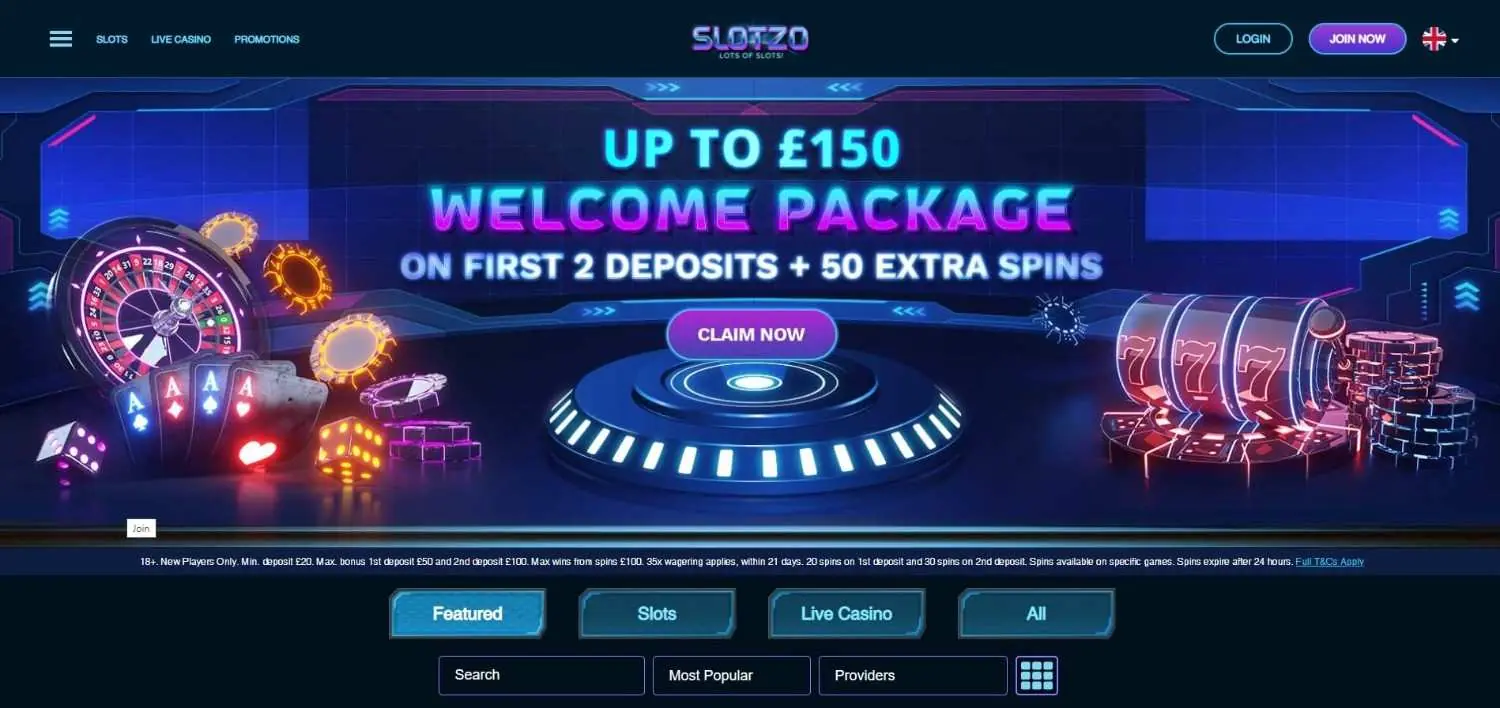
Slotzo is the strongest Red Casino sister site by Casino Guru score in this group. It carries a 9.2/10 Safety Index, compared with Red Casino’s 8.2/10. That makes Slotzo the clearest safety-score pick, although Casino Guru also flags “somewhat unfair” T&C issues, so the score should not be treated as flawless.
A Mr Slot verdict is a more direct slot-focused comparison, but Slotzo’s value here is mainly its AG/Aspire safety score.
The site is more slots-led and less personality-driven than Red Casino. Red Casino uses a bold red-and-black identity with Slingo, slots, live casino, blackjack, and roulette presented strongly. Slotzo feels more like a conventional AG/Aspire slots lobby: cleaner, simpler, and less distinctive, but easy for players who want broad slot access without much theme.
Licensing matches the wider AG Communications model. Slotzo.com appears under AG Communications account 39483 on the UKGC register, while Casino Guru lists UKGC and MGA coverage. Casino Guru also lists 17 payment methods, including Skrill, Neteller, PaysafeCard, ecoPayz, cards, PayPal, Trustly, bank transfer, Apple Pay, Klarna, MuchBetter, Interac, and CashtoCode. Monthly limits apply in some currencies, but GBP withdrawals are listed as unlimited.
The main weakness is welcome value. No active deposit or no-deposit bonus was shown in the checked Casino Guru profile. Slotzo is therefore best for players who value safety score, UKGC/MGA licensing, and a simple slot lobby over headline promotional value.
| Metric | Details |
| Site Identity | Slots-led AG Communications white-label casino with a straightforward lobby |
| What Sets It Apart | Highest Casino Guru Safety Index among the profiled Red Casino sister sites |
| Game Selection | Broad AG/Aspire slot, live, table, bingo, and crash categories |
| Best Bonus Feature | Not bonus-led in the Casino Guru profile checked |
| Honest Drawback | Some T&C issues flagged despite the high safety score |
| Ideal Player | UK players who want the safest-scored AG sister site in this comparison |

Mr Luck is the most relevant Red Casino sister site for players who want casino and sportsbook coverage under one account. Casino Guru gives Mr Luck a 9.2/10 Safety Index, lists UKGC and MGA licensing, and the UKGC domain register shows mrluck.com as an AG Communications white-label domain.
Compared with Red Casino, Mr Luck feels broader. Red Casino is casino-first, with slots, Slingo, blackjack, roulette, and live casino as its core, while a Heart Bingo alternative would lean more toward bingo-led play. Mr Luck adds sportsbook, eSports betting, virtual sports, crash games, bingo, and betting-style navigation. That makes it better for players who want one account for several gambling verticals rather than a pure casino lobby.
The trade-off is provider depth. Casino Guru lists Mr Luck with 35 providers, while Red Casino has 59. Mr Luck still includes major suppliers such as NetEnt, Play’n GO, Blueprint, Evolution, Pragmatic Play, Quickspin, Yggdrasil, Red Tiger, Betsoft, Eyecon, Wazdan, 1X2, Booming Games, and Hacksaw. Red Casino wins on software breadth; Mr Luck wins on product variety.
Casino Guru lists Mr Luck bonus entries including 77 extra spins on Big Bass Bonanza, 20 extra spins on Big Bass Splash, and 100% up to $77. Banking is also strong, with 25 methods including Neteller, Skrill, PaysafeCard, ecoPayz, Visa, Mastercard, PayPal, Trustly, Zimpler, Apple Pay, Klarna, MuchBetter, and MiFinity.
| Metric | Details |
| Site Identity | AG/Aspire casino-and-sportsbook site with broader vertical coverage |
| What Sets It Apart | Sportsbook, eSports, virtuals, crash games, and casino in one account |
| Game Selection | 35 providers, including NetEnt, Play’n GO, Evolution, Pragmatic Play, and Red Tiger |
| Best Bonus Feature | 77 spins, 20 spins, and 100% up to $77 listed by Casino Guru |
| Honest Drawback | Smaller provider count than Red Casino |
| Ideal Player | Players who want an AG sister site with casino and betting together |
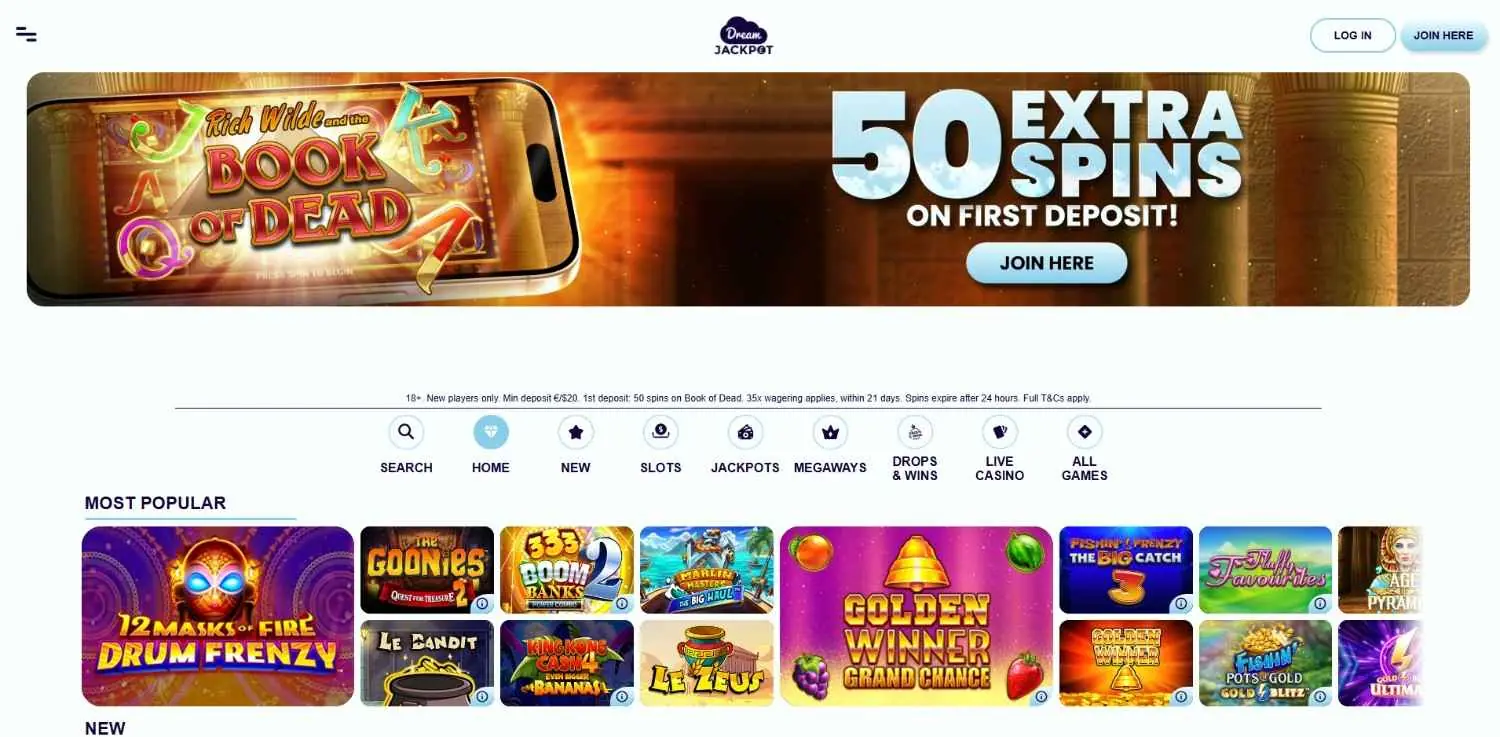
Dream Jackpot is a natural site like Red Casino because it shares AG Communications licensing but leans harder into jackpot and prize-led branding. Casino Guru gives Dream Jackpot a 9.2/10 Safety Index, and the UKGC register lists dreamjackpot.com as an active white-label domain under AG Communications account 39483.
Where Red Casino is clean and broad, Dream Jackpot is more jackpot-themed. It suits players who prefer big-win imagery, prize language, and a wider payment spread, while a Lottomart comparison is more relevant for lottery-led positioning. It is not as minimal as Slotzo, and it does not carry the sportsbook emphasis of Mr Luck. It is best viewed as a casino-focused sister site for players who want more payment flexibility and a more promotional tone.
Casino Guru lists Dream Jackpot as owned by Aspire Global International Ltd and estimates annual revenue above $5 million. It also lists 31 payment methods, more than Red Casino’s 27 and Mr Luck’s 25. Payment coverage includes Neteller, Skrill, PaysafeCard, ecoPayz, Mastercard, Visa, PayPal, Trustly, bank transfer, Klarna, MuchBetter, MiFinity, and regional methods.
Game coverage is broad, with slots, roulette, blackjack, video poker, bingo, baccarat, jackpot games, live games, scratch cards, virtual sports, crash games, and live dealer categories. The detailed complaint area includes one rejected complaint from 2020 involving disputed bonus winnings, so the high score should still be read alongside the complaint history.
| Metric | Details |
| Site Identity | Jackpot-themed AG/Aspire casino with broad payment coverage |
| What Sets It Apart | 31 payment methods listed by Casino Guru |
| Game Selection | Slots, jackpots, live games, bingo, crash games, and table games |
| Best Bonus Feature | Free-spin and deposit offers appear in external listings, but live terms must be checked |
| Honest Drawback | One rejected Casino Guru complaint appears in the detailed complaint section |
| Ideal Player | Players who want a Red Casino sister site with stronger prize-led branding |
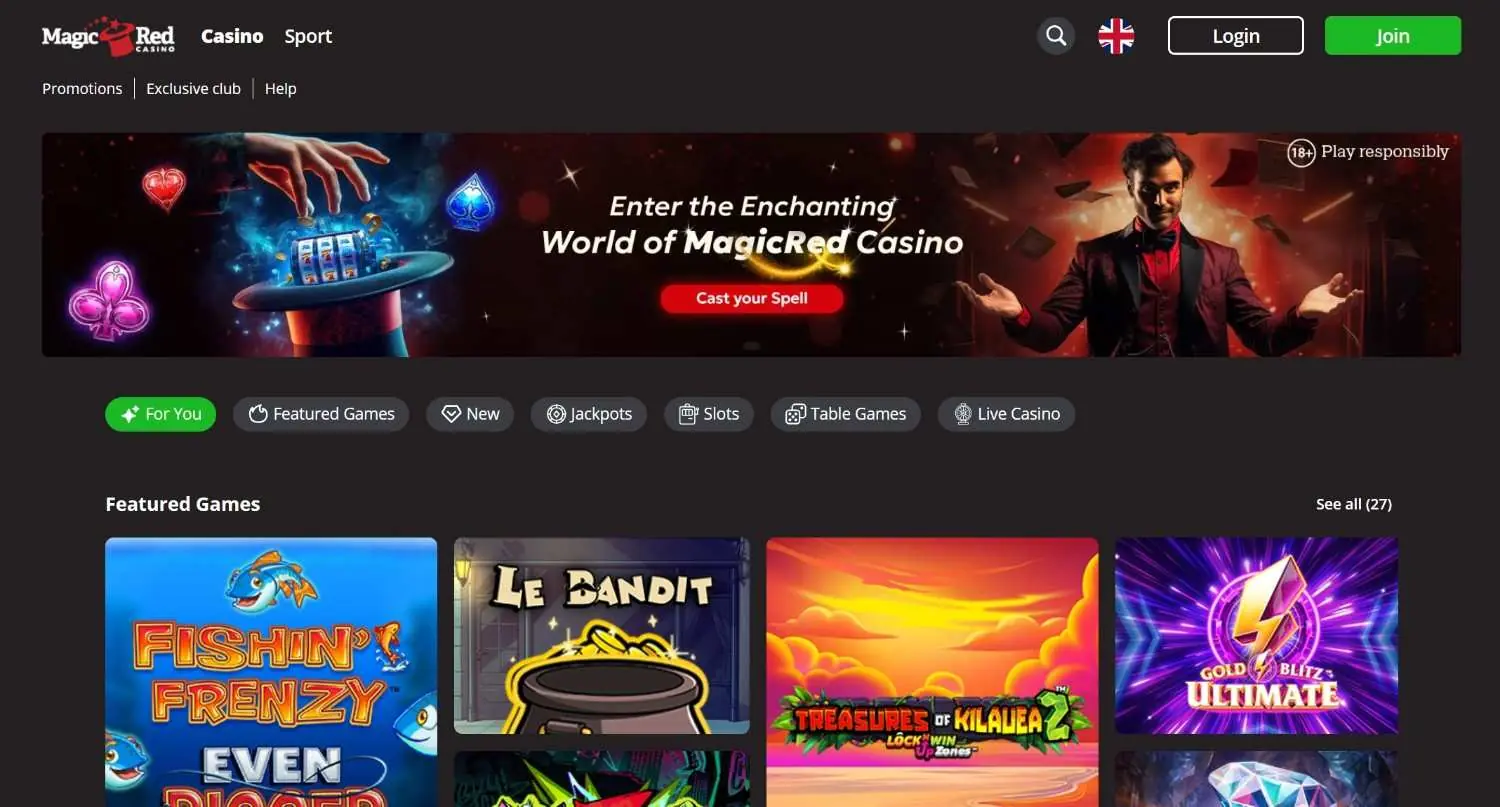
Magic Red is a Red Casino sister site by licence structure. The UKGC register lists magicred.com under AG Communications account 39483, and Casino Guru gives Magic Red an 8.5/10 Safety Index. That puts it slightly above Red Casino’s 8.2/10, but below Slotzo, Mr Luck, and Dream Jackpot.
The appeal is simplicity. Magic Red is a straightforward casino site with a clean layout, familiar AG/Aspire infrastructure, and mainstream software access, closer in everyday tone to an All British option than to a sportsbook-led site. For players who find Red Casino’s sharper red branding too strong, Magic Red is the softer sister-site option.
Casino Guru lists Magic Red with 25 payment methods, including Skrill, Neteller, PaysafeCard, ecoPayz, Visa, Mastercard, Trustly, PayPal, AstroPay, bank transfer, Skrill 1-Tap, Rapid Transfer, Revolut, CashtoCode, and MuchBetter. That is slightly fewer than Red Casino’s 27, but still enough for mainstream UK play.
The reputation signal is mixed. Casino Guru lists 50 Magic Red user reviews and a Mixed user-feedback score, while also giving the site a High Safety Index. It reports zero direct complaints but 1,001 black points from related casinos. The detailed complaint section includes delayed cashouts, cashback delays, and withdrawal-processing concerns, though some were rejected because players stopped responding.
| Metric | Details |
| Site Identity | Simple AG/Aspire white-label casino with softer branding than Red Casino |
| What Sets It Apart | Stronger user-review footprint than most profiled sister sites |
| Game Selection | 25 payment methods and broad mainstream casino categories |
| Best Bonus Feature | Region-specific offers, with live promotions changing frequently |
| Honest Drawback | Mixed Casino Guru user feedback and related-site black points |
| Ideal Player | Players who want a simpler Red Casino sister site with familiar AG infrastructure |
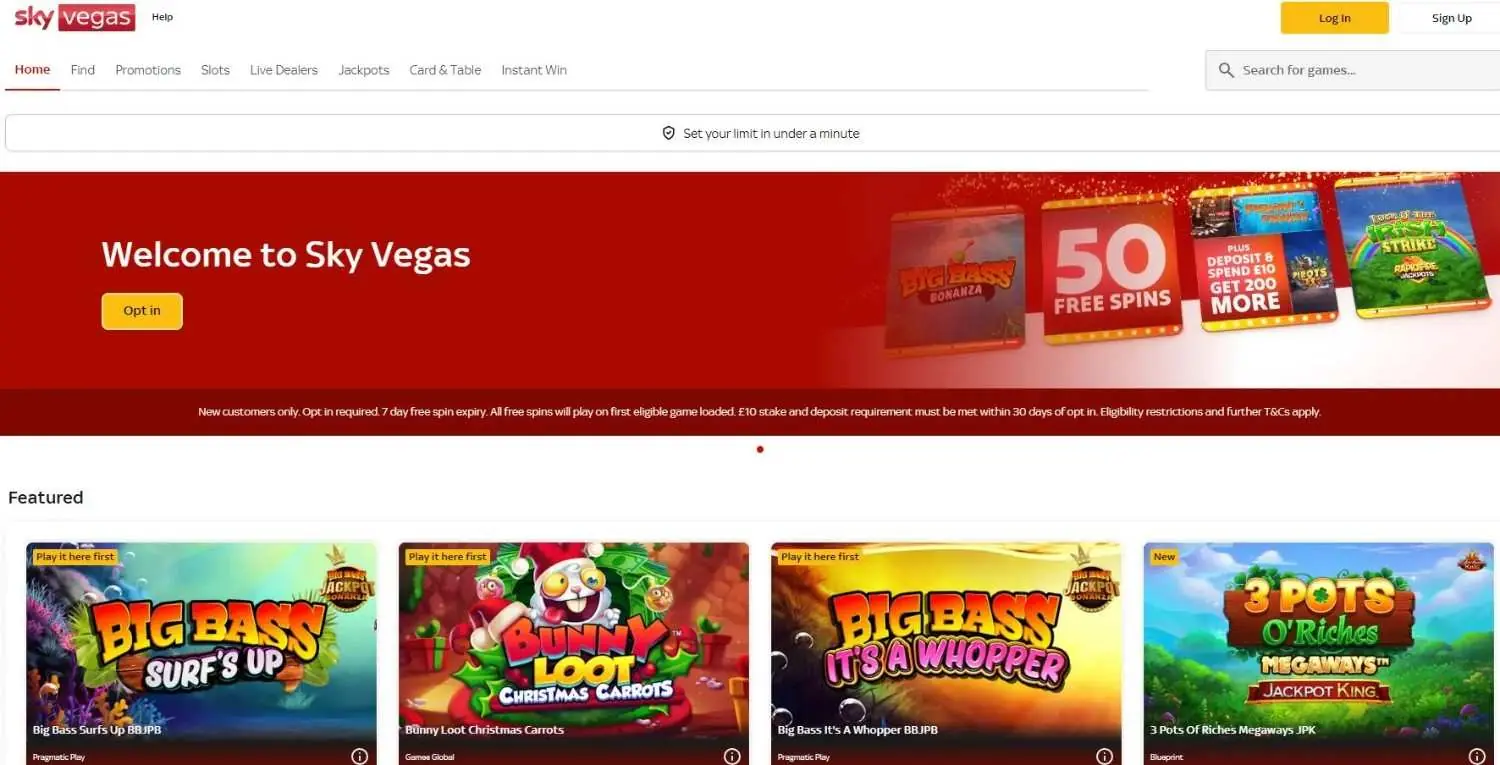
Sky Vegas is not a Red Casino sister site, but players comparing sites like Sky Vegas are clearly leaving the AG estate. It is included as the external alternative because it is a UKGC-licensed mainstream UK casino from a different operator group, with stronger household-name recognition and a more developed consumer brand. It is the best fit for players who want to leave the AG Communications white-label estate entirely.
The difference is operator identity. Red Casino is part of an AG Communications white-label network. Sky Vegas belongs to a larger entertainment ecosystem, which means a more recognisable brand, a different app experience, and a broader history with UK players. If Red Casino feels like a newer white-label casino, Sky Vegas feels like a mature UK casino account, closer to a Coral review context than another small white-label comparison.
The welcome offer also differs. Recent UK-facing Sky Vegas listings have described free-spin offers with low or no wagering on winnings, though the exact number of spins and deposit condition varies by campaign. Red Casino’s offer is smaller but specific: deposit and wager £20 on The Goonies Quest for Treasure 2 to receive 20 spins, with 0x wagering on free-spin winnings.
Sky Vegas does not escape criticism. Trustpilot reviews show praise for game variety and navigation, but also criticism of perceived poor returns, low-value slot bonuses, and payout dissatisfaction. That is different from Red Casino, where criticism more often mentions frozen accounts, withheld withdrawals, and account closures.
A Genting comparison is also useful when weighing Sky Vegas against other larger UKGC casino estates rather than AG Communications white-label sites.
| Metric | Details |
| Site Identity | Large UKGC-licensed mainstream casino from a different operator group |
| What Sets It Apart | Stronger household-name recognition than Red Casino |
| Game Selection | Broad UK casino lobby with slots, jackpots, live casino, and app-style access |
| Best Bonus Feature | Free-spin offers with low or no wagering, depending on campaign |
| Honest Drawback | Trustpilot criticism focuses heavily on perceived poor returns |
| Ideal Player | Players who want a larger UK brand instead of another AG white-label site |
Red Casino sits in the middle of the profiled AG Communications group. It has a lower Casino Guru Safety Index than Slotzo, Mr Luck, and Dream Jackpot, but it is still rated High at 8.2/10 and has no direct Casino Guru complaints in the checked profile. It also has more provider depth than Mr Luck and a more specific current UK-facing promotional hook than several sister sites.
On bonuses, Red Casino is clearer than many siblings. The welcome structure is based around depositing and wagering £20 on The Goonies Quest for Treasure 2 for 20 spins, with 0x wagering on free-spin winnings and a seven-day qualification window. That is easier to understand than a large percentage match, but also smaller than many traditional welcome bonuses.
On game library breadth, Red Casino is strong. Casino Guru lists 59 providers for Red Casino, compared with 35 for Mr Luck. Red Casino’s official site also highlights slots from Microgaming, NetEnt, Pragmatic Play, Play’n GO, Red Tiger, and others, plus Slingo, live casino, blackjack, and roulette.
On loyalty, Red Casino is less convincing. NEXT.io reported that no visible loyalty or VIP programme was found during its review checks. The site appears more built around games and promotions than a tiered reward ladder. That puts it behind casinos with clearer long-term rewards, though not necessarily behind its AG siblings.
The most important 2026 network fact is that Red Casino remains part of AG Communications Limited’s active white-label estate. The UKGC register lists 78 total domains under AG Communications, with 13 active white-label names visible in the checked register snapshot.
The second major development is regulatory. AG Communications entered a UKGC settlement in 2025 after AML and social-responsibility failings were found for 2023–2024, leading to a £1,407,834 payment in lieu of a financial penalty. The wider UK market also tightened through the 10x bonus wagering cap, online slot stake limits, and the Remote Gaming Duty increase from 21% to 40% from 1 April 2026.
| Payment Method | Min Deposit | Max Deposit | Withdrawal Time | Fees |
| Visa / Mastercard | Usually £10–£20 depending on site and offer | Site/account dependent | Standard card-processing timelines after verification | No universal network fee verified |
| PayPal | Site dependent | Site/account dependent | Often faster than bank transfer after verification | Method-specific limits may apply |
| Skrill / Neteller | Site dependent | Site/account dependent | Often faster after verification | May be bonus-ineligible on some offers |
| Trustly / Bank Transfer | Site dependent | Site/account dependent | Usually slower than e-wallets | Bank/provider fees may apply |
| PaysafeCard / CashtoCode | Site dependent | Voucher-dependent | Deposit-only or limited withdrawal use | Provider terms apply |
| Apple Pay / Klarna / MuchBetter / MiFinity | Site and country dependent | Site/account dependent | Depends on method and withdrawal eligibility | Provider terms apply |
Red Casino accepts 27 payment options in Casino Guru’s profile, including Neteller, Skrill, PaysafeCard, ecoPayz, Visa, Mastercard, PayPal, Trustly, Euteller, Maestro, Zimpler, AstroPay, bank transfer, Apple Pay, Klarna, MuchBetter, Jeton, Interac, MobilePay, and MiFinity. The official site also names Visa, PayPal, bank transfer, Skrill, PaysafeCard, and other banking options.
The strongest network comparison is payment breadth. Slotzo has 17 payment methods, Mr Luck has 25, Magic Red has 25, Dream Jackpot has 31, and Red Casino has 27 in Casino Guru’s current data. Red Casino is therefore near the top of the group, though not ahead of Dream Jackpot. GBP withdrawals are listed as unlimited, while several non-GBP currencies have monthly caps.
| Site | Top 5 Providers | Approx. Game Count | Live Dealer Available |
| Red Casino | NetEnt, Play’n GO, Blueprint, Evolution, Pragmatic Play | 59 providers listed by Casino Guru | Yes |
| Slotzo | NetEnt, Play’n GO, Blueprint, Evolution, Pragmatic Play | Provider count not highlighted in same way; broad game categories listed | Yes |
| Mr Luck | NetEnt, Play’n GO, Blueprint, Evolution, Pragmatic Play | 35 providers listed by Casino Guru | Yes |
| Dream Jackpot | NetEnt-style AG/Aspire library, live games, jackpots, bingo and crash categories | Exact provider count not highlighted in checked lines | Yes |
| Magic Red | NetEnt, Play’n GO, Evolution, Pragmatic Play, Red Tiger-style AG/Aspire mix | Broad game categories and 25 payment methods listed | Yes |
| Sky Vegas | Broad UKGC casino catalogue with slots, jackpots, live dealer and game shows | 2,000+ games cited in UK bonus listings | Yes |
Red Casino’s strongest content advantage is provider depth. Casino Guru lists 59 providers and names NetEnt, Play’n GO, Blueprint, Evolution, Pragmatic Play, Quickspin, Yggdrasil, Red Tiger, Betsoft, Scientific Games, Playson, iSoftBet, Wazdan, Slingo, Games Global, Hacksaw, and Ruby Play.
Provider overlap across AG Communications sister sites is high. Slotzo, Mr Luck, Dream Jackpot, and Magic Red often differ more in branding, payment mix, and promotion style than in core software access. Red Casino’s edge is its Slingo and slots presentation, while Mr Luck is broader because of sportsbook and betting categories. Sky Vegas gives the strongest external contrast because it is a larger mainstream UK brand rather than another AG white-label site.
Red Casino has enough live dealer coverage for casual live players. Casino Guru lists live games, live shows, live baccarat, live blackjack, live dice games, live poker, live roulette, and table games. The official site says its live games use real dealers streamed from studios with a virtual overlay for player actions.
Mobile is stronger than many white-label casinos. Red Casino’s official footer shows App Store and Google Play badges, and NEXT.io reported that the app is available on both iOS and Android. That gives Red Casino an advantage over browser-only sites and makes it more competitive with larger UKGC casinos; a Virgin Games assessment is a useful comparison for app-led UK casino expectations.
Loyalty is the weakest of the three areas. NEXT.io reported that it did not find a clearly outlined loyalty or VIP programme during its review of the promotions page, account area, and footer links. Red Casino appears more promotion-led than loyalty-led, so ongoing value depends on the live offers available after registration.
Red Casino is a UKGC-regulated site under AG Communications Limited account 39483. The UKGC register confirms active remote permissions for casino, bingo, and general betting, and marks redcasino.com as a white-label domain. Casino Guru also lists Red Casino with UKGC and MGA licensing and gives it an 8.2/10 High Safety Index.
| Site | Licence Body | UKGC Licence No. | Self-Exclusion Registered | RNG Testing |
| Red Casino | UKGC + MGA | 039483-R-319409-018 under account 39483 | Yes, via UKGC-licensed operator requirements | RNG games and third-party testing referenced on official site |
| Slotzo | UKGC + MGA | 039483-R-319409-018 under account 39483 | Yes, via UKGC-licensed operator requirements | Casino Guru found no relevant blacklist issue |
| Mr Luck | UKGC + MGA | 039483-R-319409-018 under account 39483 | Yes, via UKGC-licensed operator requirements | Casino Guru found no relevant blacklist issue |
| Dream Jackpot | UKGC + MGA | 039483-R-319409-018 under account 39483 | Yes, via UKGC-licensed operator requirements | Casino Guru found no relevant blacklist issue |
| Magic Red | UKGC + MGA | 039483-R-319409-018 under account 39483 | Yes, via UKGC-licensed operator requirements | Casino Guru found no relevant blacklist issue |
| Sky Vegas | UKGC | Separate external operator licence | Yes, via UKGC-licensed operator requirements | Very high Casino Guru safety rating cited by UK bonus databases |
The safety picture is strong but not spotless. The operator’s 2025 UKGC settlement found AML, customer interaction, self-exclusion, disclosure, key-event reporting, and rules-display failings across the AG Communications remote licence between 2023 and 2024, resulting in a £1,407,834 regulatory settlement.
The current UK regulatory context is also important. Red Casino operates under the 10x bonus wagering cap, online slot stake limits, and the higher 40% Remote Gaming Duty rate from 1 April 2026.
Red Casino has a split reputation. Casino Guru gives it a High Safety Index of 8.2/10, says it found no relevant complaints about the casino, and lists zero Casino Guru user reviews. Trustpilot is much harsher: the checked Redcasino.com Trustpilot snapshot shows 71% one-star reviews, with complaints about frozen accounts, withheld withdrawals, and negative gameplay experiences.
| Source | What Players Praise | What Players Criticise |
| Trustpilot, redcasino.com | Some positive reviews praise large wins, quick early withdrawals, and game choice | 71% one-star split, with complaints about frozen accounts, withheld withdrawals, and perceived poor returns |
| Reddit / UK gambling forums | No reliable Red Casino-specific trend strong enough to cite from this research pass | No reliable Red Casino-specific subreddit pattern found |
| Casino Guru, Safety Index 8.2/10 | High safety score, mostly fair T&Cs, no relevant direct complaints, no blacklist signal | Minor T&C concerns, including restricted-game and KYC-timeframe issues |
| Casinomeister | No Red Casino rogue classification or direct warning was verified in this research pass | General forum discussion exists around other similarly named casinos, but not a verified Red Casino rogue label |
The Trustpilot split should not be ignored, but it should not be overread either. The stronger conclusion is that Red Casino’s formal safety profile is good, while public player sentiment is volatile and visibly negative. Casinomeister did not surface as classifying Red Casino as rogue or warned in the checked search results, so the article should not claim a rogue label unless a direct warning page is verified later.
Red Casino’s current welcome offer is smaller but cleaner than many older UK casino offers. The Aspire Global Casinos listing describes the UK offer as 20 extra spins on The Goonies Quest for Treasure 2 after a £20 deposit and wager, with wagering completed within seven days, spins expiring within 24 hours, and 0x wagering on free-spin winnings.
A worked example shows why this matters. If a player deposits £20 and wagers that £20 on the required game within the seven-day window, the reward is 20 spins. If those spins produce £12 in winnings, the listed 0x wagering structure means that £12 is not multiplied into a 10x, 20x, or 35x wagering target. The key restrictions are the eligible game, opt-in path, seven-day qualification window, and 24-hour free-spin expiry.
Compared with sister sites, Red Casino is more transparent but less generous-looking. Mr Luck lists 77 extra spins, 20 extra spins, and 100% up to $77, while Dream Jackpot and Slotzo show no active deposit bonus in the checked Casino Guru profiles. No reliable standing no-deposit bonus was verified for Red Casino itself, so each live promotion page should be checked before assuming no-deposit spins exist.
Red Casino’s biggest missing piece is a transparent loyalty structure. The site has promotions and a large game lobby, but NEXT.io did not find a clearly outlined VIP or loyalty programme during its review checks. Players who value visible tiers, points, cashback levels, or predictable long-term rewards may find the offer set too promotion-led.
The second gap is player-sentiment consistency. Casino Guru shows no direct complaints and gives Red Casino a high safety score, but Trustpilot shows a heavy one-star skew. A cautious player should treat the formal licensing and public complaint tone as two separate signals.
The third gap is live support clarity. Casino Guru lists 24/7 live chat for English support, while NEXT.io reported that it did not see live chat during its own checks and relied on email-style support. This may be a visibility, timing, login-state, or account-stage issue, but it matters when payment or verification problems arise.
The fourth issue is operator history. AG Communications is UKGC-licensed, but the 2025 settlement over AML and social-responsibility failings is a real network-level blemish. The settlement related to conduct between 2023 and 2024, but the fact it happened should still be visible in an honest Red Casino casino sister sites guide.
Finally, some bonuses are method-sensitive and short-lived. Skrill and Neteller may be excluded from certain promotions according to NEXT.io’s FAQ summary, while Red Casino’s welcome spins require a specific game, a seven-day qualification window, and a 24-hour spin expiry.
Slotzo is the best Red Casino sister site if the main decision factor is Casino Guru score. It has a 9.2/10 Safety Index, no direct complaints in the profile, and the same UKGC/MGA licensing structure. It is not the most exciting site, but it is the strongest safety-score pick.
Mr Luck is the best choice if you want betting attached to the casino account. It has a 9.2/10 Safety Index, sportsbook and eSports coverage, crash games, virtual sports, and 35 providers. It gives up some of Red Casino’s provider depth, but gains multi-product flexibility.
Dream Jackpot is the best pick if payment breadth and jackpot-style presentation matter. It has 31 payment methods listed by Casino Guru and a 9.2/10 Safety Index. It is less clean than Red Casino in branding, but stronger for players who like prize-led casino positioning.
Magic Red is the simpler everyday option. Its 8.5/10 Safety Index is slightly above Red Casino’s 8.2/10, and it has a larger Casino Guru user-review footprint than most profiled sister sites. It is a practical alternative rather than a category leader.
Sky Vegas is the best external alternative if you want to leave the AG Communications white-label estate entirely. It offers a larger mainstream UK brand, strong safety reputation, and broader app-style recognition.
Red Casino is a legitimate UKGC-licensed white-label casino with strong game-provider depth, broad payment coverage, and a clear 20-spin welcome offer with 0x wagering on free-spin winnings. Its best qualities are the 59-provider game library, Slingo-heavy presentation, app availability, and AG/Aspire infrastructure.
The best within-network pick is Slotzo for pure safety score, Mr Luck for sportsbook-plus-casino play, Dream Jackpot for payment breadth, and Magic Red for everyday simplicity. The best external alternative is Sky Vegas because it gives players a more established UK brand and a different operator model instead of another AG Communications white-label casino.
Practical advice before depositing at Red Casino or any Red Casino sister site: complete your KYC verification immediately after registration. Red Casino’s Trustpilot complaints often focus on withdrawals, frozen accounts, and payment frustration, so verify early, use a payment method eligible for the bonus you want, and screenshot the live promotion terms before claiming.

Dermot Heathcote
Senior Casino Analyst
Dermot covers UK-licensed online casinos for WagerPals, focusing on UKGC compliance, payment safety, and bonus terms. He spends most of his time reading licence registers, withdrawal terms, and player-complaint forums so readers don't have to.