
















No deposit casinos offer registration-only spins or bonus funds before a first deposit. This guide profiles 5 UKGC-licensed casinos and ranks them by current no-deposit value, wagering, expiry, verification friction, and withdrawal realism. The focus is claimability, not headline spin counts.
| Casino | Operator | Our Rating | Welcome Bonus | Wagering Requirement | Top Feature |
|---|---|---|---|---|---|
| Sky Vegas | Bonne Terre Gaming Limited | 4.7/5 | 50 free spins no deposit, plus 200 free spins after depositing and spending £10 | 0x on both spin stages | Biggest operator-stated no-deposit spin bundle |
| MrQ | Tek Fox Ltd | 4.6/5 | 10 free spins no deposit, plus 50 spins after depositing and spending £10 | 0x on both spin stages | No wagering and no stated max win on the fetched offer page |
| Sun Bingo | Red Rock Managed Services Limited | 4.1/5 | 10 free spins no deposit, plus 100 spins after depositing and spending £10 | 10x winnings within 7 days | Clear expiry date and debit-card-only bonus rules |
| Inn Spins | Jumpman Gaming Limited | 4.0/5 | 20 free spins no deposit on Big Bass Splash | 10x winnings, £50 max conversion | Strong no-deposit spin count from a new Jumpman site |
| Red Casino | Jupiter Gaming Limited | 3.7/5 | 5 free spins no deposit on Fire Joker | 10x in headline terms, 50x in significant terms, £30 max conversion | Low-friction card-registration offer with visible term conflict |
Every casino listed holds a valid UKGC licence. Bonuses and features are subject to change – verify the latest terms directly on each casino’s website before depositing.
The selection prioritised UK no deposit casinos with a live, operator-stated registration offer or a clearly stated no-deposit spin package from a fetched casino page. The UKGC public register was checked first for every selected site, and any casino without an active UKGC casino or bingo remote licence was excluded. The review set then compared spin count, wagering multiplier, max conversion, expiry, accepted verification method, and whether the free spins required a first deposit.
For category fit, a smaller no-wagering offer ranked above a larger high-wagering offer, because no deposit casino sites often advertise headline spin counts that become weak once wagering and conversion caps are applied. Casino Guru entries, checked May 2026, were used for Safety Index, complaint records, fake-game checks where available, and database operator notes. Trustpilot profiles, checked May 2026, were used only as player-reported sentiment, not as proof that any casino pays faster or more often.
Paddy Power Games, Betfred Casino, PlayOJO, and BetVictor Casino were considered as competitor references, but their fetched or surfaced offers were stronger as deposit-required or wager-free-spin comparisons than as true no-deposit picks. That is why they are discussed only in comparison, not profiled among the top no deposit casinos.

Bonne Terre Gaming Limited holds UKGC account number 65519 for Sky Vegas casino games, and the UKGC public register shows active casino and bingo remote licences from 18 November 2024. Sky Vegas leads this no deposit casino ranking because its operator help page states that new customers receive 50 free spins with no deposit needed and no wagering, followed by 200 more free spins after depositing and spending £10 within 30 days. The same page states a 7-day free-spin expiry and says game and eligibility restrictions apply, with the eligible games list available through the logged-in Promotions area.
The operator’s licensing page also states that Bonne Terre Gaming Limited is licensed by the Gibraltar regulator under Remote Gambling Licence No. 156, while the UKGC public register is used here as the UK-facing authority. Sky Vegas is part of Flutter Entertainment’s Sky Betting and Gaming structure, and the current UKGC register also shows the Sky Vegas trading name and active Sky Vegas domain under Bonne Terre Gaming Limited. No UKGC regulatory actions were recorded on the Bonne Terre Gaming Limited account in the fetched public-register action page.
The operator’s live casino page states that Sky Vegas offers hundreds of games and shows providers including Pragmatic Play, Games Global, Blueprint, Octoplay, NetEnt, Inspired, Light & Wonder, Greentube, Evolution, and Pragmatic Play Live. Casino Guru’s Sky Vegas entry, checked May 2026, gives a Safety Index of 9.8/10, states that no fake games were found, and lists 2 complaints with 39 black points. Trustpilot’s Sky Vegas profile, checked May 2026, shows 3.1/5 from 3,739 reviews; players praise game choice and some fast payout experiences, while criticism clusters around perceived low slot returns, promotional exclusions, and occasional free-spin or site-freezing issues.
The limitation is that the 50 no-deposit spins auto-load on selected games, so players who want to choose any slot may find the offer narrower than the headline suggests.
| Metric | Details |
|---|---|
| Operator | Bonne Terre Gaming Limited, UKGC licence 65519 |
| No Deposit Rating | 50 no-deposit spins, stated 0x wagering, 7-day expiry |
| Standout Feature | Largest verified no-deposit spin bundle in this review set |
| Game Library | Operator states hundreds of games; Pragmatic Play, Blueprint, NetEnt |
| Best Bonus Element | Winnings from the no-deposit spins are operator-stated as wager-free |
| The Trade-Off | Eligible games are restricted and full game list may require login |
| Best For | Players who want a big no-deposit spin count with 0x wagering |
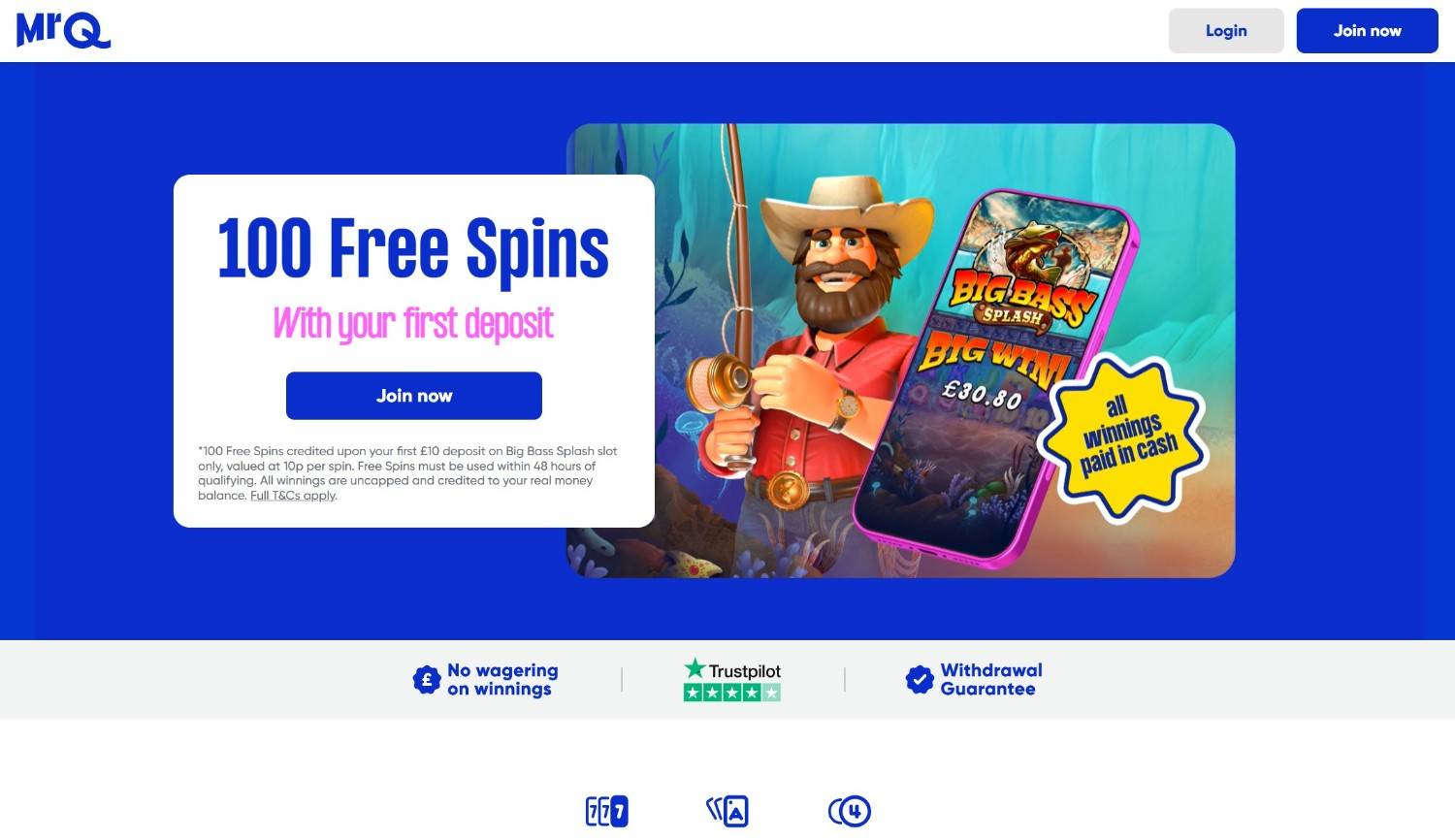
Tek Fox Ltd holds UKGC account number 60629 for MrQ, and the UKGC public register shows active casino and bingo remote licences from 29 September 2023. MrQ excels as a no deposit casino because its fetched operator offer page states that new customers who complete age verification receive 10 free spins on Big Bass Q the Splash at 10p per spin, with no deposit required, no wagering requirements, and no maximum win. The same offer states that a later single deposit and £10 spend unlocks 50 more spins on the same game, also at 10p per spin and with no maximum win. Players researching MrQ sister sites can compare the same Tek Fox-style no-wagering approach across related Tek Fox-operated brands.
The operator provider page lists 25 named providers, including Blueprint, Pragmatic Play, Games Global, Inspired Gaming, Evolution, Play’n Go, NetEnt, Red Tiger, Hacksaw, NoLimit City, OnAir, Thunderkick, and Wazdan. It does not give an operator-verified total game count in the fetched page, so this guide avoids a precise game-count total for MrQ. The same provider page confirms Tek Fox Ltd as the operator under UKGC account number 60629.
Casino Guru’s MrQ entry, checked May 2026, gives a Safety Index of 6.9/10, calls user feedback mixed from 6 Casino Guru reviews, and lists 12 direct complaints plus 2,509 black points. Casino Guru also states that MrQ was not found on relevant casino blacklists, but flags some terms as somewhat unfair and records several complaints involving verification and delayed withdrawals. Trustpilot’s MrQ profile, checked May 2026, shows 14,850 total reviews and review themes around easy navigation, fast withdrawals for some verified players, slower KYC for others, and mixed views on bonus frequency.
The welcome offer is strong because the no-deposit portion has no wagering and no stated max win in the fetched terms. The trade-off is that Casino Guru’s complaint record is heavier than Sky Vegas, especially around document checks, so KYC should be completed before trying to withdraw any free-spin winnings.
| Metric | Details |
|---|---|
| Operator | Tek Fox Ltd, UKGC licence 60629 |
| No Deposit Rating | 10 no-deposit spins, stated 0x wagering, no max win on fetched offer |
| Standout Feature | No wagering on both the registration spins and the £10-spend spin stage |
| Game Library | Operator lists 25 providers; Pragmatic Play, Evolution, NetEnt |
| Best Bonus Element | Free-spin winnings are operator-stated as cash with no wagering |
| The Trade-Off | Casino Guru records multiple verification and withdrawal complaints |
| Best For | Players who prefer a smaller no-deposit offer with cleaner wagering terms |
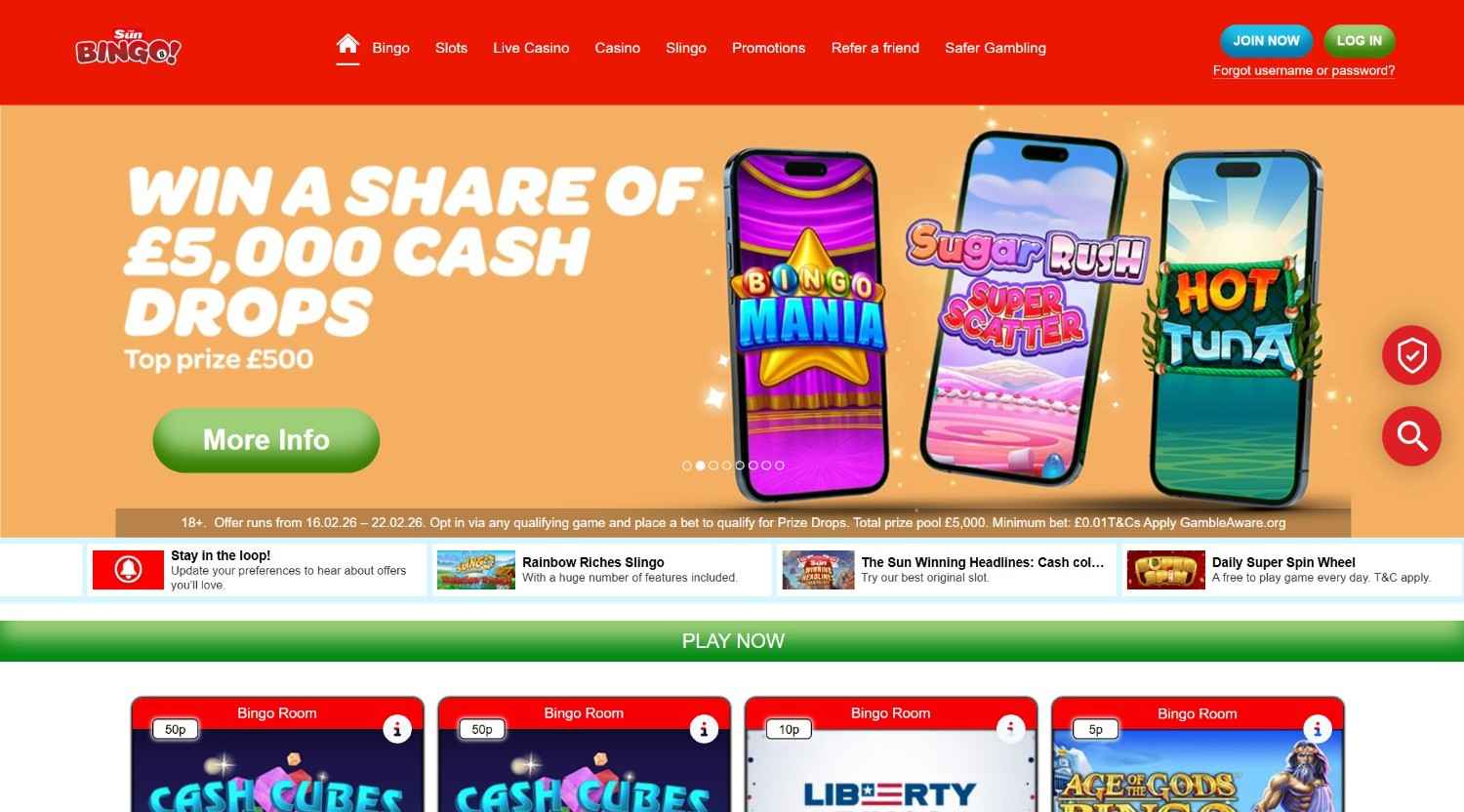
Red Rock Managed Services Limited holds UKGC account number 67754 for Sun Bingo, and the UKGC public register shows active casino and bingo remote licences from 2 October 2025. Sun Bingo is a strong no deposit casino option for players who want a casino-and-bingo account rather than a slots-only feel, because the operator’s 110 free spins page states that new customers receive 10 free spins with no deposit, then 100 extra free spins after depositing and spending £10 on casino games.
The operator page gives unusually clear bonus mechanics. The 10 registration spins are 10p spins on selected games, must be accepted within 48 hours, expire 7 days after being credited, and winnings must be wagered 10x within 7 days. The second-stage 100 spins follow the same 10x-winnings model after a £10 casino spend. The same page states that the promotion is debit cards only and that Neteller, Skrill, and PayPal deposits are not valid for this promotion. The operator page states an offer end date of 31 July 2026, which is useful because many no-deposit pages omit an end date.
Casino Guru’s Sun Bingo entry, checked May 2026, gives a Safety Index of 9.8/10 and says it found no unfair or predatory clauses in the reviewed terms, but the database still names VF2011 Limited as operator, so this guide uses the UKGC register and Sun Bingo footer for the current Red Rock Managed Services Limited account. Trustpilot’s Sun Bingo profile, checked May 2026, shows 2.2/5 from 821 reviews; player criticism clusters around withdrawal delays, extra ID checks, low slot returns, app speed, and promotion-crediting disputes, while some positive reviews mention fast withdrawals and free bingo features.
The limitation is that Sun Bingo’s no-deposit spins have 10x wagering on winnings, so they are weaker than Sky Vegas and MrQ for immediate cashout value.
| Metric | Details |
|---|---|
| Operator | Red Rock Managed Services Limited, UKGC licence 67754 |
| No Deposit Rating | 10 no-deposit spins, 10x winnings, 7-day expiry |
| Standout Feature | Clear offer end date and transparent payment-method exclusions |
| Game Library | Exact count not verified; eligible games include Fishin’ Frenzy and Big Bass titles |
| Best Bonus Element | 10 registration spins plus 100 more after £10 casino spend |
| The Trade-Off | PayPal, Skrill, and Neteller do not qualify for the promotion |
| Best For | Bingo-first players who want a no-deposit casino add-on |
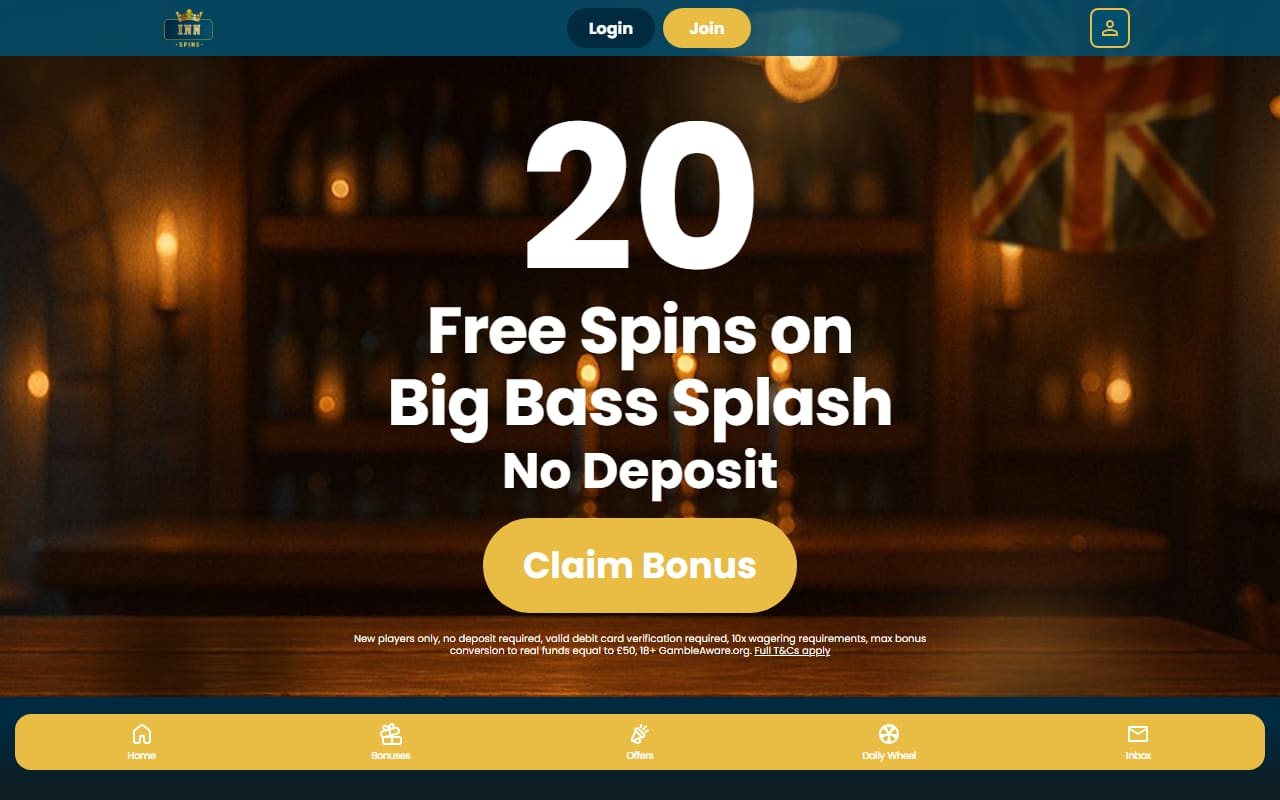
Jumpman Gaming Limited holds UKGC account number 39175, and Inn Spins states in its footer that it is operated by Jumpman Gaming Limited under that UKGC account. Inn Spins stands out among no deposit casinos in 2026 because its operator homepage states a 20 free spins no-deposit offer on Big Bass Splash, with valid debit card verification required, 10x wagering, and a £50 maximum conversion to real funds. That is a larger no-deposit spin count than Sun Bingo and Red Casino, though it is not as clean as the wager-free offers at Sky Vegas and MrQ.
The operator page states that Inn Spins has 800-plus casino games and names providers including Pragmatic Play, NetEnt, Microgaming, and Evolution. The all-games page repeats the 800-plus game claim and the Jumpman Gaming Limited operator footer. Casino Guru’s Inn Spins entry, checked May 2026, gives a Safety Index of 6.8/10 and labels it a fresh casino established in 2025. Casino Guru also lists Jumpman Gaming Limited as operator, Play Gamified Ltd as owner, 0 direct complaints, no relevant blacklist finding, and some unfair-term concerns around low-risk play, repeated withdrawal-and-redeposit patterns, and bonus-only deposit behaviour.
No Trustpilot profile for Inn Spins was verified in this pass, so there is less player-reported reputation evidence than for the larger sites. The UKGC public-register action page for Jumpman Gaming Limited shows no current regulatory actions recorded, although a UKGC news item from 2022 reported a historic Jumpman settlement that is outside the current 3-year public-register action display window.
The main value is simple: 20 no-deposit spins is a meaningful registration sample if you accept debit-card verification. The limitation is that Inn Spins is new, smaller, and has limited independent player-review history.
| Metric | Details |
|---|---|
| Operator | Jumpman Gaming Limited, UKGC licence 39175 |
| No Deposit Rating | 20 no-deposit spins, 10x wagering, £50 max conversion |
| Standout Feature | Bigger no-deposit spin count than most smaller UKGC sites |
| Game Library | Operator states 800-plus games; Pragmatic Play, NetEnt, Evolution |
| Best Bonus Element | 20 spins on Big Bass Splash before any deposit |
| The Trade-Off | New site with limited Trustpilot evidence verified in this pass |
| Best For | Players who want more spins and accept a 10x conversion route |
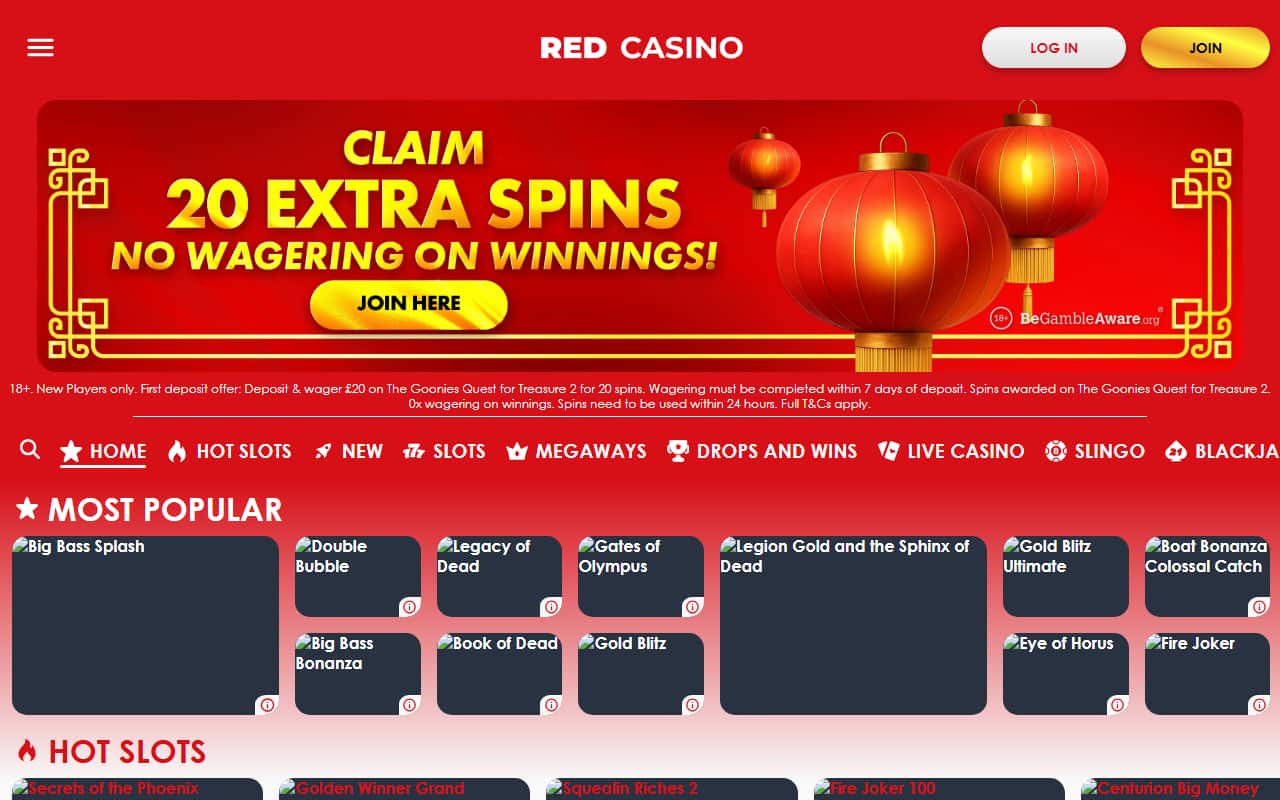
Jupiter Gaming Limited holds UKGC account number 67098, and the UKGC public register lists redcasino.com as an active domain under that account. Red Casino qualifies for this no deposit casino page because its operator page states that new UK players can receive 5 free spins on Fire Joker with no deposit required after valid card registration. The no-deposit value is modest, but the offer is easy to understand and tied to one named slot.
The bonus terms need careful reading. Red Casino’s fetched page headline states 5 no-deposit spins on Fire Joker, 10x wagering, and a £30 maximum conversion to real funds. The significant-terms line on the same page states 50x wagering and the same £30 max conversion. Because those two operator-stated lines conflict, the conservative reading is to treat the offer as potentially 50x until the logged-in promotion screen confirms otherwise. That conflict is the main reason Red Casino ranks below the no-wagering picks and Inn Spins. Players researching Red Casino sister site alternatives can compare related smaller-site offers under similar Jupiter-style operator structures.
Casino Guru’s Red Casino entry, checked May 2026, gives a Safety Index of 8.2/10, lists Jupiter Gaming Ltd as owner, states that no relevant blacklist entry was found, and records no player complaints or very low complaint value relative to size. It also flags minor concerns around restricted games during wagering and short KYC response windows. Trustpilot’s Red Casino profile, checked May 2026, shows 2.1/5 from 84 reviews. The Trustpilot complaint pattern includes account freezes, withheld withdrawal allegations, poor support response, and low-RTP perceptions, while a few positive reviewers mention successful payouts.
The operator’s page displays a broad game menu with slots, live casino, blackjack, roulette, and Slingo, and visible titles include Big Bass Splash, Gates of Olympus, The Dog House, Eye of Horus Megaways, and Fishin’ Frenzy. The limitation is clear: the no-deposit offer is small and the wagering wording is inconsistent.
| Metric | Details |
|---|---|
| Operator | Jupiter Gaming Limited, UKGC licence 67098 |
| No Deposit Rating | 5 no-deposit spins; 10x headline conflicts with 50x significant terms |
| Standout Feature | Named Fire Joker no-deposit offer after card registration |
| Game Library | Exact count not verified; Pragmatic Play, Blueprint, Eyecon-style slot mix visible |
| Best Bonus Element | £30 max conversion is stated on the operator page |
| The Trade-Off | Operator page contains conflicting wagering wording |
| Best For | Players who only want a small registration spin sample |
No deposit casinos in 2026 are not the same as demo-play casinos. UKGC rules restrict how real-money games are offered, so a no-deposit bonus usually means a real account promotion that gives free spins or bonus funds after registration, age verification, and sometimes debit-card verification. The player has not deposited, but the casino still runs identity, age, duplicate-account, and anti-fraud checks before winnings can be withdrawn.
The key distinction is between no deposit, no wagering, and no max conversion. A no-deposit offer only means the qualifying action does not require a first deposit. It may still attach wagering to winnings, restrict games, cap the cash conversion, exclude payment methods, or expire quickly. Sky Vegas and MrQ are stronger because their fetched terms state 0x wagering on the no-deposit spins. Sun Bingo and Inn Spins sit in the middle because their fetched terms use 10x wagering. Red Casino is weaker because the same operator page displays conflicting 10x and 50x wording.
The UKGC’s updated LCCP Social Responsibility Code 5.1.1, checked on the UKGC technical requirements page, states that from 19 January 2026 licensees must not apply wagering requirements over 10 times bonus funds where the rule applies. That makes any UK-facing no-deposit offer showing more than 10x worth checking carefully against the latest logged-in terms. Sky Vegas sits within Flutter Entertainment’s Sky Betting and Gaming family, which means players already familiar with the brand may also recognise sites like Sun Vegas running under the same Bonne Terre Gaming Limited operator umbrella.
No deposit casinos UK players can use also need KYC realism. A bonus may be free to claim, but withdrawals are not anonymous. Expect proof of identity, age checks, address checks, payment ownership checks, and sometimes source-of-funds questions if account activity triggers risk reviews. The best no deposit casinos make the promotional route simple and explain what happens before a withdrawal is released.
| Casino | Welcome Bonus | Wagering Requirement | Min Deposit | Max Bet | Win Cap | Expiry |
|---|---|---|---|---|---|---|
| Sky Vegas | 50 no-deposit spins, plus 200 spins after deposit and £10 spend | 0x on fetched offer | £10 for second stage | Free-spin stake fixed by operator | No cap stated in fetched help page | 7 days for spins; £10 spend within 30 days |
| MrQ | 10 no-deposit spins, plus 50 spins after deposit and £10 spend | 0x on fetched offer | £10 for second stage | 10p free spins | No max win stated in fetched offer | Expiry not verified on fetched no-deposit offer |
| Sun Bingo | 10 no-deposit spins, plus 100 spins after deposit and £10 spend | 10x winnings | £10 for second stage | 10p free spins | Not stated in fetched offer | Accept within 48 hours; spins expire in 7 days |
| Inn Spins | 20 no-deposit spins on Big Bass Splash | 10x winnings | £0 for no-deposit offer | Free-spin stake not separately verified | £50 max conversion | Expiry not verified in fetched homepage terms |
| Red Casino | 5 no-deposit spins on Fire Joker | 10x headline, 50x significant terms | £0 for no-deposit offer | Free-spin stake not separately verified | £30 max conversion | Expiry not verified in fetched page |
The most generous offer in pure no-deposit value is Sky Vegas. A player deposits £0, receives 50 free spins, and the match calculation is therefore £0 deposit plus 50 promotional spins rather than a cash match. If those spins return £8, the operator-stated wagering is 0x, so the wagering maths is £8 times 0, which equals £0 required before the winnings become cash, subject to account checks and game eligibility. On a 10p slot with a theoretical 96 percent RTP, 50 spins represent £5 of stake value and about £4.80 of theoretical long-run return, although individual results vary sharply. Because no win cap was found on the fetched Sky Vegas help page, no win-cap haircut is applied in this example; the practical limit is eligibility, expiry, KYC, and any logged-in promotion terms.
The Red Casino 10x-versus-50x conflict is the clearest reason a player should read the logged-in offer screen carefully and treat the higher number as the working assumption until the in-account terms confirm otherwise; for the broader picture see this understanding wagering requirements guide. Players who specifically want cleaner cashout maths can also benchmark this set against low-wagering casino options that publish their headline multipliers consistently.
| Casino | Visa | Mastercard | PayPal | Apple Pay | Skrill | Neteller | Bank Transfer | No-Deposit Claim Method |
|---|---|---|---|---|---|---|---|---|
| Sky Vegas | Yes, per Casino Guru payment listing checked May 2026 | Yes, per Casino Guru payment listing checked May 2026 | Yes, per Casino Guru payment listing checked May 2026 | Yes, per Casino Guru payment listing checked May 2026 | Not verified | Not verified | Not verified | Account registration; no deposit needed for first 50 spins |
| MrQ | Yes, per third-party bingo entries checked May 2026 | Yes, per third-party bingo entries checked May 2026 | Yes, per third-party bingo entries checked May 2026 | Not verified | Not verified | Not verified | Not verified | Age verification for 10 no-deposit spins |
| Sun Bingo | Debit-card deposits qualify | Debit-card deposits qualify | Available but not valid for the promotion | Not verified | Available but not valid for the promotion | Available but not valid for the promotion | Not verified | Registration and bonus acceptance within 48 hours |
| Inn Spins | Debit-card verification required | Debit-card verification required | Not verified | Not verified | Not verified | Not verified | Not verified | Valid debit-card verification, no deposit moved |
| Red Casino | Debit-card verification required | Debit-card verification required | Casino.com review checked May 2026 lists PayPal for Red Casino, but bonus eligibility not verified | Not verified | Casino.com review checked May 2026 lists Skrill, but bonus eligibility not verified | Not verified | Trustly listed by Casino.com review checked May 2026 | Valid card registration and promotion claim |
For no deposit casino sites, the best payment approach is to separate bonus claimability from later withdrawal convenience. Use the method the promotion accepts for verification, especially where Sun Bingo, Inn Spins, and Red Casino specify debit-card registration or debit-card deposits. After claiming, complete payment ownership checks before requesting a withdrawal, because no-deposit winnings are more likely to trigger duplicate-account, card-ownership, or identity review than a normal debit-card deposit. Players who would rather start with a small first deposit than chase a registration spin can compare minimum deposit bonuses as a like-for-like alternative entry point.
| Casino | Top 5 Providers | Approx. Game Count | Live Dealer Available |
|---|---|---|---|
| Sky Vegas | Pragmatic Play, Blueprint, NetEnt, Evolution, Games Global | Operator states hundreds of games | Yes |
| MrQ | Blueprint, Pragmatic Play, Games Global, Evolution, Play’n Go | Exact count not operator-verified; 25 providers listed | Yes |
| Sun Bingo | Pragmatic Play-style Big Bass titles, Blueprint-style Fishin’ Frenzy titles, Eyecon-style bingo slots, Slingo, live casino suppliers not fully verified | Exact count not verified | Yes |
| Inn Spins | Pragmatic Play, NetEnt, Microgaming, Evolution, plus other unnamed providers | Operator states 800-plus games | Yes |
| Red Casino | Pragmatic Play, Blueprint-style slots, Eyecon-style titles, live casino suppliers not fully verified, Slingo suppliers not fully verified | Exact count not verified; Casino.com review checked May 2026 states 1000-plus | Yes |
Provider strength matters for no deposit casinos because the offer usually applies to one slot, not the full lobby. Big Bass, Fire Joker, Fishin’ Frenzy, and Sky Vegas selected games are the real category detail here. A casino with many providers is useful after registration, but the free-spin value depends on the assigned slot, its fixed spin value, contribution rules, and whether the winnings become cash or bonus funds. Bingo-led players who want a softer slot menu alongside no-deposit promotions might also look at Sky Bingo sister brands, which sit inside the same Bonne Terre Gaming family as Sky Vegas and run a comparable provider mix.
All five profiled sites are registered on the UKGC public register under active remote casino or bingo licences. The current UK regulatory context is stricter than many older no-deposit bonus pages suggest. UKGC LCCP Social Responsibility Code 5.1.1 caps wagering on bonus funds at 10x where it applies from 19 January 2026. UKGC slot stake-limit guidance states that online slot limits came into effect at £5 for adults aged 25 and over from 9 April 2025 and £2 for players aged 18 to 24 from 21 May 2025, and those limits apply to slots, not roulette or blackjack. The UKGC financial risk assessment pilot is separate from what players often call affordability checks; the Commission says it is a targeted financial-risk process rather than a blanket affordability cap. GOV.UK confirms Remote Gaming Duty increased from 21 percent to 40 percent from 1 April 2026, and that is an operator tax rather than a player-protection feature. Independent UK player-protection bodies including GamCare counselling resources publish counselling, advice and self-help resources, and the regulator’s own Gambling Commission public guidance explains how to confirm a licence number on the public register.
SSL encryption, KYC, closed-loop withdrawals, responsible gambling tools, account limits, time-outs, and the GamStop national self-exclusion scheme are expected parts of the UKGC environment. ADR details vary by operator and should be checked in each site’s complaints terms before escalating.
| Casino | Licence Body | UKGC Licence No. | Operator | Self-Exclusion | RNG Testing |
|---|---|---|---|---|---|
| Sky Vegas | UKGC, Gibraltar regulator | 65519 | Bonne Terre Gaming Limited | Site tools plus national scheme | Operator states independent game testing; lab not fully verified in fetched page |
| MrQ | UKGC | 60629 | Tek Fox Ltd | Site tools plus national scheme | Provider-level testing not fully verified in fetched page |
| Sun Bingo | UKGC, Government of Gibraltar | 67754 | Red Rock Managed Services Limited | Site tools plus national scheme | Provider-level testing not fully verified in fetched page |
| Inn Spins | UKGC, Alderney Gambling Control Commission | 39175 | Jumpman Gaming Limited | Site tools plus national scheme | Provider-level testing not fully verified in fetched page |
| Red Casino | UKGC | 67098 | Jupiter Gaming Limited | Site tools plus national scheme | Operator page references RNG use; lab not verified in fetched page |
The most common no-deposit problem is not the lack of a deposit; it is the conditions attached to converting free-spin winnings into withdrawable cash. Trustpilot’s Red Casino profile, checked May 2026, includes recurring complaints about frozen accounts, withheld withdrawals, weak support response, and confusion around remaining wagering. That pattern is especially relevant because Red Casino’s operator page shows both 10x and 50x wording for the same no-deposit offer.
Trustpilot’s Sun Bingo profile, checked May 2026, shows repeated player-reported issues around extra ID checks after deposits or withdrawals, delayed withdrawals, missing promotion credits, slow app performance, and frustration with reduced promotions. Casino Guru’s MrQ entry, checked May 2026, records several complaints involving KYC delays, withdrawal delays, and closed-account disputes, although Trustpilot sentiment for MrQ is more positive than for Sun Bingo or Red Casino.
For Sky Vegas, Trustpilot reviews checked May 2026 include praise for game variety and some fast payout experiences, but criticism around game freezes, free-spin value, perceived low returns, and promotion eligibility. For Inn Spins, the lack of a verified Trustpilot profile is itself a limitation: new sites can look clean because complaint volume has not had time to develop. Reddit’s UKCasinos community did not provide a verified, brand-specific no-deposit complaint pattern in this pass, so Reddit is not used as a basis for brand-level claims. Players who specifically want low-friction free-spin promotions can also benchmark this category against the wider free-spins casinos roundup that captures cleaner-wagering deposit-spin alternatives.
| Source | What Players Praise | What Players Criticise |
|---|---|---|
| Trustpilot | MrQ reviewers often praise site usability and fast withdrawals after verification; Sky Vegas reviewers mention game choice and some quick payouts; some Sun Bingo reviewers mention successful withdrawals | Red Casino and Sun Bingo reviews show recurring withdrawal, verification, support, and low-return complaints; Sky Vegas reviews include game-freeze and promotion-value criticism |
| Reddit (/r/UKCasinos) | No verified brand-specific no-deposit pattern was found in this pass | No verified brand-specific no-deposit complaint pattern was found in this pass |
| Casino Guru | Sky Vegas and Sun Bingo receive 9.8/10 Safety Index scores; Red Casino receives 8.2/10; Inn Spins has 0 listed direct complaints | MrQ has 2,509 black points and multiple complaints; Inn Spins is marked fresh with limited evidence; Red Casino has minor term concerns |
Source-by-source, Trustpilot is the best view of current player frustration, Casino Guru is the strongest database view of complaint weight and safety scoring, and Reddit was not strong enough in this pass for casino-specific conclusions. Player reviews should be treated as sentiment evidence, not proof that a specific outcome will happen to every account.
Choose Sky Vegas if the priority is the largest no-deposit spin count with operator-stated 0x wagering. It suits players who want a household-name casino and accept that the eligible games list may be narrow. Choose MrQ if the priority is clean no-wagering wording and no stated max win on the fetched offer page, but check Casino Guru’s complaint record before assuming withdrawals will be friction-free.
Choose Sun Bingo if you also want bingo rooms and a clear offer end date, but remember the 10x wagering and payment-method exclusions. Choose Inn Spins if you want 20 no-deposit spins from a newer Jumpman site and are comfortable with debit-card verification before any deposit. Choose Red Casino only if a small Fire Joker sample is enough and you are prepared to confirm the conflicting wagering wording inside the logged-in offer screen.
Players comparing top no deposit casinos against deposit-required offers should also look at PlayOJO sister sites and sites like Betfred for wager-free or low-wagering deposit-spin alternatives. Those are not true no-deposit picks here, but for some players a £10 deposit with cleaner cashout terms may be better than a tiny no-deposit offer with heavy conversion rules.
Sky Vegas is the overall winner among no deposit casinos in 2026 because the operator-stated 50 free spins no-deposit offer has no wagering and a clear 7-day spin expiry. MrQ is the runner-up because its no-deposit spin count is smaller, but the fetched offer page states no wagering and no maximum win, which is rare for a registration-only offer. Players who recognise the brand from sportsbook adverts but want a casino-led account experience may also want to compare Paddy Power casino alternatives as a deposit-required reference point.
Sun Bingo is the clearest wagered alternative, Inn Spins offers the best spin count among the newer small-site picks, and Red Casino is only suitable if the player checks the logged-in terms first because the public page contains conflicting wagering wording. No-deposit offers are useful for sampling a site, but they are not a substitute for checking KYC, payment eligibility, expiry, game restrictions, and conversion caps.
Complete KYC verification immediately after registration, then claim the no-deposit spins only after reading the logged-in promotion screen. For this category, the practical tip is to treat any free-spin winnings as pending until the wagering meter, max conversion, and withdrawal method have all been confirmed inside the account.