
Zizobet
5.0Welcome Bonus
550% up to £3,800 across 4 deposits + 50 Free Spins
- High Bonus System
- Dual-wallet system
- 24/7 Chat Support
BetOnRed is operated by Uno Digital Media B.V. under a Curacao Gaming
Control Board licence. The network includes two confirmed sister sites,
Nine Casino and CryptoLeo, both launched between 2021 and 2022. What
makes this operator distinctive is its aggressive multi-market
positioning, pairing traditional casino gaming with crypto-native
platforms under a single corporate umbrella.
Zizobet
5.0Welcome Bonus
550% up to £3,800 across 4 deposits + 50 Free Spins

Cosmobet
5.0Welcome Bonus
750% + Up to 7000€ 1000 FREESPINS +25% Cashback

Wildies
4.9Welcome Bonus
Welcome Pack 400% up to £3200 + 150 FS

WinBeast
4.9Welcome Bonus
WELCOME PACK £5000 + 500 Free Spins
SlotoSport
4.9Welcome Bonus
Welcome Package £12000 + 777 FS

Velobet
4.8Welcome Bonus
GET UP TO 330% BONUS + 300 FREE SPINS!

7Gear
4.8Welcome Bonus
Welcome Reward Up To £5000 + 500 FS

Spin Polo
4.8Welcome Bonus
Welcome Pack 777% up to £ 7777 + 385 FS

Lilu Casino
4.7Welcome Bonus
Welcome Package 325% Up to £3750 + 500 FS

Truststake
4.7Welcome Bonus
100% Up To 1500 EUR + 100 FS

CleanWins
4.7Welcome Bonus
Welcome Bonus 200% Up To £2000 + 200 FS

Rolletto
4.6Welcome Bonus
725% Up to 7000€+ 200 FREESPINS + 20% Cashback
Betmac
4.6Welcome Bonus
100% Up To 525 EUR + 100 FS
AmunBet
4.6Welcome Bonus
Welcome Package 450% To £3000 + 450 FS

Smash Casino
4.5Welcome Bonus
600% Up To £10 000 + 25% Cashback

Daytona Spin
4.5Welcome Bonus
Welcome Pack 255% up to £4500 + 255 FS
| Detail | Info |
|---|---|
| Full Legal Name | Uno Digital Media B.V. |
| Parent Company | Independent |
| Primary Licence(s) | Curacao Gaming Control Board (B2C-AK2QPM3H-1668JAZ) |
| Active Casino Brands | 3 |
| Casino Guru Safety Index | 8.6/10 |
| Trustpilot Rating | 4/5 from 44 reviews (April 2026) |
Uno Digital Media B.V. is a relatively young operator registered in
Willemstad, Curacao, at Johan Van Walbeeckplein 24, with company
registration number 157147. Despite launching its first casino, Nine
Casino, only in 2021, the operator has quickly expanded to three active
brands. Payment processing is handled through Scartesu Limited, a
Cyprus-based entity registered under HE 410983. For context, the
operator sits in a similar competitive tier to brands like MyStake and
NineWin sister
sites, all of which target international players through
Curacao-issued licences and broad language support spanning more than a
dozen locales.
| Brand | Our Rating | Welcome Bonus | Payout Speed (E-Wallets) | Top Feature |
|---|---|---|---|---|
| Nine Casino | 4.2/5 | 100% up to €450 + 250 FS | 24–48 hours | Largest game library in the network (6,000+) |
| CryptoLeo | 4.0/5 | 150% up to $3,000 (crypto) | Under 1 hour (crypto) | Cryptocurrency-exclusive payments |
| Rolletto | 3.9/5 | 100% up to €150 + 50 FS | 24–48 hours | Hybrid sports and casino platform |
| Gambiva | 3.7/5 | 100% up to €750 + 200 FS | 24–72 hours | High deposit match ceiling |
| MyStake | 4.1/5 | 150% up to $1,000 | 24–48 hours | Mini-games and crash gaming selection |
Bonuses and wagering
requirements are subject to change — always verify the latest terms
directly on each operator’s website before depositing.
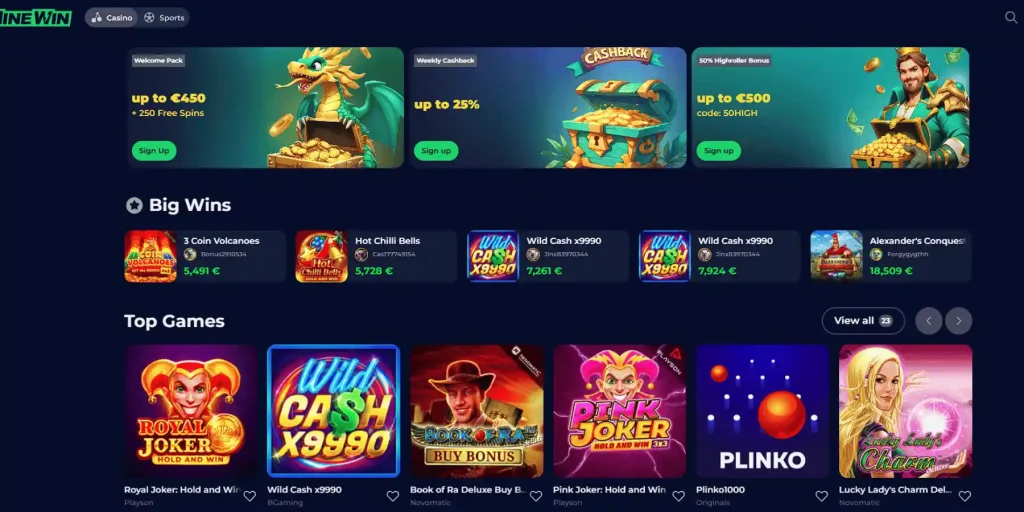
Nine Casino was the first brand Uno Digital Media B.V. brought to
market in 2021, making it the foundation upon which the entire network
was built. It launched with an international focus from day one,
supporting 18 languages and targeting players across Europe, Latin
America, and beyond.
The site runs a dark, modern interface with a clean navigation
structure that categorises its massive library of over 6,000 games drawn
from more than 80 software providers. The provider roster reads like an
industry who’s-who: NetEnt, Pragmatic Play, Play’n GO, Evolution Gaming,
Yggdrasil, Nolimit City, Hacksaw Gaming, and dozens of smaller studios
fill out the catalogue. This provider depth is where Nine Casino
genuinely outperforms its BetOnRed sister site, which offers closer to
4,000 titles.
The welcome package mirrors the network structure: up to €450 plus
250 free spins spread across three deposits. The first deposit attracts
a 100% match up to €150 with 150 free spins, the second a 55% match up
to €150 with 100 free spins, and the third a 100% match up to €150 with
no additional spins. Wagering sits at 35x on the bonus and deposit
combined, with a seven-day completion window and a €5 maximum bet during
wagering. Free spin winnings are capped at €50, which does limit the
upside for players chasing larger returns.
Nine Casino also offers a full sportsbook alongside its casino
product, covering pre-match and live markets across major football
leagues, tennis, basketball, and esports. The loyalty programme operates
on a tiered point system where players earn wager points and deposit
points to climb through ranks, with VIP status unlocking personal
account managers and increased withdrawal limits. Banking supports 31
payment methods, including Visa, Mastercard, Skrill, Neteller, Jeton,
eZeeWallet, Paysafecard, and seven cryptocurrencies. Minimum deposit is
€15, with withdrawals typically processed within 24 to 48 hours for
e-wallets.
Within the Uno Digital network, Nine Casino is the volume play. It
targets the player who wants the widest possible game selection and the
most payment flexibility, even if the site design itself is fairly
standard for the Curacao casino space. Compared to BetOnRed, it trades a
slightly less polished UI for a substantially deeper game library and
more payment routes.
| Metric | Details |
|---|---|
| Site Identity | Dark-themed, multi-language international casino with a modern grid layout |
| What Sets It Apart | 6,000+ games from 80+ providers, the deepest library in the network |
| Game Selection | Slots, live casino, table games, game shows, and a full sportsbook |
| Best Bonus Feature | Three-part welcome package totalling €450 + 250 free spins |
| Honest Drawback | Seven-day wagering window is tight for casual players |
| Ideal Player | Game-variety seekers who want maximum provider choice under one roof |
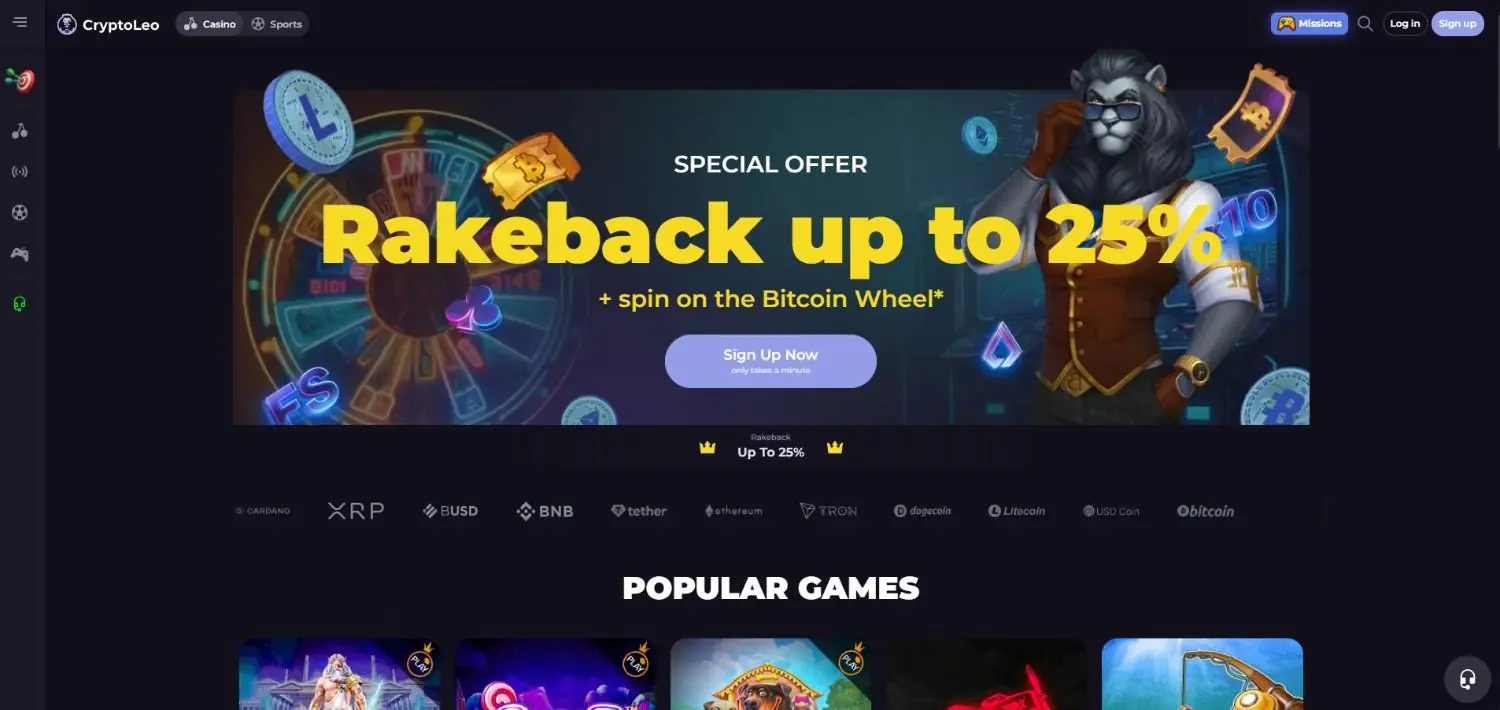
CryptoLeo launched alongside BetOnRed in 2022, completing the Uno
Digital Media trio. As the name makes obvious, this is the network’s
cryptocurrency-exclusive platform, designed for players who want to
deposit, play, and withdraw entirely in digital currencies.
The site runs a distinctive lion-themed dark interface with bold gold
accents that feels more premium than either Nine Casino or BetOnRed. The
game library is the strongest in the network despite the crypto-only
payment model, hosting over 5,000 titles from 81 software providers.
That count includes the full slate of major studios — NetEnt, Pragmatic
Play, Play’n GO — alongside niche providers like Fugaso, Reel Play, and
Tom Horn. A dedicated “Book” games category groups popular titles like
Book of Dead, Book of Sun, and Book of Wizard, while a separate jackpot
section houses approximately 20 progressive titles.
The welcome offer is structured differently to the other Uno Digital
brands: a 150% first-deposit match worth up to $3,000 in crypto terms,
which is significantly more generous than the €150 cap on BetOnRed’s
first deposit. Wagering requirements sit at 35x the bonus amount, with
slots contributing 100% and table games excluded entirely. Free spins
are distributed as part of ongoing promotions rather than concentrated
in the welcome package. CryptoLeo also runs a 25% weekly cashback on all
losses, which is one of the strongest cashback rates in the
international casino market and a genuine differentiator from sites like
Velobet or Cosmobet, where cashback rates typically hover around 10
to 15 percent.
Payment is limited to nine cryptocurrencies: Bitcoin, Ethereum,
Litecoin, Dogecoin, Tether, TRON, Ripple, Binance Coin, and one
additional option that rotates. Transactions process within minutes in
both directions, which is the core advantage of the crypto-exclusive
model. There are no fiat currency options whatsoever — no cards, no
e-wallets, no bank transfers. Customer support operates 24/7 via live
chat and email.
CryptoLeo is the Uno Digital brand for players who are already
comfortable with cryptocurrency and want the fastest possible
transaction speeds. It sacrifices fiat accessibility entirely but
rewards that trade-off with a larger game library than BetOnRed, a more
generous welcome bonus, and industry-leading cashback.
| Metric | Details |
|---|---|
| Site Identity | Lion-themed dark design with gold accents, crypto-native throughout |
| What Sets It Apart | 25% weekly cashback on losses and sub-one-hour crypto withdrawals |
| Game Selection | 5,000+ games from 81 providers including niche studios |
| Best Bonus Feature | 150% first-deposit match up to $3,000 (crypto) |
| Honest Drawback | Zero fiat payment options exclude non-crypto players entirely |
| Ideal Player | Crypto-native players who prioritise withdrawal speed and cashback |
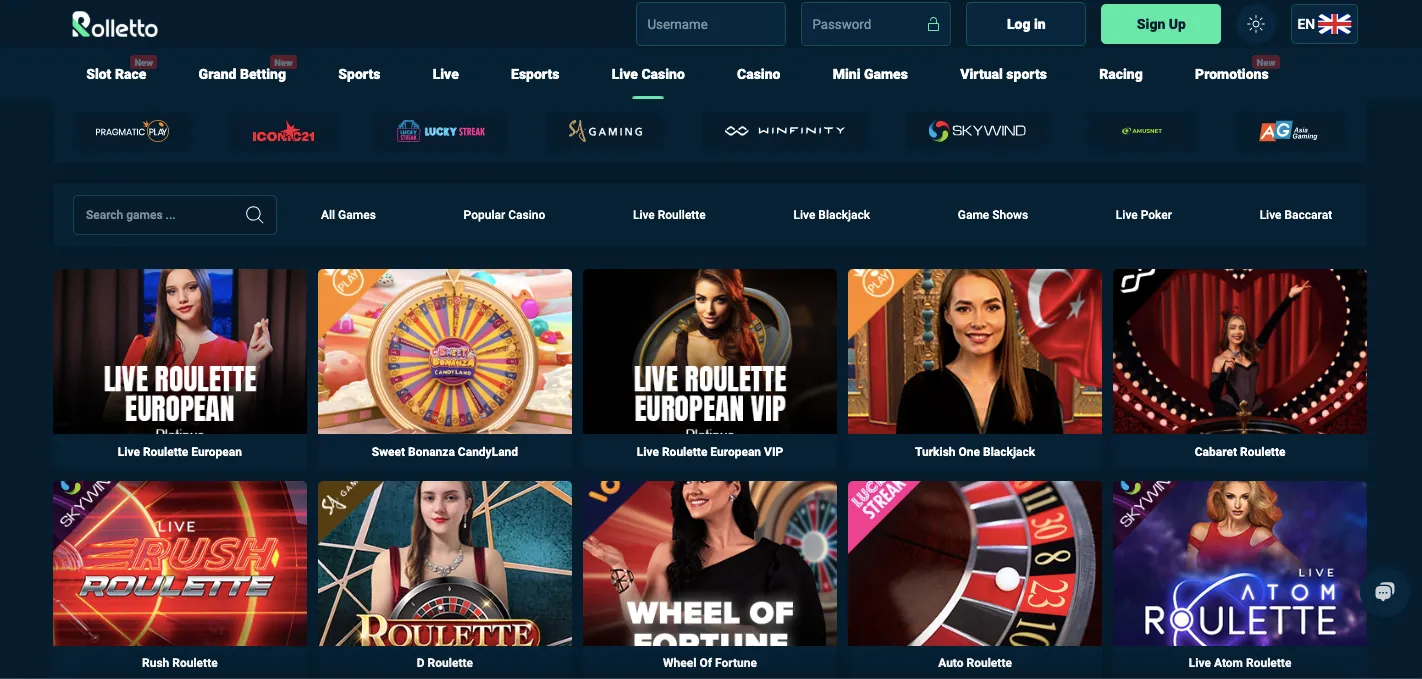
Rolletto operates under a separate Curacao licence and offers a
useful comparison for BetOnRed players who want a stronger sports
betting integration alongside their casino play. The site runs a clean
blue-and-white interface that balances its sportsbook and casino
sections evenly, with neither product feeling like an afterthought.
The casino side features approximately 3,000 games from providers
including Pragmatic Play, BGaming, Betsoft, and Wazdan. The live casino
section is powered primarily by Evolution Gaming, with additional tables
from Pragmatic Play Live and Ezugi. Table limits range from €1 to €5,000
on standard tables, with VIP options pushing higher for verified
players. Rolletto’s sportsbook covers over 30 sports with competitive
odds on football, tennis, basketball, MMA, and esports, including live
in-play markets with real-time statistics.
The welcome bonus offers a 100% match up to €150 plus 50 free spins
on the first deposit, with a 35x wagering requirement on the bonus
amount. Minimum deposit is €20, and the maximum bet during bonus play is
€5. The free spins are typically assigned to a specific Pragmatic Play
title. For returning players, Rolletto runs weekly reload bonuses and a
cashback programme that returns a percentage of net losses.
Banking supports Visa, Mastercard, Skrill, Neteller, ecoPayz,
MiFinity, and multiple cryptocurrencies including Bitcoin, Ethereum, and
Litecoin. Withdrawals for e-wallets process within 24 to 48 hours, while
crypto transactions clear faster. The minimum withdrawal is €20, and
while daily and weekly withdrawal caps exist, they are generally
reasonable for casual and mid-level players. Players seeking a
casino-first alternative in the same licensing tier may also want to
explore Sankra
sister site alternatives, which lean more heavily toward slot and
live dealer content.
Rolletto sits in a similar market position to BetOnRed but leans
harder into its sportsbook product. For players who split their time
between casino games and sports betting, the dual-product experience
here is marginally more cohesive than BetOnRed’s comparable
offering.
| Metric | Details |
|---|---|
| Site Identity | Clean blue-and-white design with equal weight on sports and casino |
| What Sets It Apart | Comprehensive sportsbook covering 30+ sports with in-play markets |
| Game Selection | ~3,000 casino games alongside a full sportsbook |
| Best Bonus Feature | 100% match up to €150 + 50 FS with 35x wagering |
| Honest Drawback | Smaller casino library than BetOnRed’s 4,000+ titles |
| Ideal Player | Dual-interest players who want strong sports and casino in one account |
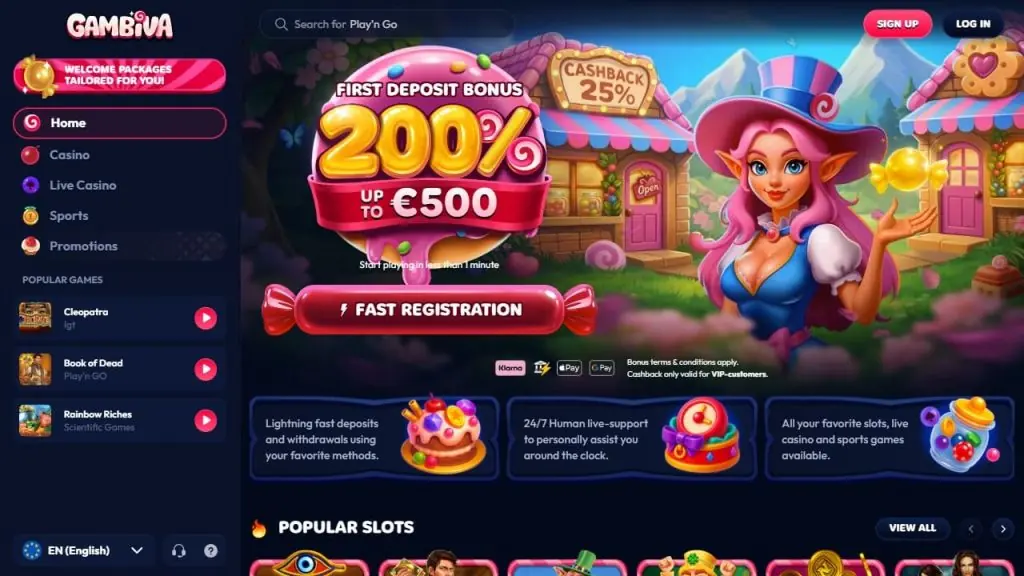
Gambiva operates from a separate Curacao licence and targets players
who want higher deposit match ceilings than the BetOnRed network
typically offers. The site runs a polished dark interface with a gold
accent colour scheme, and its game library draws from a comparable set
of providers to the Uno Digital brands.
The casino hosts approximately 3,500 games from more than 50
providers, including Pragmatic Play, Evolution Gaming, Play’n GO,
Hacksaw Gaming, and Push Gaming. The live casino section is well-stocked
with blackjack, roulette, baccarat, and game show titles from Evolution
and Pragmatic Play Live. Slots dominate the library, with a dedicated
Megaways section and a progressive jackpot category featuring titles
with six-figure prize pools.
Gambiva’s welcome package is where it genuinely differentiates
itself: a 100% match up to €750 plus 200 free spins across the first
deposit, which more than quadruples BetOnRed’s €150 first-deposit cap.
Wagering requirements sit at 40x the bonus amount, which is steeper than
the Uno Digital network’s 35x but still within the international casino
average. The maximum bet during wagering is €5, and free spin winnings
carry their own 35x playthrough with a capped withdrawal amount.
Banking options include Visa, Mastercard, Skrill, Neteller, Jeton,
MiFinity, Paysafecard, Bitcoin, Ethereum, Litecoin, and Tether. Minimum
deposit is €20, and withdrawals typically process within 24 to 72 hours
depending on the method. Crypto withdrawals clear fastest. Gambiva runs
a tiered VIP programme with personal account managers, increased
withdrawal limits, and exclusive reload offers at higher tiers.
For players who find BetOnRed’s €450 total welcome package too
modest, Gambiva offers a significantly larger entry point. The trade-off
is a slightly higher wagering multiplier and a less established
reputation than the Uno Digital brands. Players who value bonus value
above brand recognition will find Gambiva a reasonable BetOnRed
alternative.
| Metric | Details |
|---|---|
| Site Identity | Dark-themed with gold accents, premium high-roller positioning |
| What Sets It Apart | €750 + 200 FS welcome bonus, one of the highest in the Curacao space |
| Game Selection | ~3,500 games from 50+ providers including Hacksaw and Push Gaming |
| Best Bonus Feature | 100% up to €750 first-deposit match dwarfs BetOnRed’s €150 cap |
| Honest Drawback | 40x wagering is higher than the Uno Digital network’s standard 35x |
| Ideal Player | Bonus-driven players comfortable with higher wagering in exchange for bigger match amounts |
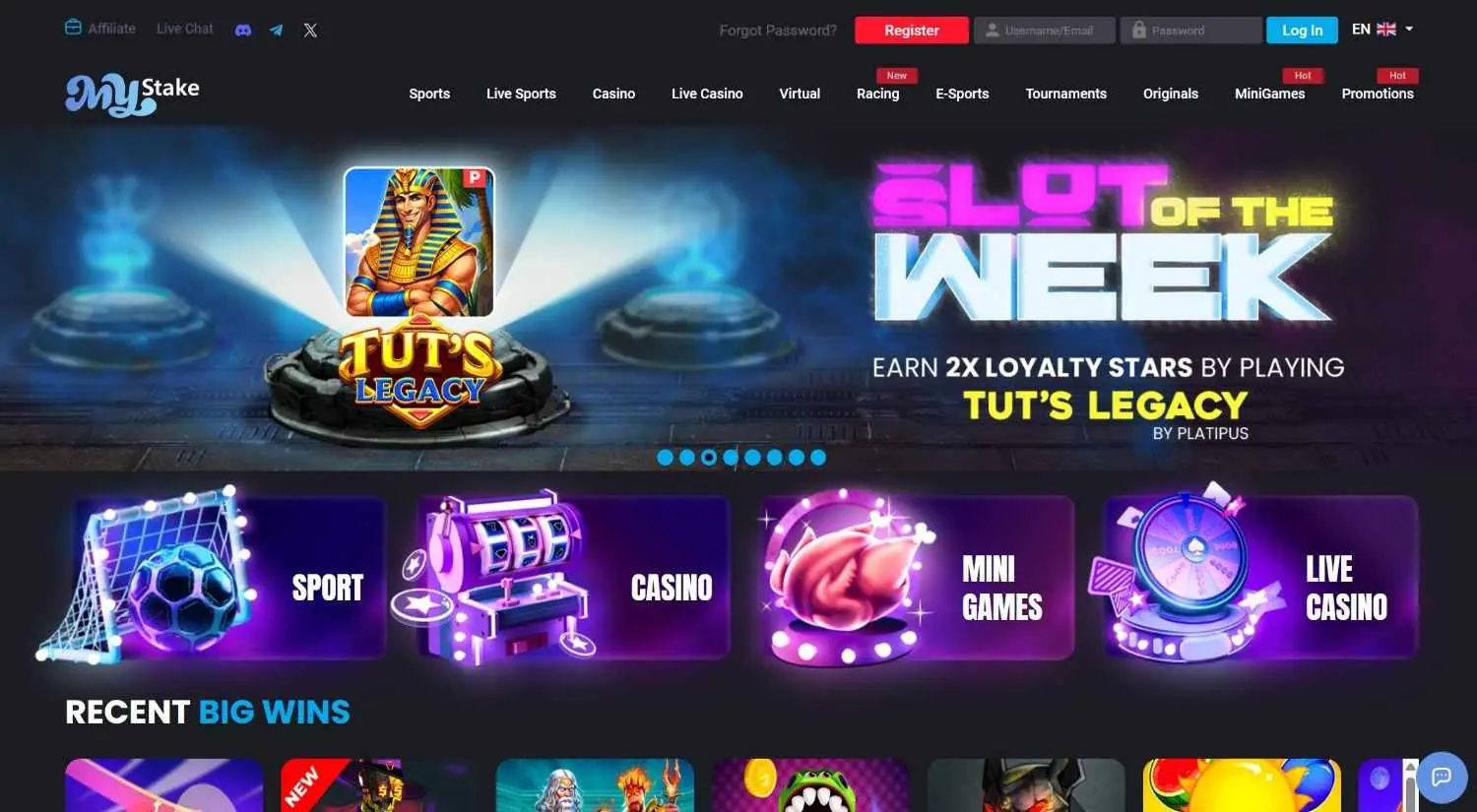
MyStake operates under a Curacao licence through a different operator
and has built a distinctive reputation in the international casino space
through its mini-games and crash game selection, a category that
BetOnRed does not emphasise. The site launched in 2020 and has grown
rapidly, particularly among players in Europe and Latin America.
The casino library exceeds 5,000 games from more than 60 providers,
including standard names like Pragmatic Play, NetEnt, and Evolution
alongside a proprietary mini-games section that includes crash games,
dice games, and quick-play formats. This mini-game category is where
MyStake genuinely stands apart from the Uno Digital network and from
most Curacao-licensed competitors. The sportsbook is similarly
comprehensive, covering major sports and esports with live betting
markets.
The welcome bonus offers a 150% first-deposit match up to $1,000,
which substantially outpaces BetOnRed’s 100% up to €150 first-deposit
offer. Wagering requirements are 30x the bonus amount, lower than both
BetOnRed’s 35x and Gambiva’s 40x, making this one of the more
playthrough-friendly welcome offers in the space. Free spins are
distributed separately through ongoing promotions rather than bundled
with the welcome package.
Banking supports a wide range of methods including Visa, Mastercard,
Skrill, Neteller, Jeton, MiFinity, Paysafecard, and multiple
cryptocurrencies. Minimum deposit is €10, which is lower than BetOnRed’s
€15 threshold. Withdrawals process within 24 to 48 hours for e-wallets.
MyStake’s customer support operates 24/7 via live chat and has a
generally positive reputation for response times. Established Kingdom
Casino sister sites share a similar target demographic in the
Curacao space, though MyStake’s mini-game integration gives it a
distinct edge for players who enjoy quick-play formats.
For BetOnRed players who want more game variety — particularly in the
mini-game and crash game categories — MyStake delivers a demonstrably
broader experience with more generous bonus terms. The lower wagering
requirement alone makes it worth considering as an alternative.
| Metric | Details |
|---|---|
| Site Identity | Clean modern interface with a strong focus on mini-games and crash gaming |
| What Sets It Apart | Proprietary mini-game and crash game section unavailable at BetOnRed |
| Game Selection | 5,000+ games from 60+ providers plus exclusive mini-games |
| Best Bonus Feature | 150% up to $1,000 with 30x wagering — lower than BetOnRed’s 35x |
| Honest Drawback | The mini-games section can encourage rapid-fire play; no built-in session timer |
| Ideal Player | Players who enjoy crash games and quick-play formats alongside traditional casino titles |
BetOnRed occupies a middle position within the Uno Digital Media
network, and that is both its strength and its limitation. In terms of
bonus generosity, BetOnRed’s three-part welcome package maxing at €450
plus 250 free spins matches Nine Casino exactly, but falls well short of
CryptoLeo’s €3,000 crypto ceiling. The 35x wagering requirement is
consistent across BetOnRed and Nine Casino, making neither a better deal
in pure bonus maths — the difference comes down to where you want to
play your wagering through, and Nine Casino’s larger library gives you
more options for that.
Game library breadth is where BetOnRed shows its weakest hand within
the network. At approximately 4,000 titles from 70+ providers, it sits
behind both CryptoLeo (5,000+) and Nine Casino (6,000+). All three sites
share the same major providers, so the gap comes from niche studios that
Nine Casino and CryptoLeo have onboarded but BetOnRed has not. For
players who stick to mainstream slots and live casino, this difference
is academic. For players who explore deeper catalogues, Nine Casino is
the clear network winner.
BetOnRed’s advantage within the network is its user interface, which
multiple independent reviewers have noted as the cleanest and most
navigable of the three Uno Digital brands. The customer support
experience at BetOnRed also earns higher marks than Nine Casino, where
response quality has been a documented complaint. For a Curacao-licensed
brand with a similarly clean interface and responsive support, Cosmobet’s full
profile covers another operator that prioritises usability alongside
game variety. On withdrawal speed, all three brands process e-wallet and
crypto withdrawals within similar timeframes, typically under 48 hours.
CryptoLeo holds the edge for crypto-only players due to its streamlined
transaction pipeline.
The loyalty programme structure is essentially identical across the
network: a tiered system with wager and deposit points, escalating
through named ranks toward VIP status that unlocks personal managers and
higher limits. No single brand in the Uno Digital network offers a
meaningfully differentiated loyalty experience.
Uno Digital Media B.V. has not launched any new casino brands in 2026
so far. The network remains at three active properties — Nine Casino,
CryptoLeo, and BetOnRed — with no public announcements regarding
expansion or contraction. This stability is worth noting in a Curacao
casino market where operators frequently launch and shutter brands
within months.
The most significant development for BetOnRed in early 2026 has been
a noted restriction on new player registrations in certain markets, with
at least one Canadian review site reporting that BetOnRed was not
accepting new players as of February 2026. Whether this reflects a
temporary pause, a market exit, or a compliance adjustment is not
publicly confirmed. The other Uno Digital brands appear to be operating
normally.
Casino Guru updated BetOnRed’s Safety Index to 8.6 out of 10 in its
most recent review cycle, an increase from the 8.2 score recorded in
earlier assessments. This upward movement suggests that the operator’s
complaint resolution record has improved or that new data has positively
impacted the rating methodology.
| Payment Method | Min Deposit | Max Deposit | Withdrawal Time | Fees |
|---|---|---|---|---|
| Visa / Mastercard | €15 | €3,000 | 1–3 business days | None stated |
| Skrill | €15 | €3,000 | 24–48 hours | None stated |
| Neteller | €15 | €3,000 | 24–48 hours | None stated |
| Jeton | €15 | €3,000 | 24–48 hours | None stated |
| eZeeWallet | €15 | €3,000 | 24–48 hours | None stated |
| Paysafecard | €15 | €1,000 | N/A (deposit only) | None stated |
| MiFinity | €15 | €3,000 | 24–48 hours | None stated |
| Bitcoin | €15 equivalent | €149,962 | Under 1 hour | Network fees only |
| Ethereum | €15 equivalent | €149,962 | Under 1 hour | Network fees only |
| Litecoin | €15 equivalent | €149,962 | Under 1 hour | Network fees only |
| Tether (USDT) | €15 equivalent | €149,962 | Under 1 hour | Network fees only |
| Bank Wire Transfer | €15 | €3,000 | 3–7 business days | Varies by bank |
The standout payment option across the BetOnRed network is
cryptocurrency, which processes
withdrawals in under an hour once approved, compared to the 24 to 48
hour standard for e-wallets. Nine Casino offers the broadest payment
selection at 31 methods, while CryptoLeo is limited to nine
cryptocurrencies. BetOnRed sits in between with 18 options that blend
traditional and crypto methods. Withdrawal caps reportedly sit at €2,500
per transaction for standard players, with VIP players accessing higher
limits. Paysafecard is deposit-only across the network.
| Site | Top 5 Providers | Approx. Game Count | Live Dealer Available |
|---|---|---|---|
| BetOnRed | Pragmatic Play, NetEnt, Evolution, Play’n GO, Yggdrasil | 4,000+ | Yes |
| Nine Casino | Pragmatic Play, NetEnt, Evolution, Nolimit City, Play’n GO | 6,000+ | Yes |
| CryptoLeo | Pragmatic Play, NetEnt, Play’n GO, Hacksaw Gaming, Evolution | 5,000+ | Yes |
Provider overlap across the Uno Digital network is substantial, with
Pragmatic Play, NetEnt, Evolution, and Play’n GO appearing on all three
brands. The meaningful differences come from second-tier studios. Nine
Casino has onboarded more niche providers — over 80 in total — which
explains its significantly larger game count. CryptoLeo’s 81 providers
produce a library of 5,000+, suggesting fewer titles per provider but
broader studio access. BetOnRed’s 70+ providers deliver a solid but
comparatively modest library. Operators outside the network, such as the
Bloody Slots
platform, draw from a near-identical provider pool, confirming that
Pragmatic Play and Evolution anchor the Curacao-licensed casino market.
For live casino specifically, all three brands rely primarily on Evolution Gaming, supplemented by
Pragmatic Play Live and, in some cases, Ezugi. Live table counts vary,
but the core offering of blackjack, roulette, baccarat, and game shows
is consistent across the network.
The live casino experience across the Uno Digital network is powered
predominantly by Evolution Gaming, which supplies the full suite of game
show titles — Crazy Time, Monopoly Live, Dream Catcher — alongside
standard live blackjack, roulette, and baccarat tables. Pragmatic Play
Live adds additional table capacity across all three brands. Table
limits start as low as €0.50 for entry-level tables and push into the
thousands on VIP options. BetOnRed hosts approximately 200 live titles,
Nine Casino offers a marginally larger selection, and CryptoLeo matches
BetOnRed closely. The quality of the streaming experience is consistent,
as all three brands pull from the same provider infrastructure.
None of the Uno Digital brands offer a dedicated native app on iOS or
Android app stores, though BetOnRed and Nine Casino both advertise
downloadable app options through their websites. In practice, the mobile
browser experience across all three brands is fully responsive and built
on HTML5, meaning games load and play smoothly on modern smartphones
without requiring a download. Navigation is adapted for touchscreen use,
and the core features — deposits, withdrawals, bonus claims, live chat —
are all accessible on mobile. Performance is comparable across the three
sites, with no significant loading speed or stability differences
reported. UKGC-licensed operators covered in our All British
Casino review confirm that responsive browser-based design has
become the industry standard regardless of licensing jurisdiction.
The loyalty programme follows an identical structure across BetOnRed
and Nine Casino: a tiered system where players earn Wager Points (1 per
€5 staked) and Deposit Points (1 per €10 deposited) to progress through
named ranks. Each rank contains five stages, with rewards like free
spins, bonus cash, and increased withdrawal limits unlocked at each
progression. Players who reach Gold 1 status gain access to the VIP
Club, which adds personal account managers, exclusive tournament
invitations, and priority support. CryptoLeo runs a similar structure
but frames its rewards through the crypto lens, including the option to
spin a Bitcoin wheel at certain deposit thresholds. The loyalty systems
are not cross-brand — progress on BetOnRed does not carry over to Nine
Casino or CryptoLeo.
BetOnRed operates under a single licence issued by the Curacao Gaming
Control Board, reference B2C-AK2QPM3H-1668JAZ. This licence covers all
three Uno Digital Media brands. Curacao licensing requires operators to
implement SSL encryption, KYC verification procedures, and basic
responsible gambling measures, though the regulatory
licensing framework is less rigorous than European bodies like the
UKGC or MGA.
BetOnRed implements SSL encryption across its entire platform, and
KYC verification is required before withdrawals are processed. Players
must submit government-issued identification and proof of address, which
is standard procedure for Curacao-licensed operators. Some Casino Guru
complaints reference delays in the verification process, particularly on
mobile devices, though these appear to have been addressed in more
recent feedback.
For responsible gambling tools, BetOnRed offers in-account deposit
limits that can be set on a daily, weekly, or monthly basis. Players can
also request voluntary self-exclusion from their account for periods
ranging from six months to one year. Loss limits and session time
reminders are available through the account settings. Account closure
can be requested at any time by contacting customer support. There is no
published ADR (Alternative Dispute Resolution) provider specifically
named on the BetOnRed site, though Casino Guru has successfully mediated
complaints between players and the operator, which suggests some
willingness to engage with third-party resolution.
| Site | Licence Body | Licence No. | Responsible Gambling Tools | RNG Testing |
|---|---|---|---|---|
| BetOnRed | Curacao Gaming Control Board | B2C-AK2QPM3H-1668JAZ | Deposit limits, loss limits, self-exclusion (6–12 months), account closure |
Provider-level (Pragmatic Play, NetEnt, etc.) |
| Nine Casino | Curacao Gaming Control Board | B2C-AK2QPM3H-1668JAZ | Deposit limits, loss limits, self-exclusion, account closure | Provider-level |
| CryptoLeo | Curacao Gaming Control Board | B2C-AK2QPM3H-1668JAZ | Deposit limits, self-exclusion, account closure | Provider-level |
| Rolletto | Curacao Gaming Control Board | Separate licence | Deposit limits, self-exclusion, account closure | Provider-level |
| Gambiva | Curacao Gaming Control Board | Separate licence | Deposit limits, loss limits, self-exclusion | Provider-level |
| MyStake | Curacao Gaming Control Board | Separate licence | Deposit limits, self-exclusion, cooling-off | Provider-level |
RNG testing across the BetOnRed network is handled at the game
provider level rather than through an independent operator-level audit.
This means that individual titles from Pragmatic Play, NetEnt,
Evolution, and other licensed studios carry their own certification, but
BetOnRed itself has not published results from an independent testing
house like eCOGRA, iTech Labs, or GLI.
BetOnRed’s reputation profile presents a mixed picture that warrants
careful assessment. Casino Guru’s Safety Index of 8.6 out of 10 places
it firmly in the “safe” category, with a low volume of complaints
relative to its estimated revenue. The site currently carries 92 black
points, derived from one resolved complaint involving a player from
Romania who raised concerns about responsible gambling practices and
payment processing methods.
A more serious complaint on Casino Guru involved an Austrian player
who reported losses exceeding €30,000 and alleged persistent errors with
the Book of Dead slot that went unresolved despite repeated discussions
with a VIP manager. The complaint was ultimately rejected due to
insufficient supporting evidence, but the pattern of the player’s
frustration — particularly around the relationship between VIP
management communication and actual issue resolution — echoes themes
found in other Uno Digital complaints.
| Source | What Players Praise | What Players Criticise |
|---|---|---|
| Trustpilot (44+ reviews) | Fast deposits, broad game selection, responsive live chat, mission system engagement |
Withdrawal delays on first cashout, bonus terms clarity, verification friction |
| Game variety, crypto payment speed | Limited awareness of the brand, questions about Curacao licensing credibility |
|
| Casino Guru (Safety Index 8.6) | Low complaint volume, reasonable resolution attempts | Somewhat unfair T&C clauses identified, verification delays on mobile |
The Trustpilot profile under betonred.live holds a 4-star rating from
44 reviews. Positive reviews highlight ease of use, fast deposits, the
mission zone engagement system, and the breadth of available games.
Negative reviews cluster around withdrawal processing for first-time
cashouts — a common friction point at Curacao-licensed casinos where KYC
is triggered at withdrawal rather than registration — and some confusion
around bonus wagering terms. Casinomeister does not currently list
BetOnRed as rogue or warned. For comparison, larger networks such as PartyCasino
sister sites carry heavier review volumes but face proportionally
more documented complaints relative to their player base.
BetOnRed’s welcome package delivers up to €450 plus 250 free spins
across three deposits. Here is a concrete worked example using the first
deposit: a player deposits €150 and receives a 100% match of €150 plus
150 free spins. The total balance is €300. Wagering at 35x applies to
the bonus and deposit combined, meaning the player must wager €300
multiplied by 35, totalling €10,500 in bets within seven days. Free spin
winnings are capped at €50, and those winnings carry their own 35x
wagering requirement.
That seven-day window is the most punishing element of the bonus
structure. Completing €10,500 in slot wagers within a week requires an
average daily turnover of €1,500, which is achievable for regular
players but unrealistic for casual depositors. Nine Casino applies
identical terms, so switching within the network offers no advantage on
bonus maths. CryptoLeo’s 150% match up to $3,000 offers a higher
ceiling, but the wagering mechanics are comparable, making it more
attractive only for high-deposit crypto players.
No brand within the Uno Digital network currently offers a no-deposit
bonus as part of its standard welcome package, though promotional codes
for free spins on specific slots (such as BETRED100 for Bonanza Billion)
have appeared periodically. These promotional offers carry separate 30x
wagering terms and no cashout cap in some cases, making them materially
better value than the standard welcome free spins.
The most notable gap across the Uno Digital network is the absence of
published RNG audit results at the operator level. While individual game
providers carry their own certifications, BetOnRed has not commissioned
or published independent testing results from bodies like eCOGRA or iTech Labs. For players who
value transparency, this is a meaningful omission.
Withdrawal caps for standard players reportedly sit at €2,500 per
transaction, which can be frustrating for players on winning streaks.
The VIP programme raises these limits, but the exact thresholds are not
publicly documented, forcing players to contact support for specifics.
This lack of published withdrawal limit transparency is a recurring
criticism of Curacao-licensed operators more broadly, and BetOnRed is no
exception.
The responsible gambling toolkit, while functional, could be more
prominent. Deposit limits and self-exclusion options exist but are
tucked into account settings rather than surfaced proactively during
registration or gameplay. A session timer that actively notifies players
of time spent is not clearly available, and reality-check pop-ups are
not prominently advertised. BetOnRed does not publish a named ADR
provider, which means players who escalate complaints beyond the
operator’s internal team have limited formal recourse outside of Casino
Guru’s mediation service.
Phone support is absent across the entire Uno Digital network. All
customer contact runs through live chat and email, which operate 24/7
but lack the immediacy that some players prefer for urgent issues like
locked accounts or payment disputes. The FAQ sections across the three
brands are adequate but not comprehensive, particularly around
responsible gambling tools and bonus terms.
Finally, the mobile
experience, while functional through responsive web design, lacks a
dedicated native app on either app store. The downloadable options
advertised on the BetOnRed and Nine Casino sites are essentially
progressive web apps rather than full-featured native applications.
For players who prioritise game variety above all else, Nine Casino
is the clear pick within the network. Its 6,000+ games from 80+
providers dwarf BetOnRed’s catalogue, and the bonus structure is
identical, making the switch a pure upgrade for library depth.
Crypto-native players should go directly to CryptoLeo. The faster
transaction speeds, higher welcome bonus ceiling, and 25% weekly
cashback make it the most rewarding Uno Digital brand for players
who hold and use cryptocurrency.
Players who want the cleanest interface and the best customer support
experience within the network should stay with BetOnRed. It may have the
smallest game library of the three, but its navigation, support
responsiveness, and balanced casino-sportsbook integration make it the
most user-friendly option.
For those looking outside the Uno Digital network entirely, MyStake
offers the best combination of bonus generosity and wagering fairness,
with a 150% match up to $1,000 at just 30x wagering. Rolletto sister
brands share a strong sportsbook focus for players who split time
between sports betting and casino play. Gambiva suits high rollers who
want the biggest possible welcome match and are comfortable with 40x
wagering.
BetOnRed sits comfortably as the mid-range brand in an operator
network that has grown quickly since 2021. Uno Digital Media B.V. has
built three distinct brands that share a consistent infrastructure —
same licence, same provider core, same bonus mechanics — while
differentiating on payment method, game library depth, and target
audience. The Casino Guru Safety Index of 8.6 and a clean Casinomeister
record provide reasonable reassurance, though the Curacao licensing
framework inherently offers less player protection than European
alternatives.
Within the network, Nine Casino is the strongest overall proposition
for most players, combining the deepest game library with the broadest
payment options and identical bonus terms to BetOnRed. Outside the
network, MyStake edges ahead on bonus value and wagering fairness, while
Rolletto and Gambiva offer differentiated experiences for sports bettors
and high rollers respectively.
For anyone registering at BetOnRed or any of its sister sites,
complete your KYC verification immediately after registration — do not
wait until your first withdrawal request. Uno Digital brands trigger KYC
at withdrawal, which means delays if you submit documents only when you
want to cash out. Upload your ID, proof of address, and payment method
verification proactively to ensure your first withdrawal processes
without friction.

Dermot Heathcote
Senior Casino Analyst
Dermot covers UK-licensed online casinos for WagerPals, focusing on UKGC compliance, payment safety, and bonus terms. He spends most of his time reading licence registers, withdrawal terms, and player-complaint forums so readers don't have to.