

Zizobet
5.0Welcome Bonus
550% up to £3,800 across 4 deposits + 50 Free Spins
- High Bonus System
- Dual-wallet system
- 24/7 Chat Support
Avantgarde Casino launched in 2021 under SSC Entertainment N.V., operating with a Curaçao eGaming licence (#8048/JAZ). The operator runs at least six confirmed sister sites, including This Is Vegas and Paradise 8. A merger with True Dynasty Limited expanded the network while retaining Rival Gaming as its primary software backbone.
This operator does not hold a UK licence, so it is not permitted to offer gambling to consumers in Great Britain, and UK player protections such as GAMSTOP, ADR dispute resolution and licensed-operator safeguards do not apply. This page is published for information only and is not a recommendation to play.
Zizobet
5.0Welcome Bonus
550% up to £3,800 across 4 deposits + 50 Free Spins

Cosmobet
5.0Welcome Bonus
750% + Up to 7000€ 1000 FREESPINS +25% Cashback

Wildies
4.9Welcome Bonus
Welcome Pack 400% up to £3200 + 150 FS

WinBeast
4.9Welcome Bonus
WELCOME PACK £5000 + 500 Free Spins
SlotoSport
4.9Welcome Bonus
Welcome Package £12000 + 777 FS

Velobet
4.8Welcome Bonus
GET UP TO 330% BONUS + 300 FREE SPINS!

7Gear
4.8Welcome Bonus
Welcome Reward Up To £5000 + 500 FS

Spin Polo
4.8Welcome Bonus
Welcome Pack 777% up to £ 7777 + 385 FS

Lilu Casino
4.7Welcome Bonus
Welcome Package 325% Up to £3750 + 500 FS

Truststake
4.7Welcome Bonus
100% Up To 1500 EUR + 100 FS

CleanWins
4.7Welcome Bonus
Welcome Bonus 200% Up To £2000 + 200 FS

Rolletto
4.6Welcome Bonus
725% Up to 7000€+ 200 FREESPINS + 20% Cashback
Betmac
4.6Welcome Bonus
100% Up To 525 EUR + 100 FS

AmunBet
4.6Welcome Bonus
Welcome Package 450% To £3000 + 450 FS

Smash Casino
4.5Welcome Bonus
600% Up To £10 000 + 25% Cashback

Daytona Spin
4.5Welcome Bonus
Welcome Pack 255% up to £4500 + 255 FS
| Detail | Info |
|---|---|
| Full Legal Name | SSC Entertainment N.V. |
| Parent Company | True Dynasty Limited (affiliate programme merger) |
| Primary Licence(s) | Curaçao eGaming #8048/JAZ |
| Active Casino Brands | 8+ |
| Casino Guru Safety Index | 3.5/10 (as of April 2026) |
| Trustpilot Rating | 4.6/5 from 924 reviews (as of April 2026) |
SSC Entertainment N.V. has operated offshore casinos since at least 2005, registered at Heelsumstraat 51, E-Commerce Park Vredenberg, Curaçao. The company merged its portfolio with True Dynasty Limited around 2024, bringing brands like True Fortune and Fatbet under the same affiliate umbrella. Compared to Bet365 sister sites, which process KYC across regulated networks within hours, SSC Entertainment operates with considerably less regulatory oversight. Coral sister sites benefit from Flutter Entertainment's cross-brand player protections, and the gap between that corporate accountability and what SSC Entertainment provides is substantial.
| Brand | Our Rating | Welcome Bonus | Payout Speed (E-Wallets) | Top Feature |
|---|---|---|---|---|
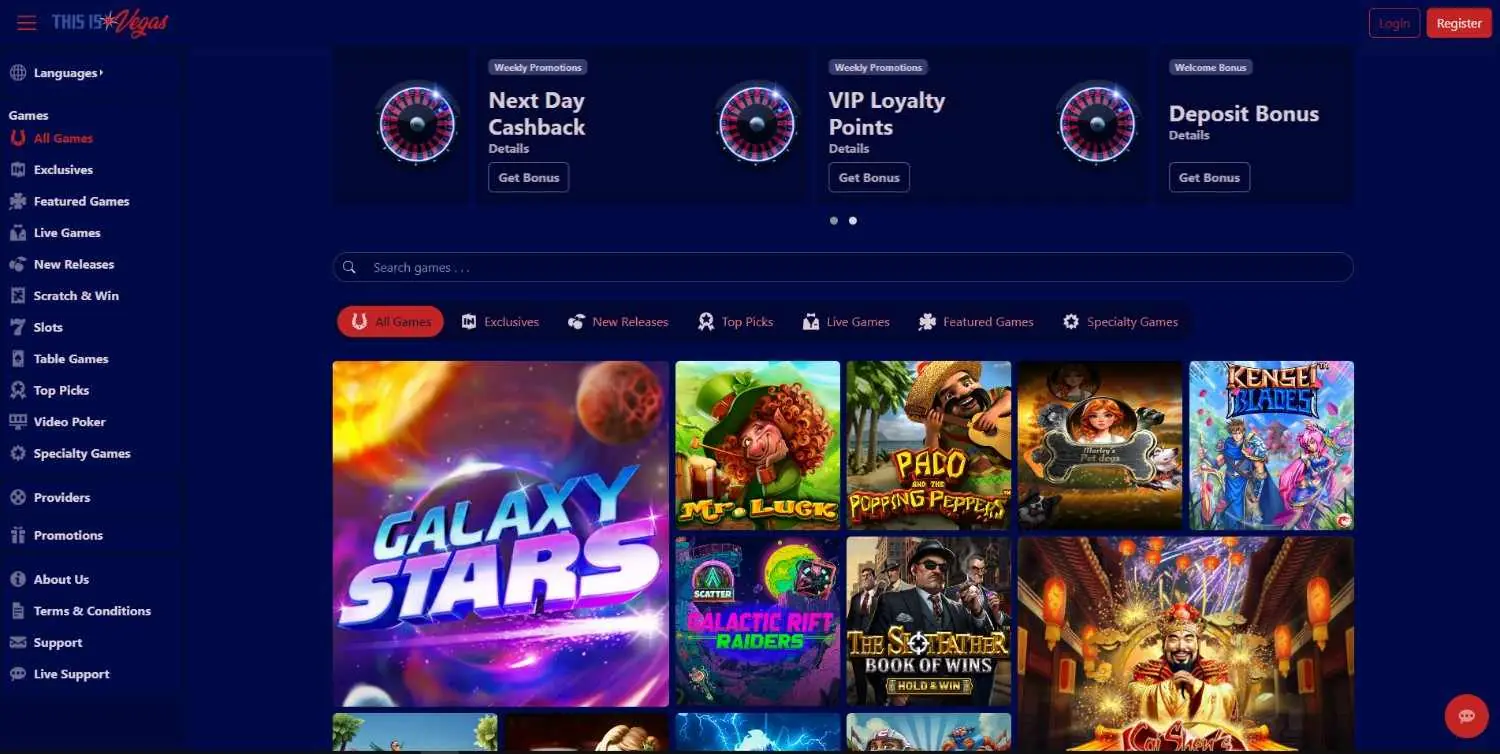
| This Is Vegas | 2.5/5 | 200% up to $1,000 + 100% cashback | 5–10 business days | Vegas-themed i-Slots library |
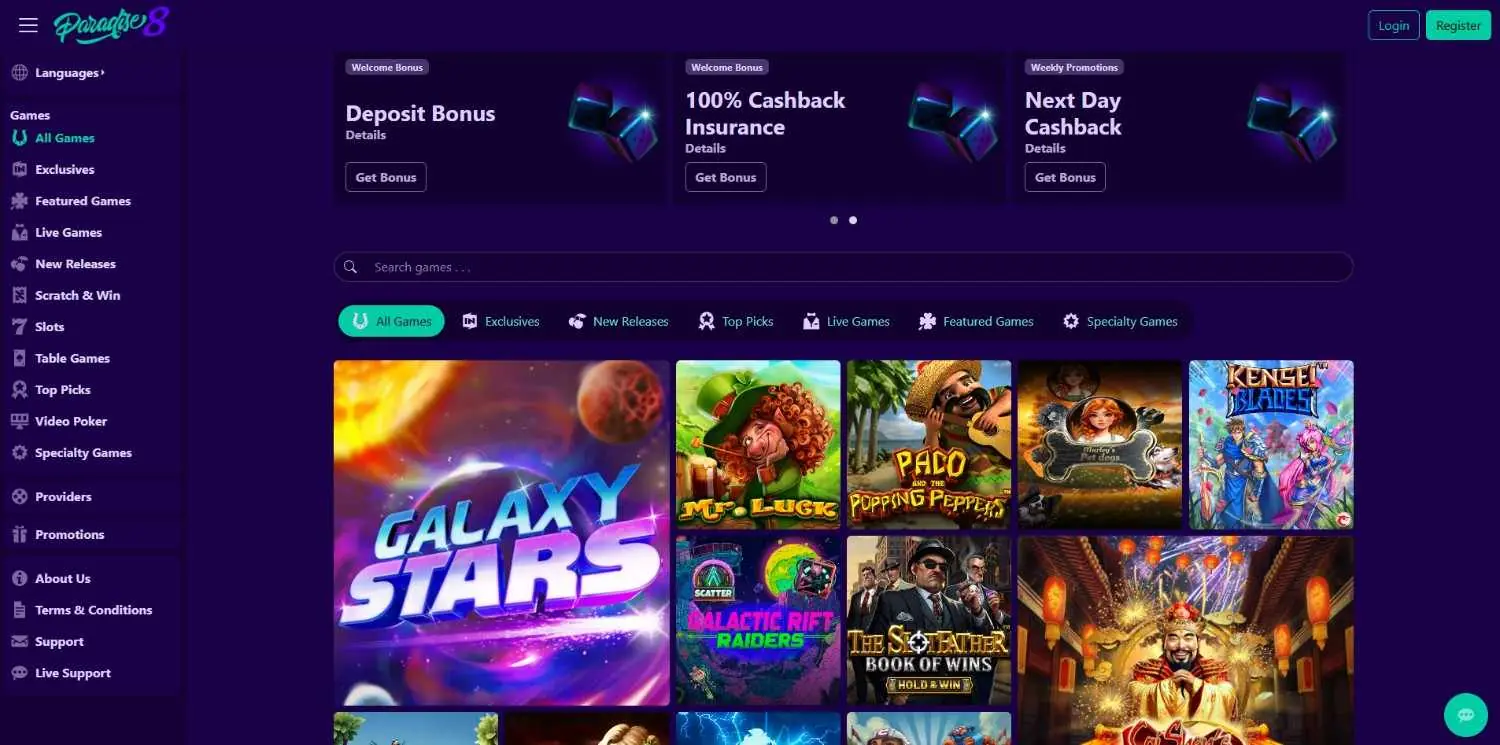
| Paradise 8 | 2/5 | 200% up to $1,000 + 100% cashback | 7–14 business days | 365-day daily free spins |
| DaVinci's Gold | 2/5 | 200% up to $1,000 + cashback | 7–14 business days | Downloadable desktop client |
| Cocoa Casino | 2/5 | 200% up to $1,000 + cashback | 7–14 business days | Identical bonus structure |
Bonuses are subject to change — always verify the latest terms directly on each operator's website before depositing.
| Brand | Our Rating | Welcome Bonus | Payout Speed (E-Wallets) | Top Feature |
|---|---|---|---|---|
| MyStake | 3.5/5 | 150% up to €1,000 | 0–24 hours (crypto) | Mini-games and sportsbook |
| Rolletto | 3/5 | 150% up to €1,500 | 0–24 hours (crypto) | 7,000+ game library |
These are Curaçao-licensed competitors from different operators, included because they outperform the SSC Entertainment network on withdrawal speed, game variety, and trust metrics. Players familiar with UKGC-regulated networks like William Hill sister site options will notice the gap in regulatory oversight immediately.
| Game Variety | Payout Speed | Bonus Value | Trust |
|---|---|---|---|
| 4/10 | 2/10 | 5/10 | 3/10 |
This Is Vegas launched in 2006, making it the oldest brand in the SSC Entertainment network. The casino targets US, Australian, and New Zealand players with a neon-drenched aesthetic that replicates the energy of a Las Vegas casino floor.
The site operates under the same Curaçao eGaming licence (#8048/JAZ) as Avantgarde Casino. Game selection leans heavily on Rival Gaming's catalogue, including the provider's signature i-Slots, interactive narrative-driven slot games with branching storylines. Betsoft, Saucify, Tom Horn, and Spinomenal round out the library at approximately 800 titles across slots, table games, and a limited live dealer section.
The welcome offer mirrors the network's standard formula: a 200% match up to $1,000 on first deposit plus 100% cashback insurance with 1x wagering on the cashback option. The match bonus carries 35x wagering requirements. Minimum deposit is $25, and the max cashout on deposits under $249 is capped at 10x the deposit amount, a restriction across every SSC Entertainment property.
This Is Vegas shares the network's 6-tier loyalty programme, awarding comp points on every wager that convert at 1,000 points per $1. Higher tiers unlock weekly cashback between 10% and 25%. Banking mirrors the network: VISA, MasterCard, Skrill, Neteller, Bitcoin, with withdrawals processed in 15–18 business days. Within the SSC Entertainment family, This Is Vegas targets players who value nostalgic Rival Gaming content and an established track record, though that track record carries baggage from unresolved complaints.
| Metric | Details |
|---|---|
| Site Identity | Neon Las Vegas theme with animated lobby graphics |
| What Sets It Apart | Largest i-Slots selection in the network; 2006 launch gives it the longest operating history |
| Game Selection | ~800 games from Rival, Betsoft, Saucify, Tom Horn, Spinomenal |
| Best Bonus Feature | 100% cashback insurance with 1x wagering |
| Honest Drawback | 15–18 business day withdrawal processing and 10x deposit max cashout cap |
| Ideal Player | Rival Gaming fans who value narrative-driven slots and network longevity |
| Game Variety | Payout Speed | Bonus Value | Trust |
|---|---|---|---|
| 4/10 | 2/10 | 6/10 | 3/10 |
Paradise 8 has been part of the SSC Entertainment network since 2005, operating as one of the original Rival Gaming casinos. The site targets a broad international audience with a tropical paradise theme, bright colours, and a layout that feels dated compared to modern casino design.
Licensed under Curaçao eGaming (#8048/JAZ), Paradise 8 shares the same provider roster as its siblings: Rival Gaming, Betsoft, Saucify, Fresh Deck Studios, and Tom Horn. Total game count sits around 800 titles. The live dealer section runs through Fresh Deck Studios rather than Evolution, restricting table variety and streaming quality.
The welcome offer follows the network template: 200% match up to $1,000 or 100% cashback insurance. Where Paradise 8 differentiates itself is the daily free spins promotion, awarding five free spins every day for 365 days after a qualifying $25 deposit. That totals 1,825 free spins across a year, though spin values are low and winnings carry 35x wagering. Players exploring sites like Paradise 8 will notice the same withdrawal bottleneck: 15–18 business days as standard, with Casino Guru forum reports describing waits stretching beyond that. The monthly withdrawal cap sits at approximately $10,000.
| Metric | Details |
|---|---|
| Site Identity | Tropical paradise theme with bright, dated design |
| What Sets It Apart | 365-day daily free spins promotion (1,825 total spins per year) |
| Game Selection | ~800 games from Rival, Betsoft, Saucify, Fresh Deck Studios, Tom Horn |
| Best Bonus Feature | Daily free spins for a full year after first qualifying deposit |
| Honest Drawback | Outdated interface and extremely slow withdrawal processing |
| Ideal Player | Casual players who value daily login rewards over fast cashouts |
DaVinci's Gold, Cocoa Casino, CandyLand, and several newer additions round out the SSC Entertainment roster. These brands share the same Curaçao eGaming licence (#8048/JAZ), the same Rival Gaming and Betsoft catalogue of approximately 800 titles, the same 200% welcome bonus template with 35x wagering, and the same 15–18 business day withdrawal timeline. DaVinci's Gold is the only network property that still offers a legacy downloadable desktop client alongside the instant-play browser version, which may appeal to players who prefer desktop software over browser sessions. Cocoa Casino and CandyLand casino alternatives are functionally identical to Avantgarde Casino beneath their respective visual themes. Players comparing Cosmobet sister sites or Gambiva sister sites to any of these brands will find dramatically faster processing at those Curaçao-licensed competitors, where crypto withdrawals routinely clear within 24 hours. For practical purposes, choosing between SSC Entertainment's secondary brands is a purely aesthetic decision — the operational experience is uniform.
| Game Variety | Payout Speed | Bonus Value | Trust |
|---|---|---|---|
| 9/10 | 8/10 | 7/10 | 6/10 |
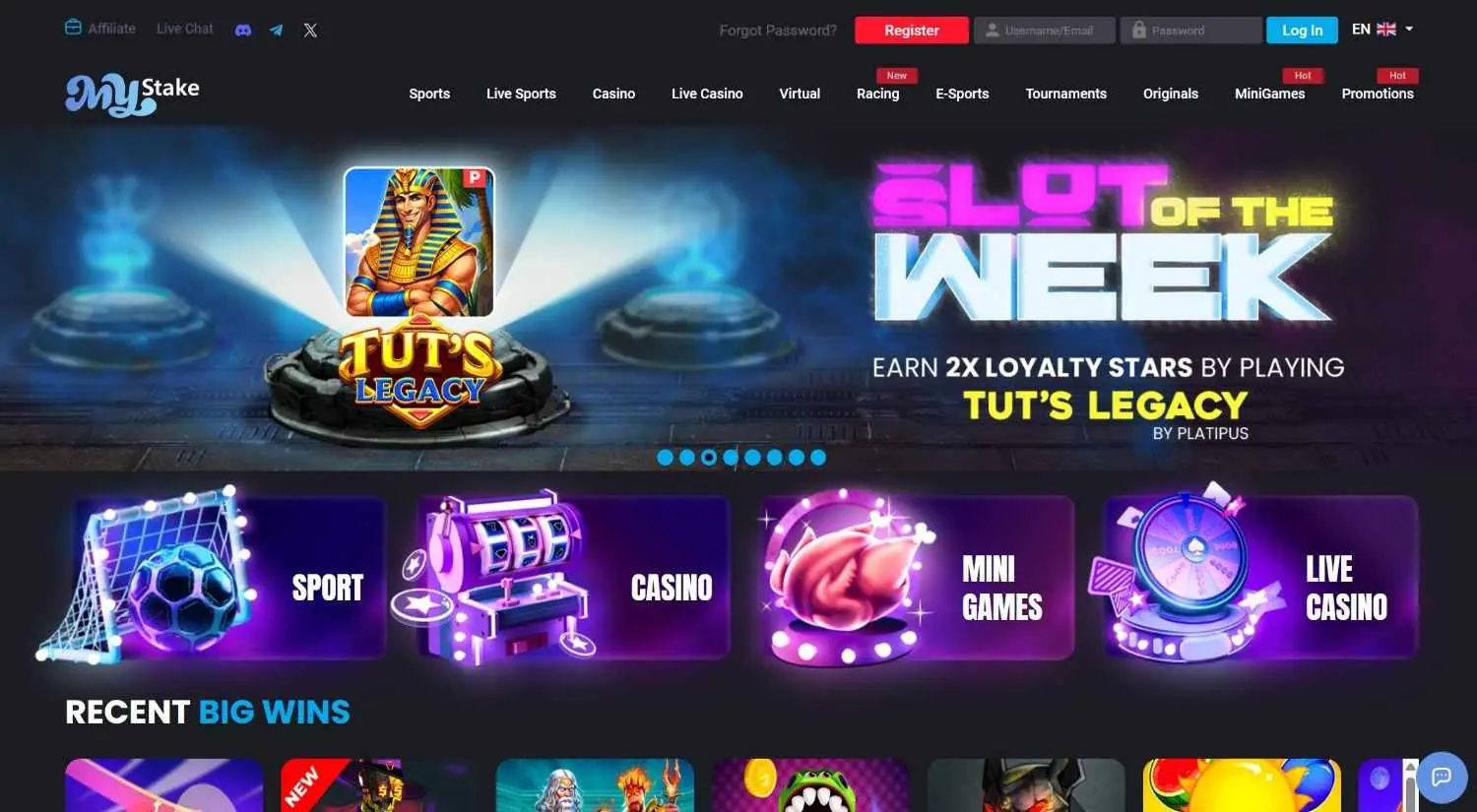
MyStake operates under Santeda International B.V. with a Curaçao licence, offering a fundamentally different experience from the SSC Entertainment network. Launched in 2020, MyStake has rapidly grown into one of the largest Curaçao-licensed casinos by game count, hosting over 7,000 titles from more than 60 providers including Pragmatic Play, Evolution, Play'n GO, Hacksaw Gaming, and Push Gaming. For the full operator family, our guide to MyStake sister site alternatives maps every brand under the Santeda umbrella.
The welcome bonus offers a 150% match up to €1,000 with 30x wagering requirements, noticeably lower than Avantgarde Casino's 35x despite a less flashy headline match percentage. Minimum deposit is €20. Where MyStake truly separates itself is its mini-games section featuring original titles like Chicken, Dino, and Plinko, alongside a fully integrated sportsbook covering football, basketball, MMA, and esports.
Banking is where the gap becomes most apparent. Crypto withdrawals (Bitcoin, Ethereum, Litecoin, Tether) process within minutes to a few hours. E-wallet withdrawals clear within 24 hours. MyStake also imposes no withdrawal fees, whereas Avantgarde Casino charges $10–$40 per withdrawal. Monthly withdrawal limits start at €15,000 for standard accounts. The responsible gambling toolkit includes deposit limits, loss limits, session time reminders, and self-exclusion at the operator level.
| Metric | Details |
|---|---|
| Site Identity | Modern, dark-themed multi-product platform with sportsbook integration |
| What Sets It Apart | 7,000+ games, original mini-games, integrated sportsbook |
| Game Selection | 7,000+ from 60+ providers including Pragmatic Play, Evolution, Hacksaw |
| Best Bonus Feature | 150% up to €1,000 with 30x wagering — lower playthrough than Avantgarde |
| Honest Drawback | Interface can feel cluttered due to the sheer volume of content |
| Ideal Player | Players who want maximum game variety, fast crypto withdrawals, and sports betting under one roof |
| Game Variety | Payout Speed | Bonus Value | Trust |
|---|---|---|---|
| 9/10 | 9/10 | 6/10 | 6/10 |
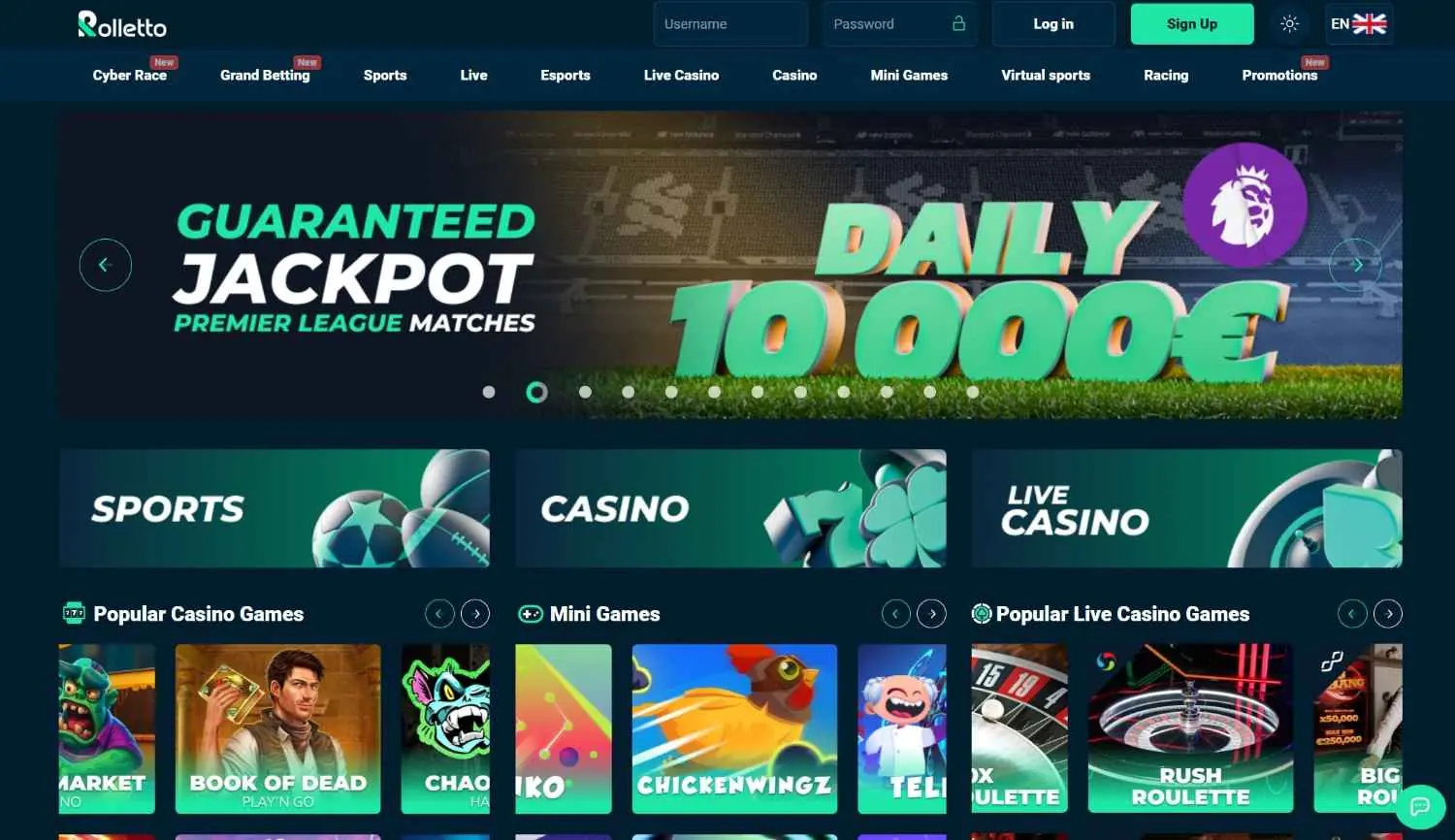
Rolletto is operated by Santeda International B.V. under a Curaçao licence, offering a crypto-first casino experience with support for Bitcoin, Ethereum, Litecoin, Tether, Dogecoin, and additional altcoins. The site launched in 2021 and has built its reputation on fast cryptocurrency transactions, processing withdrawals within minutes for verified accounts. Our Rolletto sister site list covers the broader Santeda network for players exploring this operator.
The game library exceeds 7,000 titles from providers including Pragmatic Play, Evolution, BGaming, Hacksaw Gaming, and Nolimit City. Live casino coverage through Evolution and Pragmatic Play Live is comprehensive, with hundreds of tables spanning blackjack, roulette, baccarat, and game shows. This contrasts sharply with Avantgarde Casino's limited Fresh Deck Studios live dealer offering.
Rolletto's welcome package provides a 150% match up to €1,500 with 35x wagering and free spins on selected slots. The site also runs a sportsbook and esports section. Crypto withdrawals clear in under an hour for verified players, with no fees charged by the casino. The responsible gambling section includes deposit limits, loss limits, wagering limits, and account self-exclusion.
| Metric | Details |
|---|---|
| Site Identity | Dark, modern crypto-first design with clean navigation |
| What Sets It Apart | Near-instant crypto withdrawals and 7,000+ game library |
| Game Selection | 7,000+ from Pragmatic Play, Evolution, BGaming, Hacksaw, Nolimit City |
| Best Bonus Feature | 150% up to €1,500 with sportsbook and esports access |
| Honest Drawback | Fiat withdrawal options more limited than crypto alternatives |
| Ideal Player | Crypto-native players seeking fast payouts and a comprehensive casino-sportsbook experience |
Avantgarde Casino sits in an unusual position within the SSC Entertainment network: it offers the highest headline welcome bonus at 400% up to $2,000, significantly above the 200% standard at This Is Vegas, Paradise 8, and DaVinci's Gold. However, this apparent generosity is undercut by the 10x deposit max cashout rule on deposits under $249, which applies network-wide and severely limits what players can actually withdraw.
Game libraries are functionally identical across the network. Every SSC Entertainment brand draws from the same Rival Gaming, Betsoft, Saucify, and Tom Horn catalogue with approximately 800 titles. There is no exclusive content at any brand, making the choice between them largely aesthetic. Avantgarde Casino's dark, minimalist design is arguably the most modern in the family.
Loyalty programme structure is uniform: the same 6-tier system with identical comp point conversion rates. No brand offers faster withdrawals or exclusive promotions. The network's most significant weakness — 15–18 business day withdrawal processing with $10–$40 in fees — is consistent across every property.
The SSC Entertainment network underwent its most significant structural change in recent years with the merger into the True Dynasty Limited affiliate programme. This brought former standalone operations like True Fortune, Fatbet, and Pure Casino under the same administrative umbrella. The merger expanded the network's total brand count but has not resulted in noticeable improvements to withdrawal speeds, customer support responsiveness, or game library diversity according to player reports through early 2026.
No new casino brands have launched under the SSC Entertainment banner in 2026. The network appears focused on maintaining existing operations rather than expansion, a neutral signal that at least indicates stability in a segment where sudden brand closures are not uncommon. For players seeking actively expanding Curaçao networks, Velobet sister brands offer a growing portfolio with faster withdrawal infrastructure.
| Payment Method | Min Deposit | Max Deposit | Withdrawal Time | Fees |
|---|---|---|---|---|
| VISA / MasterCard | $10 | $1,000 | 15–18 business days | 3% deposit; $10–$40 withdrawal |
| Skrill | $10 | $1,000 | 15–18 business days | 3% deposit; $10–$40 withdrawal |
| Neteller | $10 | $1,000 | 15–18 business days | 3% deposit; $10–$40 withdrawal |
| Bitcoin | $25 | Varies | Same day (reported) – 5 business days | Lower than fiat methods |
| Neosurf | $5 | $200 | N/A (deposit only) | 3% deposit |
| ecoPayz | $10 | $1,000 | 15–18 business days | 3% deposit; $10–$40 withdrawal |
Banking infrastructure is shared across the entire SSC Entertainment network, so these limits and timelines apply uniformly to all sister sites. The 3% deposit processing fee on card transactions is above industry average. Withdrawal minimum is $100, and all cashouts require KYC verification through emailed documents before the first payment. Of available methods, Bitcoin offers the fastest withdrawal route, though player reports vary from same-day to multi-day delays. The monthly withdrawal cap of approximately $10,000 restricts high-balance cashouts.
The 15–18 business day stat appears throughout player reports, but the process breaks down into distinct stages that explain where the time goes. After submitting a withdrawal request through the cashier, the request enters a pending review queue that typically lasts 3–5 business days. First-time withdrawals trigger a mandatory KYC check, requiring players to email copies of their ID, proof of address, and payment card images to the verification team, which adds another 5–7 business days. Once verified, the actual payment processing takes an additional 5–7 business days depending on method. Bitcoin withdrawals can compress the final stage to 1–2 days, but the review and KYC stages remain fixed. Players who complete KYC verification immediately after registration — before requesting any withdrawal — can shave up to a week off their first cashout. Our withdrawal speeds test benchmarks how these timelines compare to faster operators across the market. For subsequent withdrawals, the KYC stage is skipped but the pending review and processing stages still apply, meaning 8–12 business days is the realistic floor even for verified accounts.
| Site | Top 5 Providers | Approx. Game Count | Live Dealer Available |
|---|---|---|---|
| Avantgarde Casino | Rival, Betsoft, Saucify, Tom Horn, Spinomenal | ~900 | Yes (Fresh Deck Studios) |
| This Is Vegas | Rival, Betsoft, Saucify, Tom Horn, Spinomenal | ~800 | Yes (Fresh Deck Studios) |
| Paradise 8 | Rival, Betsoft, Saucify, Fresh Deck Studios, Tom Horn | ~800 | Yes (Fresh Deck Studios) |
| DaVinci's Gold | Rival, Betsoft, Saucify, Tom Horn, Spinomenal | ~800 | Yes (Fresh Deck Studios) |
Provider overlap across the network is near-total, with Rival Gaming serving as the foundational catalogue at every property. Rival's i-Slots remain the network's most distinctive content, offering interactive storyline-based slot games. Betsoft contributes polished 3D slots. The absence of tier-one providers like Pragmatic Play, Evolution, Play'n GO, and NetEnt means the network cannot compete on game variety with larger Curaçao operators. Compared to 888 Casino's 2,000+ title catalogue or PartyCasino sister sites' Playtech-powered libraries, the SSC Entertainment offering is narrow.
The live casino section relies entirely on Fresh Deck Studios, delivering functional but basic live dealer tables for blackjack, baccarat, craps, and Caribbean stud poker. Table limits are modest, streaming quality does not match Evolution or Pragmatic Play Live, and there are no game shows or Speed variants.
Mobile access is browser-based across all SSC Entertainment brands with no dedicated app. The HTML5-responsive sites load acceptably on modern smartphones, with full game selection carrying over from desktop. Navigation is functional though dated, with game search but no advanced filtering.
The loyalty programme is a 6-tier system from Star through Diamond. Comp points accrue on every wager and convert at 1,000 points per $1. Higher tiers unlock 10%–25% weekly cashback, personal account managers, and VIP tournament access. The programme is not cross-brand, so progress at Avantgarde Casino does not transfer to other network properties.
Avantgarde Casino operates under Curaçao eGaming licence #8048/JAZ, historically issued through Antillephone N.V. and now subject to restructuring under the Curaçao Gaming Control Board. The licence provides basic regulatory coverage but does not impose the player protection standards of UKGC or MGA frameworks seen at All British Casino.
SSL encryption (128-bit per the casino's documentation) protects data in transit. KYC verification is required before the first withdrawal, requiring government-issued ID, proof of address, and copies of payment cards used. RNG certification is attributed to Rival Gaming's internal testing, though independent third-party audit reports are not publicly accessible.
Responsible gambling tools include personal deposit limits set through the account interface or support team. Players can request cooling-off periods or permanent account closure via live chat or email. Session time limits and loss limits are not prominently featured.
| Site | Licence Body | Licence No. | Responsible Gambling Tools | RNG Testing |
|---|---|---|---|---|
| Avantgarde Casino | Curaçao eGaming | #8048/JAZ | Deposit limits, account closure, cooling-off | Rival Gaming internal |
| This Is Vegas | Curaçao eGaming | #8048/JAZ | Deposit limits, account closure, cooling-off | Rival Gaming internal |
| Paradise 8 | Curaçao eGaming | #8048/JAZ | Deposit limits, account closure, cooling-off | Rival Gaming internal |
| DaVinci's Gold | Curaçao eGaming | #8048/JAZ | Deposit limits, account closure, cooling-off | Rival Gaming internal |
| MyStake | Curaçao | 8048/JAZ2020-009 | Deposit, loss, wagering limits, self-exclusion | Certified RNG |
| Rolletto | Curaçao | 8048/JAZ | Deposit, loss limits, self-exclusion | Certified RNG |
Avantgarde Casino carries a Casino Guru Safety Index of 3.5/10 (as of April 2026), rated "Low," with the platform explicitly advising players to seek alternatives. Casino Guru identified unfair T&Cs and logged 4 direct complaints plus 9 against related brands, accumulating 1,316 total black points (501 from sister sites).
LCB issued a formal Warning (as of April 2026), citing poor support and refusal to cooperate with complaint resolution. LCB rated the casino 1.6/5 from 47 votes. WorldwideGamblers placed Avantgarde Casino on its blacklist. CasinoFreak hosts 15 player reviews with multiple reports of multi-month withdrawal waits.
The Trustpilot picture presents a stark contrast: avantgardecasino.com holds a 4.6/5 from 924 reviews (as of April 2026), with positive reviews praising free chip offers and live chat responsiveness. This divergence between Trustpilot scores and independent review sites is a pattern across SSC Entertainment properties.
| Source | What Players Praise | What Players Criticise |
|---|---|---|
| Trustpilot (924+ reviews, as of April 2026) | Generous free chip bonuses, friendly live chat agents, good game variety | Withdrawal delays, unclear bonus terms on cashout |
| Casino Guru (Safety Index 3.5/10, as of April 2026) | Comp point system, no-deposit promotional offers | Unfair T&Cs, 1,316 black points, withdrawal refusals under vague terms |
| LCB (Warning issued, 1.6/5, as of April 2026) | Game selection from Rival and Betsoft | Non-cooperation with complaint resolution, 15–18 day payouts, predatory cashout rules |
The common thread is withdrawal processing. Players consistently report 15–18 business day waits as a baseline, with some describing 30+ day delays. Withdrawals denied under the 10x deposit max cashout rule and the 39-day deposit requirement for free chip winnings appear repeatedly across Casino Guru forums and LCB complaint threads.
Avantgarde Casino's headline offer of 400% up to $2,000 is the most aggressive in the SSC Entertainment network, doubling the 200% standard at its sister sites. The alternative 100% cashback insurance option carries only 1x wagering, making it player-friendly in isolation.
A worked example on the 400% match: a $50 deposit triggers a $200 bonus, giving a total balance of $250. With 35x wagering on the bonus, the playthrough requirement equals $7,000 in wagers. At that deposit level, the max cashout is capped at $500 (10x the $50 deposit), meaning even a strong session has a hard ceiling. The bonus itself is non-cashable and removed from any withdrawal, so if the $250 balance grows to $600, the casino pays $400 after removing the $200 bonus. Fully understanding wagering requirements at this level of complexity is essential before depositing.
No genuine no-deposit bonuses are consistently available, though the site periodically emails free chip codes. These carry high wagering multipliers (up to 100x) and strict max cashout limits (typically $50). Across the network, CandyLand casino alternatives operate the same promotional structure with nearly identical terms.
The most significant gap is the absence of published independent RNG audit reports. While the casino claims fair play through Rival Gaming's internal systems, there is no publicly accessible test certificate from iTech Labs, eCOGRA, or GLI.
Withdrawal infrastructure is the network's weakest point versus fast-payout alternatives. A 15–18 business day processing timeline, $10–$40 per-transaction fees, a 3% deposit fee, and a $100 minimum withdrawal place Avantgarde Casino well below industry standards.
The game library lacks access to tier-one providers. No Pragmatic Play, no Play'n GO, no NetEnt, no Evolution beyond Fresh Deck Studios. No dedicated mobile app is available, and the responsible gambling toolkit lacks session time limits, loss limits, and reality-check notifications. No clearly named ADR provider means limited recourse if disputes escalate.
Players who need withdrawals processed within a week should look elsewhere entirely. The 15–18 business day baseline is not an outlier — it is the standard operating timeline across every SSC Entertainment brand, and player reports describe it worsening rather than improving through 2026.
High-volume players face a structural ceiling: the 10x deposit max cashout rule on deposits under $249 and the $10,000 monthly withdrawal cap make this network unsuitable for anyone depositing and winning at scale. A $100 deposit session is hard-capped at a $1,000 withdrawal regardless of actual winnings.
Players who value independently verified game fairness should note that no third-party RNG audit from iTech Labs, eCOGRA, or GLI is publicly available for any SSC Entertainment property. The absence of a named ADR provider compounds this, leaving players without a clear escalation path if disputes arise. Anyone coming from UKGC-licensed casinos like Coral Casino accustomed to segregated player funds, published RTP data, and regulated complaint resolution will find the SSC Entertainment network a significant step down in transparency and accountability.
For players determined to stay within the SSC Entertainment network, This Is Vegas offers the strongest track record and i-Slots library, making it the default for Rival Gaming enthusiasts. Paradise 8 appeals to players who value daily free spins.
For players willing to look outside the network, MyStake delivers a superior experience across game variety, withdrawal speed, provider access, and responsible gambling tooling. Rolletto offers the fastest crypto payouts among Curaçao-licensed alternatives and a live casino section the SSC Entertainment network cannot match. Unless Rival Gaming's i-Slots catalogue is a genuine priority, the alternatives offer measurably better value.
Avantgarde Casino's SSC Entertainment network represents a cluster of Curaçao-licensed brands built on shared infrastructure, identical provider catalogues, and uniform bonus structures differentiated almost entirely by visual theme. The 400% headline bonus catches attention, but the network's withdrawal timeline, cashout fees, 10x deposit max cashout cap, and accumulated complaints paint a picture of operational shortcomings no bonus percentage can offset.
Within the network, This Is Vegas is the strongest option on the strength of its heritage and i-Slots library. Outside the network, MyStake stands as the clear upgrade: 7,000+ games, same-day crypto withdrawals, integrated sportsbook, and a responsible gambling framework beyond basic deposit limits.
For anyone registering at any site covered in this guide, complete your KYC verification immediately after registration by emailing identity documents to the casino's verification address before placing a single withdrawal request. At SSC Entertainment properties, this step can shave a full week off an already protracted payout process.

Olivia Cox
Sister Sites Researcher
Olivia tracks UK casino sister-site networks for WagerPals — mapping which brands share authorisations, parent companies, and player-protection terms. She works from public authorisation registers and operator filings, with a particular eye for offshore/UKGC ownership splits.